VIFF '13: Best of the Fest  photo Film-still-from-The-Past--005_zps75f38e52.jpg
01. The Past (Farhadi)
02. All Is Lost (Chandor)
03. Rhymes for Young Ghouls (Barnaby)
04. A Touch of Sin (Jia)
05. Stray Dogs (Tsai)
06. Our Sunhi (Hong)
07. Nebraska (Payne)
08. A Field in England (Wheatley)
09. Just in Time (Greenaway)
10. Gebo and the Shadow (de Oliveira)
VIFF '13: Of All These Friends and Lovers
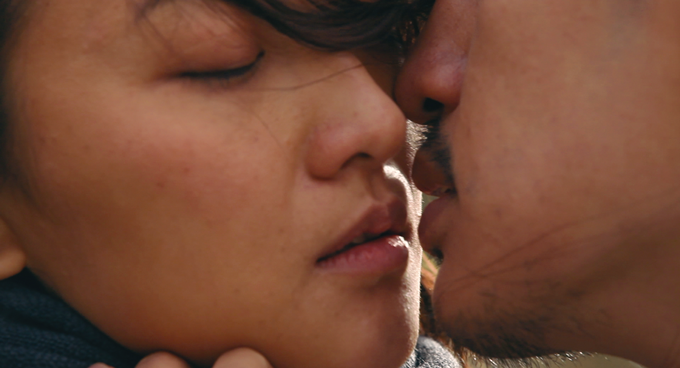
 photo RO_Long_s_zps57065b5e.png
Bends Carina Lau turns in a superb performance as a well-heeled Hong Kong housewife who, suddenly (though perhaps not entirely unexpectedly?), has the economic rug pulled out from underneath her. If this debut feature by Flora Lau feels decidedly more polished and assured than most debut features, that's due in large part to both Carina Lau bringing the movie-star goods and ever-dependable DP extraordinaire Christopher Doyle following each eye-popping composition with another more gorgeous. It's a one-two punch that would no doubt leave other neophyte filmmakers feeling more than a little jealous.

Longing for the Rain The program guide for Yang Lina's film promised something "unprecedented in Chinese cinema: a truly erotic depiction of female desire, shot from a woman's point of view." In execution, the film is almost as radical as that pull-quote would suggest. Initially, Longing for the Rain felt like a reaction to the Fifty Shades phenomenon--the sexually frustrated protagonist pops some porn into the DVD player while her husband and daughter are out for the day, receives a vibrator as a "naughty" gift from a girlfriend, etc.--Chinese only insofar as the story is playing out in Beijing, which, in the early goings, seemed (pointedly) like it might just as well be New York, London, or Tokyo. As the film progresses, however, it takes on an ethnographic specificity that serves to steer the narrative in strange, unexpected directions. The final act--set in a remote Buddhist commune--feels curious and somewhat unsatisfying, yet completely appropriate in these respects.

Our Sunhi Wherein Hong Sang-soo tackles the classic trope about the moody-elusive-charming young woman whom no male who makes her acquaintance can seem to resist. It could be, say, Sooki in True Blood. Cameron Diaz's Mary. Or Audrey Hepburn at the peak of her waifish prowess. But here it's Sunhi, equal parts might-be-smart aspiring artist and blank slate, ripe for the projection of romantic, idealistic notions by her assortment of male admirers. Hong handles this familiar material with a lightness and wit that renders it very nearly fresh. It's a pleasure to watch, from its opening moment to its last. Yet beneath its breezy comic surface, there is the subtlest undercurrent of melancholy here, emanating not least from the distaff center of attention. "Our" Sunhi, after all, has to shoulder the weight of all that smitten affection, which Hong wisely realizes might be a less enviable, more burdensome task than inferior rom-coms prefer to let on.

3x3D Of course the Godard entry was the reason this omnibus was a must-see. Somewhat paradoxically, though, The Three Disasters is only essential viewing for serious Godard completists, and yet I'm not so sure that those completists will find anything particularly new here--the 3D format notwithstanding--in relation to his late-career body of work. We shall see; I'm certainly not anticipating the forthcoming Farewell to Language any less eagerly after this teaser. Surprisingly, it was the Peter Greenaway effort, Just in Time, that stole the show for me. Greenaway picks up from where he left off in recent work like Rembrandt's J'Accuse, but rather than re-treading the same meta-historical territory to similar effect, he utilizes the distinctive quirks of 3D to push the thematic points he's pursuing further while fruitfully reformulating them. To his credit, Greenaway seems neither intimidated by the technology nor constrained by the brief runtime, which lends his entry a dexterous vitality that Godard's interesting work-in-progress ultimately lacks. Edgar Pera's Cinesapiens, meanwhle, is insufferable trash. Had it not been sequenced in the middle of the triptych (preceding the Godard), I would have walked out before it hit the five-minute mark.

Wolf Children I must admit, in the interests of full disclosure, that I'm not an anime guy. To be sure, I enjoy and/or admire the same small canon of Japanese animated features that other non-anime people enjoy and/or admire: most of Miyazaki's films, a few other Ghibli titles, the too-small oeuvre of the brilliant, sadly departed Satoshi Kon. But press me beyond these mostly safe picks and my (admittedly, probably at least partly unfair) genre prejudices become apparent. Happily, I enjoyed and admired Hosoda Mamoru's Wolf Children considerably more than I expected to, even while a) commenting to Teresa, during the film's poignant, largely "realistic" opening section, that Wolf Children would be better without its fantasy conceit of people who can transform into wolves; and b) finding distractingly silly the (for lack of a better word) "romantic" appearance of the adult wolves that the titular children grow into, which, in my view, seemed representative of the grating anime cliches that Mamoru mostly manages to eschew.
We Run Things, Things Don't Run We
Brava!
VIFF '13: The Past Is a Foreign Country  photo england-post_zpsbe79b15b.jpg
A Field in England If noting that Ben Wheatley's latest plays like a heady mix of Samuel Beckett, Jim Jarmusch's Dead Man, and Monty Python riffing on The Seventh Seal doesn't exactly add much to the critical conversation, I think it nevertheless goes some way toward providing a sense of how pleasurable (if occasionally trying) and strange a film this is. The titular field is an Early Modern purgatory, a seemingly mundane space that serves as a fitting backdrop for the confusion, madness, violence, and dark humor that ensue, ad infinitum. In other words, this is an ideal midnight movie, which we had the good fortune of attending as such. I'm only a touch jealous that Teresa was nodding off periodically during the screening, which I suspect added serendipitously to the film's hypnotic, somnabulistic rhythms.

Gebo and the Shadow It's unfortunate the impact a bad performance can have on a film that is, in nearly every other regard, exquisite. In this case, if it wasn't for Ricardo Trêpa's highly off-putting turn, as the greatly troubled prodigal son of a lower-class nineteenth-century French family, this might well have been the best de Oliveira film in years, perhaps since my favorite of his features, 2003's A Talking Picture. Instead, it's--please excuse the easy pun--a shadow of the film it could have been sans Trêpa's obnoxious performance. The rest of the cast is splendid, especially Michael Londsdale as the world-weary patriarch and Jeanne Moreau in an amiably scene-stealing supporting role. Trêpa (de Oliveira's real-life grandson) has been servicable enough, if never impressive, in past de Oliveira films; he's generally better in comic roles or in parts that aren't particularly crucial to the fabric of a film. His role in Gebo and the Shadow is of the utmost importance to the narrative--truly a shame.

Nebraska In anticipation of seeing Alexander Payne's new film, my first screening at this year's fest, I found myself listening to Bruce Springsteen's Nebraska (one of my all-time favorite albums). However, beyond a few kindred aspects (Phedon Papamichael's ashy black-and-white cinematography pairs nicely with the way Springsteen's stark, stripped-down aesthetic for the album evokes the flatness and plainness of the Husker state landscape), these are ultimately works of art that share little save for a common title. Where Springsteen's record is dark and mostly pessimistic, imagining the sad fates of small-time outlaws, Payne's film is perhaps the warmest and most humane that he's directed to date. Even when he seems to cast judgment on his characters, Payne's sketches of cranky curmudgeons, their naggging wives, and ambivalent thirtysomething offspring ring true to this born-and-raised Midwesterner. There's an honesty to Payne's satiric eye that doesn't preclude affection. Scenes of old men gathered together in a modest-sized living room, collectively snoring in front of a television set; or drawn-out, alternately boastful and mocking, discussions about how long it takes, or should take, to drive from one town to another are ethnographic Americana in the sense that Kathleen Stewart does it--that is, in the best possible sense.

The Past Ashgar Farhadi's follow-up to his superb A Separation is an even stronger piece of work; indeed, it's the best film that I've seen at VIFF this year. True to its title, The Past is not so much a critics' film as it is an historian's film--in terms of themes and methodological concerns, if not period per se. To be sure, it's one of the most thoughtful and provocative filmic meditations that I've encountered concerning the myriad ways that the past presses up threateningly against the present while actions in the present often seek--consciously or not--to recreate moments or feelings from our past--always, of course, to imperfect effect. At the same time, Farhadi considers, in both epistemological and psychological terms (insofar as these modes can be cleanly delineated), the knowability of the past and the ultimate importance, or (perhaps) lack thereof, of knowing precisely "what happened" at critical junctures in our respective, convergent pasts. In fact, most of the key "events" that compel the actions and decisions of Farhadi's characters actually occurred off-screen in the days, weeks, and months preceding the start of the in medias res narrative presented here. This is, above all, a profound study in causality and consequence, yet unlike A Separation, otherwise excellent, The Past never feels schematic or contrived. Instead, the sequence of connections in The Past registers as unsettlingly natural, forcing the viewer to reflect in similar terms on the causal dynamics of his or her own past and present.

VIFF '13: Crimes and Misdemeanors  photo A_Touch_of_Sin_4-620x316_zpsf47e3efa.jpg All Is Lost There has been no shortage of late of films centering on people (literally) stuck in perilous situations, from James Franco's headstrong spelunker in 127 hours to Ryan Reynolds' interred war-zone contractor in Buried to, most recently, the stranded astronauts in Gravity. What separates All is Lost within this crowded subgenre is not just that it almost entirely eschews the exposition that other such films sneak in through the narrative back-door. It's also every crag and line in Robert Redford's face as he grimaces at his bad fortune, his long-gestating gutteral "Fuuuuuuuuuuucckk" when things go further south, his methodical movements aboard his doomed boat, signifying, perhaps, his stubborn will to survive against the odds yet never eclipsing, via heavy-handed semiotics, the specificity and instantaneity of a given moment's particular task. Likewise, the film allows, in its final sequence, for something like spiritual or metaphysical redemption, but without forcing the issue.

Miss Violence Sometimes I wish festival program guides were more forthcoming--worries over "spoiling" gradually revealed plot points be damned. Not that the VIFF program's entry for this Greek feature is completely vague, but some topical tags like "incest as alleged political allegory," "raping children," and "pimping children" could really go a long way. I can't say that Miss Violence is a bad film, nor am I going to claim that films like this one should not be made or don't serve a certain social function. But, personally, I would rather not sit through them. Call me squeamish if you'd like; that's fine. As Miss Jean Brodie would say, "For those who like that sort of thing, that is the sort of thing they like."

Rhymes for Young Ghouls It may be Tarantino who, over the past few years, has received the lion's share of credit for demonstrating that historical tragedies can be treated thoughtfully on film without didactic solemnity standing for Moral Seriousness. But it's the spirit of Rob Zombie--whose effusive affection for the horror genre comes sans quotation marks and the brand of inescapable irony with which Tarantino, despite his well-noted movie-geek reputation, approaches generic pastiche--that Jeff Barnaby is most distinctly channelling here. It's a fruitful model, to be sure. Barnaby's examination of Canada's notorious residential school system is imagined as an historical horror movie--by turns, hallucinogenic and painfully prosaic. The forbidding haunted house on the hill is a site of cultural genocide and institutionalized abuse; the gooseflesh-inducing chills are collectively remembered instances of trauma. The cumulative result is a bloody, well-deserved "fuck you" to the not-distant past, as powerful as it is irreverent.

Stray Dogs If this is indeed Tsai Ming-liang's swansong, it's an exceptionally haunting final note, though not necessarily a representative example of what has made Tsai of one of Taiwanese cinema's finest practitioners. From its sustained opening shot to the pair of stunners that close the film, Stray Dogs practically oozes melancholy, all unfillable voids and cryptic despair. Yet, for a director who has proven a master at balancing such emotions alongside a singular deadpan humor, this is without doubt--a few droll moments notwithstanding--his least funny effort, an aspect that threatens to render the film as a whole nearly oppressive in its bleakness. That's not to say that Stray Dogs is less than completely indelible and poignant; just that last year's classic short, The Walker, might finally be the more apt send-off.

A Touch of Sin By moving slyly from the quasi-documentary territory that Jia Zhang-ke has recently staked out toward an (at least ostensibly) more accessible aesthetic mode, A Touch of Sin makes certain integral themes in Jia's work more readily apparent than ever. For instance, it now seems quite clear that, for Jia, there are (at least) four Chinas, or layers of China: an extremely diverse and beautiful, if sometimes dauntingly rugged, landscape; an "ancient," semi-mythic civilization represented by the material traces of the past that remain standing; the expansive industrialization of the Mao era that sought to eradicate much of that imperial past; and the aspects-of-capitalism free-for-all of the present moment, wherein a small handful of often thuggish elites have come into copious amounts of money while, for the vast majority of the populace, life remains, at best, rather drab and decidedly less than promising. The action in Jia's latest takes places simultaneously in each of these Chinas, overlapping stages that converge in fascinating ways. The similarly overlapping narrative strains are variations on a revenge-of-the-repressed theme, allowing Jia to play explicitly with genre tropes in a manner that is unmistkakably new within his oeuvre. Yet the grim question remains of whether these are ultimately trees falling in a forest with no one around to hear them--or to care (or remember), at any rate. This lingering point suggests the presence of a fifth essential layer: China as paradox, an overpopulated echo chamber.

Songs of the Young Millennium
 photo bey_jay_zps5a6905f9.jpg
Inspired by Grantland's fun, if inevitably contentious, Songs of Millennium competition, I have put together my own top 25 list, limiting my selections to de jure or de facto singles. Here it is:


25. Drake - "Hold On, We're Going Home"


24. Lana Del Rey - "Video Games"


23. Adele - "Rolling in the Deep"


22. Justin Timberlake - "Cry Me a River"


21. CSS - "Hits Me Like a Rock"


20. Lil Jon and the East Side Boyz - "Get Low"


19. M.I.A. - "Galang"


18. 50 Cent - "I Get Money"


17. Aaliyah - "We Need a Resolution"


16. Grimes - "Oblivion"


15. Panjabi MC feat. Jay-Z - "Beware of the Boys"


14. Taylor Swift - "Our Song"


13. R. Kelly - "Ignition (Remix)"


12. Lil Wayne - "Upgrade U"


11. OutKast - "B.O.B."


10. Nelly Furtado feat. Timbaland - "Promiscuous"


09. Rihanna feat. Jay-Z - "Umbrella"


08. Britney Spears - "Radar"


07. Brad Paisley - "Welcome to the Future"


06. The New Pornographers - "Letter from an Occupant


05. Robyn - "Handle Me"


04. Lumidee - "Never Leave You (Uh Oh)"


03. Rene Liu feat. Stanley Huang - "Black Black Heart"


02. Solange - "Losing You"


01. Beyonce feat. Jay-Z - "Crazy in Love"
The Greatest We've Got

I know it. You know it. He knows it. And yet this shared understanding in no way precludes or dilutes the impact of 'HOLY SHIT' moments like this one.
All Things Shining
 photo to_the_wonder_terrence_malick_57_zps1453947c.png
I wrote about Terrence Malick, To the Wonder, the Song of Songs, medieval Christian theology, etc., here.
Memories of Murder  photo STILL3-1500x898_zpsbb63f55d.png
See Joshua Oppenheimer's The Act of Killing, by all means--in the director's cut, if possible. The word singular is decidedly over-used when discussing movies, yet there's no real point of comparison in cinema or any other artistic medium for the experience of watching Oppenheimer's film. One could perhaps posit certain analogies between this film and, say, Shoah or Salo or La Commune (Paris, 1871), particularly insofar as The Act of Killing is so vitally filmic and highlights the unique potential of cinema as a medium for engaging with historical memory. But Oppenheimer's film deserves to be considered as a truly sui generis work, staggeringly powerful and indelible. It's also the rare movie-about-movies that never feels gratuitously reflexive or designed exclusively for the small club of the well-versed. Rather, this is an ostensible meta-movie that's finally about nothing less than man's capacity for evil and the labyrinthine contours of the human conscience.

(As a primer before seeing the film, I highly recommend picking up a copy of John Roosa's excellent book, Pretext for Mass Murder: The September 30th Movement and Suharto's Coup d'Etat in Indonesia, especially since The Act of Killing is relatively light on historical context, aside from a few expository intertitles.)
Can't You See It's We Who Own the Night?

01. What is this? I mean, wtf is this?!

02. Despite its (ontological?) ambiguity, one thing is not at all ambiguous: never before has a former teenpop queen transitioned into outright salaciousness more abruptly or stunningly. In fact, "transition" is the wrong word. From, like, daisy dukes in the "Party in the USA" video to this is like 0-90 in two seconds on a street with a 35 mph speed limit. It's insane. If Britney is the inevitable poster-child for this sort of trajectory, her image evolution has actually been far more gradual--and she's never put out anything quite so prurient as this.

03. This happened just five years ago. Miley, 2013: "To my homegirls here with the big butts / shaking it like we at a strip club..." Rihanna, Miley's apparent role model, has, I suppose, upped the ante in this respect. "Sex in the air / I don't care, I like the smell of it" is now a lyric that one can hear on one's public broadcast medium of choice. Subtlety is done, put a fork in it.

04. By contrast, Selena G.'s "mature" turn suggests some interest in being an old-fashioned pop star, more glamorous than hip. As hooks go these days, "If you want it, come and get it" is comparatively nuanced!

05. There's so much going on, and I'm not sure whether it reminds me more of Fiona Apple's "Criminal" video or the Yeah Yeah Yeahs' "Y Control" clip.

06. Is this the end of hipster culture, or the moment when hipster culture swallowed youth culture in its entirety, one big fucking gulp, like the whale in Pinocchio--the American Apparelization of all things? Harmony Korine may be at least partly responsible for this rapid development, but scenes like the one in Spring Breakers where the characters sing "Baby One More Time" will soon no longer be possible if the "We Can't Stop" video is an accurate indication of the direction we're headed: the ironic disconnect between the dream life of pop and the lives lived by listeners will have been (at least ostensibly) bridged.

07. This track will definitely be featured prominently on the next season of Girls.

08. I am old.

09. OUR SONG WILL BE YOUR SUMMER. RED CUPS, SWEATY BODIES, ETC.

10. Is the mongoose thing an allusion to Ghost World? "Umm, that's not officially for sale. I may have to hang on to that for the time being."
Days of Being Wild
 photo 25057b85-a135-43e1-ac50-a767c3281e71_zpsa3b6c9ea.jpg
I was split on whether or not to see Spring Breakers. My feelings on Harmony Korine's work are decidedly ambivalent, and even the films, or aspects of films, that I admire, I do so with certain, strong reservations. I'm glad that I bit the bullet: it's some kind of masterpiece, a term I try to resist using whenever possible. But to say that it's Korine's masterpiece (i.e., the best entry in his filmography) is, while true, of course, a rather severe understatement. Even though Spring Breakers is no doubt of a piece, thematically and conceptually, with his other efforts, the new film's formal and poetic coherence is downright startling coming from the same director who once made Gummo. This is--as James Franco's indelible Alien might enthusiastically gush--some next-level shit.

From its opening images, Spring Breakers establishes its aesthetic terrain as within the over-heated dream life of American popular culture (that is, youth culture, or youth-driven culture). Benoit Debie's superlative camerawork foreshadows the textures, colors, and shape(s) of things to come--or rather, that have come, or are coming, at once. Because the narrative is highly elliptical, all things (thoughts, experiences, sights, sounds) seem to be occurring atemporally within the same moment. Only that moment, which one character repeatedly wishes could "last forever," can't. Instead, it is viscerally ruptured, scattered into loosely congruous fragments and echoes that call to mind, at the same time, Egoyan, van Sant, and even the later films of Malick. The assorted voices disembodiedly populating the soundtrack coalesce into a peculiarly poeticized collective unconscious, much as in The Thin Red Line, The New World, and The Tree of Life--and the "poetry," as such, isn't much worse either.

The structure of the film suggests, too, the seductive, perpetually reiterated loop of images, sounds, and negligibly contextualized bits of "narrative" that constitute the pop-cultural continuum, as it stands now. The problem, implies Korine's film (which has, somewhat misleadingly, been characterized as "amoral" and "non-judgmental"), is that a dangerous and disingenuous disconnect exists within this powerful, omnipresent loop, between the litany of signifiers relating to gun violence, sexual debasement, the performance of gendered and racialized social roles, etc. and the "IRL" application of these potent themes. This is not as simple a diagnosis as "life imitating art" or the reverse, but rather the more slippery dilemma of how to interpret and reconcile the profoundly mixed messages sharing space within the pop data-stream. Korine deliberately pushes the "real-life" analogues to this range of signs to nightmarish extremes, while simultaneously turning up the stylistic heat to its eye- and ear-popping, (revealingly) hypnotic boiling point.

This strategy also functions as an acidic parody of the alarmist "worst-generation-ever," decline-of-Western-civilization rhetoric, confirming its worst fears in absurdist fashion. The look of the film stands in for the subjectivity of its characters, awash in a sweaty, Floridian glow and throbbing with a pulse dictated by adrenaline, hormones, and unwise combinations of intoxicants. But the trajectory of the narrative, re-assembled as a linear story, reflects the most lurid, nutso fantasies of those inclined to cook up worst-case scenarios--and who, like everybody else, has been aggressively inundated with the same variably legible sex-and-violence stream. That said, the fact that the pieces of story scattered across Spring Breakers are not strung together in a clear straight line, but as the cracked shards of a mirror, is, finally, very much the point: the pleasures of the dream life cannot be neatly separated from its ugly underbelly, nor, at this point, can the lives we live from the cultural kool-aid we imbibe.
The JLT/JLT Ballot


With the Oscars just around the corner and most other awards groups having already weighed in, I guess that means it's time for the annual-'cause-I-do-it-every-year JLT/JLT ballot. Picks listed in roughly descending order.


FILM
Lincoln
Beyond the Hills
The Deep Blue Sea
Barbara
Zero Dark Thirty


DIRECTOR
Steven Spielberg - Lincoln
Cristian Mungiu - Beyond the Hills
Terence Davies - The Deep Blue Sea
Kathryn Bigelow - Zero Dark Thirty
Julia Loktev - The Loneliest Planet


ACTRESS
Rachel Weisz - The Deep Blue Sea
Nina Hoss - Barbara
Cosmina Stratan - Beyond the Hills
Cristina Flutur - Beyond the Hills
Anne Marsen - Girl Walk//All Day


ACTOR
Denis Lavant - Holy Motors
Daniel Day-Lewis - Lincoln
Jack Black - Bernie
Mads Mikkelsen - The Hunt
Min-sik Choi - Nameless Gangster: Rules of the Time


SUPPORTING ACTOR
Matthew McConaughey - Magic Mike; Killer Joe; Bernie
Jason Clarke - Zero Dark Thirty
Simon Russell Beale - The Deep Blue Sea
Tommy Lee Jones - Lincoln
Fran Kranz - The Cabin in the Woods


SUPPORTING ACTRESS
Alison Brie - The Five-Year Engagement
Elizabeth Banks - The Hunger Games
Sally Field - Lincoln
Shirley MacLaine - Bernie
Karen Mok - East Meets West


SCREENPLAY
Tony Kushner - Lincoln
Drew Goddard and Joss Whedon - The Cabin in the Woods
Terence Davies - The Deep Blue Sea
Mark Boal - Zero Dark Thirty
James Lee - If It's Not Now, Then When?


CINEMATOGRAPHY
Janusz Kaminski - Lincoln
Katsumi Yanagijima - Like Someone in Love
Oleg Mutu - Beyond the Hills
Sidi Saleh - Postcards from the Zoo
Hans Fromm - Barbara
And This Is Crazy

It's official: This was, in terms of music, the year that I went from kinda to almost totally out of step with the critical consenus. It's funny--when I first started getting involved with music criticism, it was still Boomer-dominated: the "old guard," Rolling Stone/Voice (seeming) lifers, et al. Now, I feel old. I didn't vote for any of the top 16 albums in this year's Pazz & Jop poll. And, more tellingly, the only one of those 16 that I considered voting for was the Springsteen record! Singles-wise, I'm less disconnected, I suppose. I voted for three in the top ten, including the landslide victor: Miss Carly Rae Jepsen's "Call Me Maybe," which is, of course, undeniable and sublime--though not necessarily one of the top five tracks on CRJ's superlative Kiss. (By the way, here is an interesting piece on "Call Me Maybe" read in relation to game theory [!]).

Speaking of great singles, I would have absolutely voted for this--to which I was only recently alerted by Teresa--had I heard it before the deadline. It's so ginormous and dramatic; and she looks more than a little like a young Cyndi Lauper (just saying). If this, coupled with the very welcome Girls Aloud comeback, is what's going on right now in British pop, this is not at all a bad state of affairs.
Forever Changes


2013 promises to be a transcendent year for relationship movies (Exhibit A! Exhibit B!!). But 2012 was pretty solid, in its own right. "Relationships movies," not romances per se: Amour and The Deep Blue Sea, for instance, would hardly fit the bill for viewers in search of more standard film romance, yet both of these films offer some fairly profound reflections on the power of human relationships. The same goes for Julia Loktev's stunning The Loneliest Planet. The early stages of the narrative are more or less what one would expect from an indie love story. Scenes of slightly awkward intimacy, more quirky than sexy, are intercut with lots of hiking across gorgeously austere landscapes, as an engaged couple and their local guide tour the Caucasus Mountain region of Georgia. Then, in a sudden, unexpected moment of violence (or more accurately, the threat of violence), everything changes, albeit in subtle, unspoken ways. The film's greatest strength is that every scene that follows this troubling incident--and in retrospect, all those that had preceded it--can be read, equally validly, on an absolutely literal level, specific to these distinctive individuals and their circumstances; an allegorical level, in which the actions and reactions of Loktev's back-packing lovers and their host represent a provocative commentary on sexual politics; or on a semiotic level, given the potency and quiet precision of Loktev and cinematographer Inti Briones' ruggedly mannerist compositions. Best of all, none of these levels of analysis or combinations thereof, could yield a truly conclusive reading of The Loneliest Planet, because the film is stubbornly elusive, making meaning(s) that it refuses to ever pin down as definitive--not least, in its ambiguous final shot.

The Five-Year Engagement is, on the one hand, a decidedly more conventional relationship film: there's laughter, there's tears, there's musical montages, etc. Nicholas Stoller's movie is recognizably a product of the Judd Apatow rom-com factory. It might, arguably, in fact, be the best Apatow production to date, but--notwithstanding the aforementioned, reasonably plentiful "laughs" (foolishly incurred injuries, a faked male orgasm, Chris Parnell)--it's not the funniest. Which brings me to the "on the other hand": From the trailers for this film, one would expect something, in equal measure, wacky and fluffy, like Stoller and Jason Segel's previous collaboration on Forgetting Sarah Marshall or She's Out of My League, both fine, funny, and slight. The Five-Year Engagement is more wistful and sensitive. At times, it's legitimately sad, and in a way that feels honest and (quite appropriately) mundane, rather than engineered for maximum emotional impact. What separates this from other, similar relationship movies is that Stoller and his cast (Segel and Emily Blunt are splendid as the leads, while Alison Brie, aka Trudy Campbell, steals every scene she's in), true to the title of the film, capture a real sense of time passing--and what the passage of time means for these characters, and for relationships, more generally. The episodic structure works well comically, but it also serves to express how a relationship's rough stretches, as much as (or sometimes more than) the good times, can make a partner all the more dear and uniquely irreplaceable. If it's a cliche that distance makes the heart grow fonder, it's a truth that has rarely been demonstrated so poignantly on screen. When the film arrives at its happy ending, it's as well-earned and satisfying as it is pro forma. And, fittingly, it doesn't feel at all like an actual end to the story of these two interesting, changing people. Both The Loneliest Planet and The Five-Year Engagement reject a too-common cinematic view of relationships as finite trajectories, in which the bumps of the metaphorical "journey" are retroactively smoothed over by the inevitable "destination." Loktev and Stoller, instead, present portraits of relationships as unpredictable, ever-dynamic, negotiated things, at once, fragile and durable, strange and natural.
10 X 4: 2012

I'm blurb'd out. Suffice it to say that I like the things listed below very much. Expanded lists are here.


FILMS
01. Lincoln (Spielberg)
02. Beyond the Hills (Mungiu)
03. The Deep Blue Sea (Davies)
04. Barbara (Petzold)
05. Zero Dark Thirty (Bigelow)
06. The Loneliest Planet (Loktev)
07. The Cabin in the Woods (Goddard)
08. Resident Evil: Retribution (Anderson)
09. Postcards from the Zoo (Edwin)
10. If It's Not Now, Then When? (Lee)


PERFORMANCES
01. Denis Lavant - Holy Motors
02. Daniel Day-Lewis - Lincoln
03. Rachel Weisz - The Deep Blue Sea
04. Jack Black - Bernie
05. Mads Mikkelsen - The Hunt
06. Nina Hoss - Barbara
07. Cosmina Stratan - Beyond the Hills
08. Cristina Flutur - Beyond the Hills
09. Anne Marsen - Girl Walk//All Day
10. Matthew McConaughey - Magic Mike


ALBUMS
01. Carly Rae Jepsen - Kiss
02. Kathleen Edwards - Voyageur
03. Solange - True (EP)
04. Lana Del Rey - Born to Die
05. Marina and the Diamonds - Electra Heart
06. The Mountain Goats - Transcendental Youth
07. Taylor Swift - Red
08. Adam Lambert - Trespassing
09. Rick Ross - God Forgives, I Don't
10. Cat Power - Sun


SINGLES
01. Solange - "Losing You"
02. Rihanna - "Diamonds"
03. Justin Bieber - "Boyfriend"
04. Taylor Swift - "We Are Never Ever Getting Back Together"
05. Santigold - "Disparate Youth"
06. Carly Rae Jepsen - "Curiosity"
07. Carly Rae Jepsen - "Call Me Maybe"
08. T.I. f/ Lil Wayne - "Ball"
09. Conor Maynard - "Can't Say No"
10. Iggy Azalea - "Pu$$y"
The Mystic Chords of Memory


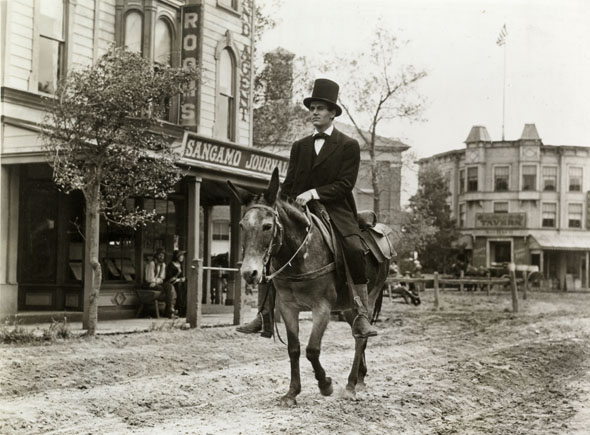
In John Ford's Young Mr. Lincoln, Henry Fonda is the very embodiment of "Honest Abe," albeit sans beard. Guided by the memory of his mother and of his first sweetheart, both deceased, Fonda's Lincoln is a man of plain-spoken smarts and high-minded (but absolutely not highfalutin) principles; without doubt the most virtuous lawyer in Illinois, if not the world. The resulting film might be the only example on film of the courthouse picture as tone poem, arguably sharing more in common with Bresson's Diary of a Country Priest (Fonda's Lincoln, like Claude Laydu's Priest of Ambricourt, is all haunted eyes and melancholy cheekbones) than with, say, 12 Angry Men or To Kill a Mockingbird. There's plenty of drama, to be sure, but as history: this is unmistakably the calm before the storm. It's well worth remembering that some elderly members of the film's 1939 audience would have retained childhood memories of the Civil War and Lincoln's assassination. If Young Mr. Lincoln plays like a prelude to history with a capital 'H', it's not least because Ford avoids the incendiary national disturbances that followed this relatively serene stage in Lincoln's life, a period that had already long since crystallized into myth. (It also bears considering that W.E.B. DuBois' Black Reconstruction in America, a polemical rebuke to the racist histories of the Reconstruction that then dominated the field, had been published just four years before Ford's film debuted.)

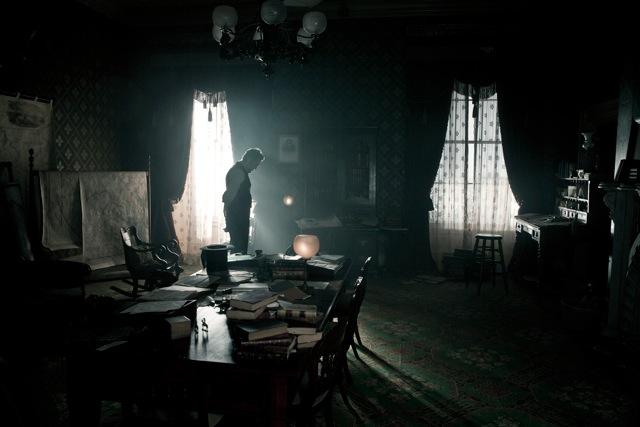
Almost exactly as many years separate Steven Spielberg's Lincoln from Young Mr. Lincoln as separated Ford's film from Lincoln's death. Yet Spielberg's film should rightfully be considered as a bookend to Ford's. It's quite easy to imagine Spielberg, operating in the "historical mode" of Schindler's List and Saving Private Ryan, making a fine remake of Young Mr. Lincoln. Instead, Spielberg--working from a superb Tony Kushner script that might, in lesser hands, have proven rigidly theatrical--together with Daniel Day-Lewis imagine Lincoln in the final months of his life, world-weary yet passionate and exuberantly thoughtful, tirelessly politicking to push through the 13th Amendment. More mosaic than biopic, Lincoln renders the quirky, prosaic, not always altogether "honest" ins and outs of nineteenth century politics beautiful in much the same way that Ford gracefully poeticized the law procedural. Janusz Kaminski, evincing some of the most magisterial work of his long partnership with Spielberg, situates Kushner's pitch-perfect words, as impeccably delivered by Day-Lewis, et al., in a dazzlingly sustained series of evocative, painterly compositions that gradually take on the affect of a dream of the past--a past so vivid that it must be none other than our collective own. It might seem peculiar to call Lincoln a zeitgeist film (not that I'm by any means the only one doing so), but Spielberg, Kushner, and Day-Lewis clearly recognized the perilous, precipitious height of the stakes involved, and produced a film that speaks as eloquently of, for, and to the present moment as Ford and Fonda did nearly three quarters of a century ago.

There's so much palpable, productive tension between past and present in this film; between historicity and mythologization; usefulness and verisimilitude; intimacy of scale and staggering ambition; the ebullience of triumph and the specter of grief; aching beauty and the pervasive stench of death. It's a cinematic equivalent to the profound power of Lincoln's Second Inaugural Address. That Lincoln concludes with a sample of that speech--allowing the fallen leader to, in effect, provide his own eulogy, after admirably subverting expectations by keeping his assassination off-screen--is the supreme note of brilliance that seals the deal: This is movie-making of the highest order.
Once More, with Feeling


I discussed the highs, lows, prevailing themes, and minutiae of VIFF 2012 with Adam Cook here.