It's That Time of Year


With the 2012 edition of the Vancouver International Film Festival kicking off tomorrow, I figured a quick jog down memory lane was in order. Below are the ten best films (plus a dozen runners-up) I've had the pleasure of catching at VIFF over the past five years, since moving to Canada.

01.Karamay (Xu, 10)
02.Redacted (De Palma, 07)
03.This Is Not a Film (Panahi/Mirtahmasb, 11)
04.Uncle Boonmee Who Can Recall His Past Lives (Apichatpong, 10)
05.Perfect Life (Tang, 08)
06.Summer Hours (Assayas, 08)
07.The Tiger Factory (Woo, 10)
08.The Duchess of Langeais (Rivette, 07)
09.Almayer's Folly (Akerman, 11)
10.The Turin Horse (Tarr, 11)

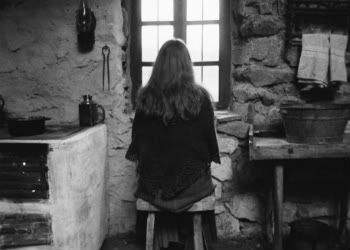
Runners-up: I Wish I Knew (Jia, 10); The White Ribbon (Haneke, 09); A Separation (Farhadi, 11); A Christmas Tale (Desplechin, 08); The Man from London (Tarr, 07); The Romance of Astrea and Celadon (Rohmer, 08); Rembrandt's J'Accuse (Greenaway, 09); Useless (Jia, 07); Adrift (Bai, 09); Love Conquers All (Tan, 07); My Winnipeg (Maddin, 07); Of Time and the City (Davies, 08)
De rebus quae geruntur


Current fixations:

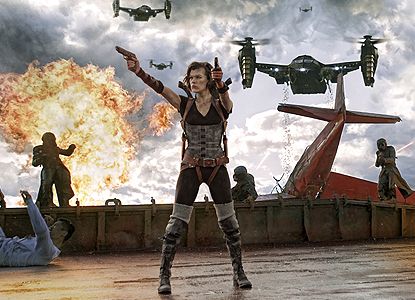
Resident Evil: Retribution Picking up where the deliriously destabilized Aftermath left off, Paul W.S. Anderson's latest franchise entry is pure, unhinged spectacle, as slick and slippery as it is visceral as it is pleasurable in a way that feels, for lack of a better word, new. That's because this is post-everything cinema, not non-narrative per se, but a brand of filmic storytelling wherein quaint notions like plot and continuity are largely beside the point and what matters, if anything, is the interplay of bodies and signs in spaces that expand and contract, invert and collapse in on themselves (needless to say: legitimately worth experiencing in 3-D). What still signifies, Anderson seems to wonder, in the age of semiotic overload, with mixed messages canceling each other out and once-powerful images radically de-contextualized and stripped of meaning? Answer: Milla Jovovich's Alice, who, like everyone else, is trapped inside the hall of mirrors, yet is singularly defined by her never-static shark-like resolve to eat/shoot/kill her way out of the labyrinth--the closest thing to "dramatic tension" in the series. "I'm going to kill you," she tells her evil nemesis cum potential ally cum commander-in-chief (?!). "Perhaps," he coyly responds, "but first..." So it goes, ad infinitum.

Carly Rae Jepsen, Kiss She's citing Robyn every chance she gets, and you should take her at her word because Kiss is the closest any North American disciple has come to the sparkling, slightly moody, dancey Europop-plus-songcraft that makes Stockholm's finest the twenty first century's pop star par excellence. It's a sophisticated, yet thankfully unironic, teenpop that sounds perfectly palatable coming from a Bieber tourmate now closer to thirty than twenty, let alone sixteen. "I wish we could be holding hands," she sings on the opener, a sentiment no more precious than "we could fall in love / I could be the apple of your eye" and less precocious than "I can be a gentleman / anything you want." Album of the year, for me for sure for now, and I can easily envision it hanging tough through 2012's final quarter.

Girl Walk//All Day As giddily irresistible--and as substantially predicated on constantly, hypnotically moving bodies--as Resident Evil: Retribution, director and principal photographer Jason Krupnick's choreographic compliment to Gregg Gillis's best album makes me grin more than any movie, or movie-type-thing, in recent memory. It's the sort of blissfully irreverent ballet-gone-street concept that the main couple in Center Stage might have concocted if they happened upon a mash-up masterpiece, some video equipment, and possessed a casual familiarity with Tati. Astonishingly energetic heroine, Anne Marsen, has superstar charisma; New York has rarely looked more fun on screen; and that sequence on the Vespa, near the middle of the film, is absolute, unfettered ebullience: Watch it right now, for the first or fifteenth time.
If I Could Stand to Be Less Difficult


Note three points from the post immediately below this one:

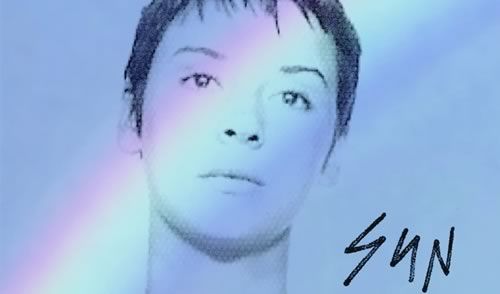
01. "Ruin" and "Cherokee," the two Sun tracks most widely available in advance of the album's release, were not featured on my list. This is partly, of course, because they are not among my 10 favorite Cat Power songs. I like both of the new tracks just fine, but I'm not sure they'd rank if I'd expanded the list to 20 or 25 songs. That said, I also excluded them because I wanted to wait and hear how they sounded in the context of the full record. Aside from the stray exception--"He War" might be the only clear case; "Cross Bones Style" is arguable, but I'd contend that it's essentially a particularly catchy album track that fits nicely where it's sequenced on Moon Pix-- Marshall is an album artist. Not in a high-concept way, but in a kind of old-school singer-songwriter sense. Her best albums are less about the individual songs and more about moments within said songs that cohere into something seamless (but not formless), to the point that one may sometimes forget which specific track contained some specific, sublime moment. (This aspect of Marshall's music may seem to render an exercise in ranking her best songs, as I've attempted below, a rather counter-productive effort, but I have tried to emphasize the moments that stand out in those songs.) What I did not, however, anticipate in excluding "Ruin" and "Cherokee" from my list was that they would be, by a fairly significant margin, the two best tracks on Sun. After a dozen-plus listens to the new album, those two remain the only songs that I feel particularly compelled to replay after they finish. This is a problem for two reasons: First, and most obviously, because, while both songs are good, they are not "Nude as the News"-good or "Say"-good or "Fool"-good. But also because, in wanting to replay "Cherokee" and "Ruin," I am reflexively acknowledging that tracks which proceed them, immediately or for the duration of the record, are not just inferior, but perhaps more importantly, do not hang together all that well or compliment one another the way most or all of the songs on her best albums do.

02. I began the earlier post by asserting that "Chan Marshall is one of the great artists of the past two decades." I did not claim that Marshall was one of the great lyricists of that period. While she has always had a knack for the cryptic-poignant line that catches your attention and sticks in your head (say, "all the hearts that touch your cheek / how they jump, they move, they embarrass"), her songs inevitably sound better on record than they read on the page--as well they should. I'm hardly one to deny aural pleasures on the grounds of less than literary language. Much of the writing on Sun, however, is on-the-nose to the point of getting in the way of such pleasures. Sample offenders: "three, six, nine / you drink wine / monkey on your back, you feel just fine"; "you're a human being / you gotta right to scream when they don't want you to speak / you gotta right to be whatcha want and where you wanna be" (the spelling choices come courtesy of Marshall or Matador or whoever had the hubris to include a fold-out poster lyric sheet with the CD); or basically all of album-ender "Peace & Love." It also doesn't help that Marshall's greatest asset, her voice, is needlessly overproduced in places, while at other times, her vocals get lost amidst the sonics. Speaking of which, for all the buzz/trepidation concerning Marshall's digital move, the production on Sun feels rather banal, like so much twenty-first century adult-contemporary pop, more often than it registers as inspired or "something new" in an exciting or challenging way.

03. In my entry for "Lived in Bars," I admitted that "I was one of those annoying Cat Power purists who found it easy to like yet hard to love The Greatest--a reaction I'm already readying myself against in advance of Sun." Apparently, not well enough! Which is to say, following the criticisms posited above, that the problem(s) here may lie as much with this long-time fan as with the artist herself. The new record is actually pretty good. I keep wanting to listen to it and each time I do, I find something new to like: the guitar line on "Ruin" is jagged and sharp, clean and cool yet vaguely menacing, like the guitars on some of my favorite Talking Heads songs, and Chan rides its groove impeccably; "Silent Machine" largely delivers on the hype of Cat Power 2.0--or is it 3.0?--with legitimately interesting sonic flourishes that feel well-coupled to some of Marshall's stronger Sun material, words-wise; even the Iggy Pop cameo on "Nothin' but Time" has grown on me. The title of that last track, though, can't help but recall "American Flag," the Beastie Boys-sampling (who said CP 1.0 was hopelessly austere?) opener from Moon Pix. Alas, I'm living in the past, while Marshall is fumbling toward something like the future. I guess I can relate a little bit to "Charles" from "Names": I said I was in love with her. We were both fourteen. Then she had to move away. Then I began to smoke crack. (Okay, so it's not a perfect analogy.)
The Sun Also Rises


Chan Marshall is one of the great artists of the past two decades. She's been away far too long, especially in terms of new, original material. In eager anticipation of Sun, which I will write on here sometime next week, below are my ten favorite Cat Power tracks.


10. "Lived in Bars"
I admit it: I was one of those annoying Cat Power purists who found it easy to like yet hard to love The Greatest--a reaction I'm already readying myself against in advance of Sun. My problem, not the music's: "Lived in Bars" is Marshall's Dusty in Memphis moment. She kills it.


09. "He War"
Similarly, it took me a little while to warm up to this unabashed pop-rock move, incongruous as it seemed on You Are Free and within the Cat Power catalogue more generally. Then I came around. I still basically agree with what I wrote about the song six years ago (even as I can't help but cringe at some of the writing...).


08. "Cross Bones Style"
Before "He War" or the apparently digitized Sun, this hypnotic sing-along and Moon Pix highlight (and its excellent video) was a tip-off to Marshall's hidden pop prowess.


07. "Still in Love"
Nobody does heartbroken quite like Chan Marshall, even when she's re-channeling someone else's heartbreak, as on this cover of Hank Williams, an early indication of Marshall's knack for reimagining others' material. There's a hint of sunniness in its mild twang that makes "Still in Love" a welcome moment of relative relief on Myra Lee.


06. "Rockets"
It's a toss-up between the stripped-down version on Marshall's debut, Dear Sir, and the slightly less stripped-down, more rocking cut on Myra Lee. Either way, it's classic early Cat Power, as the live video above vividly attests.

05. "Ice Water"
Myra Lee, named for Marshall's mother, is still my favorite Cat Power record front-to-back. It's an album as exquisitely damaged as Plastic Ono Band, as hauntingly raw as PJ Harvey's 4-Track Demos. Marshall sums it up here: "I am so angry / I am so at ease."


04. "I Found a Reason"
There are a number of covers--"Satisfaction," "Wonderwall" "Lost Someone"--that might've made the cut here, but I've limited it to two, and "I Found a Reason" is certainly the very best. Marshall's take on the Velvets is spectacularly beautiful, so urgent and tender in its plea to "come, come, come, come, come to me / run, run, run, run, run to me," regardless of who wrote it.


03. "Fool"
My lord, that Georgia accent. It's Cat Power's not-so-secret weapon. A little effortless guitar and/or piano was all that was ever needed with Marshall's lush, smoky vocal floating atop it like a ghost or a dream, threatening to evaporate into the musical ether at any moment. Her delivery of the title word on the chorus of "Fool" is sad, sexy, and beguiling in equal measure. She nearly drops the 'l', as if she just can't exert the energy; life is hard, too many consonants.


02. "Say"
Gorgeously languorous and sonically spare, "Say" is perfectly representative of Cat Power's minimalist, pre-You Are Free aesthetic and of that subgenre regrettably termed "sadcore." The endlessly repeated guitar loop and occasional, portentous storm sounds mirror Marshall's lyrical concerns: the purgatory that is banal repetition and numbing sameness. Yet amid the bleakness, she offers some poignant consolation: "I hope all is well with you / I wish the best for you / When no one is around, love will always love you."


01. "Nude as the News"
This, for me, remains the quintessential Cat Power moment. Marshall turned something rather mundane and common, a scorned lover's lament, into something else, something cryptic yet furious and alarming: "I still have a flame gun for the cute ones."
Ephemera
Photobucket

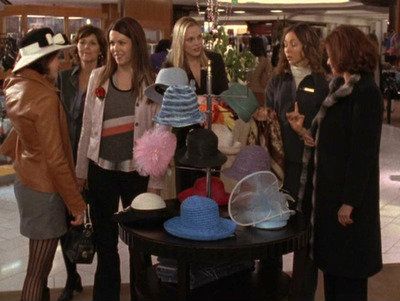
Genevieve Koski ponders shopping malls as future "nostalgia objects," while writing on "mallpisodes"--that is, TV episodes set inside malls.

Adam Cook had an interesting exchange with Apichatpong Weerasethakul in Locarno.

Alex Pappademas reflects on the legacy of Tony Scott.

Conor Maynard's "Can't Say No" has grown on me.

And, finally, this is too batshit insane not to pass along.
Top 10 Underappreciated Singles of the Past 10 Years


The list below is aimed less toward "hidden gems" that barely anyone has heard (e.g., say, "Weather the Weather" by Natalie Rose LeBrecht, which is singularly odd and sort of great, for what it's worth, but not what this particular list is about), and more toward tracks by known entities that were critically and/or popularly slept-on, whether wholly or by comparison to other singles by that artist; or, in other cases, were well-received upon their release, but, for whatever reason(s), are no longer mentioned by reviewers and/or fans. That second criterion inevitably tips the scales in favor of less recent singles, since it's too hard to tell how stuff from the past couple years will fare over time. If that sounds convoluted, what follows should basically explain my vague "methodology."


10. Lil Wayne - "Prom Queen"
It might not warrant placement on Weezy's best-of compilation, except perhaps as a bonus track curiosity, but it's better than you remember.


09. Rachel Stevens - "Some Girls"
I debated including about a half-dozen different Girls Aloud songs, but I honestly have no clue how favorably GA's best work (most of Sound of the Underground, pretty much all of What Will the Neighbours Say?, about half of Chemistry) is viewed in Britain these days. The same is true of Rachel Stevens' "Some Girls," but its one-off brilliance landed it a spot here anyway, and at the expense of GA and their formidable catalogue of classics.


08. Lil Flip - "Game Over"
I can't remember the last time I heard this mentioned by anyone, but I popped in an old Source comp the other day and, what do you know, this is still terrific. The beat's so spare and the hook is insanely simple, it's like this hypnotic crunk monolith.


07. Gretchen Wilson - "When I Think About Cheatin'" and "One of the Boys"
"Redneck Woman," of course, will always be Gretchen Wilson's calling card, the same way "Achy Breaky Heart" will be the only song cited in Billy Ray Cyrus' obituary. But both of these are better. The former is one of the most elegant, affectingly straightforward country ballads of the past decade; the latter is a poignant tomboy's anthem with an easy, assured twang and, in its refrain, a lyrical twist that sweetly subverts the title of the song and her third album.


06. Miley Cyrus - "Start All Over"
Despite the stab at awkward, inarticulate adolescence ("my best friend Leslie says that she's just being Miley"), "See You Again" was the point-of-no-return-to-Hannah-Montana (even if Miley and/or Disney tried to play it off otherwise). Edgily assertive musically and in terms of delivery, if not lyrics per se, it was, for better or worse, Miley's plunge into/embrace of (adult) celebrity culture--a move confirmed by "Party in the U.S.A.," which self-consciously positioned Miley alongside Britney and Jay-Z. By contrast, "Start All Over," nearly as good as "See You Again" and better than "Party in the U.S.A.," is one for the kiddoes: angsty like acne, giddy like the giggles, and inexhaustibly infectious.


05. Britney Spears - "Everytime"
Post-Blackout, some perceptive reviewers have begun to recognize Britney's genius, but that appreciation has only extended backward so far as "Toxic" and her other big, undeniable, dancey singles are concerned. Those who suggest that Britney should just steer clear of ballads because her talents lie elsewhere (as I have been tempted to, on occasion) should reconsider "Everytime," her most arrestingly unadorned moment on record, and especially Brit's superbly tender rendition of it on SNL (linked above, until it inevitably gets deleted again).


04. The Game - "Put You on the Game"
Timbaland and Danja went all-in for this funereal stutter-stomp that remains the Game's finest moment (a vulnerable 50 Cent stole "Hate It or Love It"). Over such a vintage beat, Game's boasts can't help but sound convincing, and he's funny, too, kind of: "If I got a problem with a bitch, I let Eve do it."


03.Kelly Osbourne - "One Word"
Wow! Remember this? I went all crazy with superlatives on it back in '05--and I don't think I was wrong. It's a Euro-dance pop parody that isn't a parody at all because it's so in love, in precisely equal measure, with the sexiness and the silliness of that fundamentally sexy-silly form.


02. Nina Sky - "Move Ya Body"
Right, everyone liked this just fine when it came out eight years ago, but who's talking about it or playing it in 2012? Why? Is it less awesome? (Listen again.) No. It is not. And that "can you feel the beat within my heart?/can't you see that you must be a part/of that beat in my heart?" bit at 2:10 remains sublime.


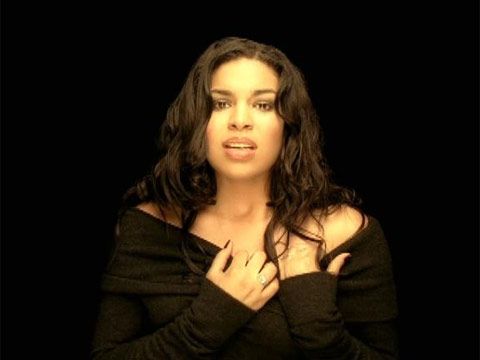
01. Jordin Sparks - "Tattoo"
The fact that I've been listening obsessively to this lately probably accounts at least partly for the ranking, but, really...this one of the great power-pop ballads of all time! It's our "Take My Breath Away" or "What About Love?"; we're just too dumb or cynical or fickle to recognize perfection when it comes our way. And as much as I love Carrie, Kelly, and especially Adam, this is the one song from an American Idol contestant that we preserve in a time-capsule from the beginning of the twenty-first century. The Library of Congress needs to get on this.

On the page, "Tattoo" is banal, a love song that in lesser hands would be pedestrian and entirely generic. But the production by Stargate has this thrumming, soaring bounce to it that sounds, at once, warm and wistful, and Jordin sings every note like she completely and totally means it. From 2:52-2:58, she sings, "Ooohhhhhhhhhhh," which she might even mean just a little bit more.
Ghost Stories

Recent viewings:

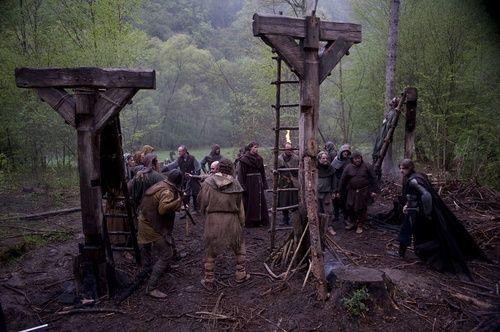
Black Death As someone with more than a glancing interest in the Middle Ages, I was curious and skeptical about this 2010 horror movie from Christopher Smith (who made a nasty, scary little horror flick called Creep back in 2004), much as I was about Game of Thrones (TV show, not the books) prior to diving in headfirst. Despite the appearance of Sean Bean (who I'm pretty sure lives somewhere in medieval Europe when he's not working) and Carice van Houten as a world-weary knight and pagan sorceress, respectively, and certain aesthetic similarities, Black Death is a different animal from Game of Thrones (which offers a different smorgasbord of pleasures). For one, it's not fantasy, a point it reinforces by de-mysticizing, and boldly undermining, its horror conceits in a way that feels both historically plausible and organic within the narrative. And it's much smaller in scope, like a sliver of the fourteenth-century preserved on film, not a Tolkien-esque medievalist epic. This is not to say that the film is "historically accurate" (whatever that actually means...), but like Nicholas Winding Refn's superb Valhalla Rising, it is imbued by the everyday affects of visceral griminess and extreme religiosity in a way that registers as largely credible. (John Boorman's underrated Excalibur did this, too, and few other films, Hollywood or otherwise, have succeeded nearly so well in this measure.) It also feels appropriate that Black Death's protagonist is not actually Bean's knight, but a monk, overeducated and underexperienced, who questions his faith as rigorously as any Bergman hero. The denouement is as perverse as it is haunting--again, rather like that of Valhalla Rising, though these conclusions themselves are otherwise dissimilar--dramatically recoloring and qualitatively elevating all that preceded it.

The Innkeepers Not as wholly successful as Ti West's previous film, the thoroughly terrific House of the Devil, this follow-up is still quite enjoyable, if not ultimately all that scary. Though maybe that's the point. It's a horror movie for people who want to live their lives inside a horror movie--in this case, a pair of twentysomethings (the pitch-perfect Sara Paxton and Pat Healy) working at a supposedly haunted inn that looks like the one Lorelai managed in the earlier seasons of Gilmore Girls. In this regard, The Innkeepers can't help but feel personal given what we know of West from his oeuvre; where House of the Devil wore its affection for the genre in pastiche form, this one opts for a kinder, gentler, less aggressively post-modern variation on the Scream route. When all the talk and portent finally turn to real danger and ostensible scares, it almost feels beside the point or somewhat perfunctory.

The Woman in Black This is surprisingly, quietly quite fine, and such a pleasant antidote to the kind of loud, frenetic, in-your-face filmmaking that seems so ubiquitous and dominant of late (the kind of the thing that Mike Archibald rightly bemoaned in our Dark Knight Rises chat). Daniel Radcliffe still probably can't act, but he's so perfectly cast that this point is neither here nor there. As a pale, bookish, sad-sack young widower in Victorian/Edwardian England (the precise time-period is unclear and also probably moot), Radcliffe is precisely as good as the props and costumes and locations that surround him in a determinedly old-fashioned ghost story that does almost everything that you expect and hope such a film will do. Really, it's like director James Watkins was working from an expertly compiled checklist of all the specific ingredients that the English haunted mansion movie should contain, and then diligently complied top to bottom. This is not backhanded praise. Far too many horror films fail to deliver what you actually want out of them, whether through squandering a good premise, under-utilizing chilly atmosphere, neglecting to build suspense, or missing the mark on the best potential scares. Or the most common bad habit in recent years (blame J-Horror): adding twist after twist after twist, then spending the last twenty minutes over-explaining said twists. That The Woman in Black avoids all of these traps is commendable. It's not groundbreaking or even especially memorable, but it's elegant as hell without feeling wooden; and entirely satisfying in its unironic straightforwardness and uncommon formal fidelity.

Fifty Shades of Gotham
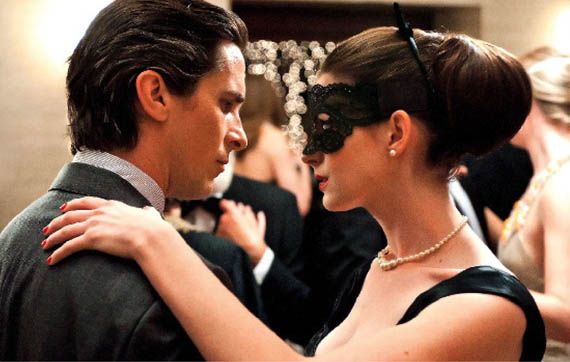
Ignatiy Vishnevetsky, Adam Cook, Mike Archibald and I had an interesting conversation about The Dark Knight Rises, published here.
The Man Comes Around?
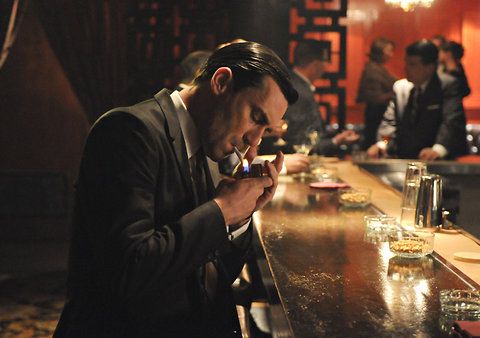
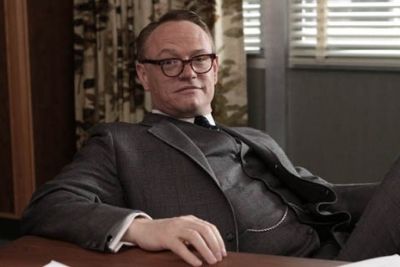
Is Don Draper a good guy? Is he capable of being one? Do, at the end of the day, the better angels of his nature outweigh his cruel-streak and sometimes blinding self-centeredness? Certainly, he's no Luke Danes or Eric Taylor--perhaps the only unambiguously good guys among prominent male characters in American television's twenty-first century renaissance. It's worth observing, though, that even Coach Taylor must overcome his own bout of selfish inflexibility in Friday Nights Lights' swansong season. Still, the ultimate decentness of these characters is never really in question. Over five seasons, Don Draper has perhaps grown more familiar and hence less enigmatic, as viewers have not only come to know some of the details of his shadowy past but also closely observed his behavior in various situations so that, when his actions sometimes appear inexplicable to other characters on the show, they make a certain sense to us. Don's moral make-up, however, remains for us as elusive as it does for his family, co-workers, and indeed for Don himself. What we think we know about our protagonist's moral compass is constantly in flux, with our assumptions and expectations confounded from week to week--something that's never been clearer (or rather, hazier) than in the show's marvelous fifth season.

To be sure, Don is a moral step up from the recent TV anti-heroes he's too often grouped with: Tony Soprano, Vic Mackey, Walter White. There's rarely any doubt on The Sopranos or The Shield that their protagonists are, morally speaking, shitbags--fascinating, charismatic, psychologically complex shitbags, yes, but almost certainly beyond redemption. Ditto Walt, who may have initially broken bad for the "right reasons," but the original premise of the series and of Walt's descent into crime are long since out the window; the chilling final shot of Breaking Bad's fourth season shows just how far we've moved beyond the moral defensibility of season-one Walt. In the grand tradition of Welles' Charles Foster Kane and John Wayne's Ethan Edwards in The Searchers, these men are not merely flawed, but doomed by the weight of their moral compromises. If anyone presents a good comparison to Don in this sense it might rather be someone like The Wire's Jimmy McNulty.

Don might perhaps remain in better shape in this regard than did McNulty after the fifth (and final) season of The Wire, considering the deeply dubious serial-killer plot that McNulty masterminds. Don's role, or maybe non-role, in the Joan-Jaguar situation does speak to a level of decency that elevates Don above the ranks of Pete Campbell(who Lane quite rightly calls "a grimy little pimp" during their fight scene) and the blissfully amoral Roger Sterling. This is not exactly rarefied moral air, granted, but when Joan says that Don is "one of the good ones," we're tempted to agree. But it's never that simple, is it? Certainly not on a show with this many moral shades of grey.

The tragic case of Lane's downward spiral this season, and Don's reactions to it, are illustrative of such fine nuances. When Don forces Lane out after finding out about his desperate financial manoeuvrings, it seems like the fairest, if not the most sympathetic or kind, course of action. Though we in the audience can clearly see the sad, awful road ahead for Lane, I really don't think the thought of suicide ever crossed Don's mind as he tried to comfort Lane by telling him that things can only get better from the rock-bottom of being fired. This is partly because Don seems largely incapable of generating anything like empathy; he is intimately familiar with starting over and reinventing himself and can't understand why this should be any less feasible a process for Lane. But Don also doesn't know what we do, in terms of the overwhelming strain that has been mounting on poor Lane all season.

The most morally murky scene, with regard to Don's handling of Lane's crisis, comes in the finale as Lane's widow tells him flat out that Lane was simply not the sort of man who could handle the kind of high-stakes ambition that energizes Don, and that the money being offered to her by the company is an insulting pittance compared to what her late husband put in, personally and pecuniarily. It's basically this season's version of the great "that's what the money's for!" exchange in last season's "The Suitcase," and Don still doesn't get it--how to say "thank you" or "I'm sorry" in a meaningful way, without having a check do the talking for him.

The finale, of course, ends on an ambiguous note, as a core aspect of Don's moral character hangs perilously in the balance. With Megan faded into the background (symbolized brilliantly within that virtuoso final sequence), after quitting advertising and proving unable to find acting work without Don's help, will Don the faithful husband lapse back into Don the compulsive philanderer? We'll have to wait until next season to find out, but my guess is that this season of increasing disagreement and disappointment between Don and Megan didn't conclude with such a scene to suggest that Don's going to respond, "Sorry, ladies, I'm taken." The acidic wisdom of Dr. Fay Miller remains on the mark: "I hope she knows," said Fay of Megan to Don, "that you only like the beginnings of things."

Death of a Salesman


My goodness! Matthew Weiner & Co. are, as ever, on top on their game. Astonishingly, Mad Men's fifth season seems poised to continue the show's streak of each season surpassing the one that preceded it. I'm going to write something at length after next week's season finale. In the meantime, Grantland is the place to go for the best in Mad Men coverage. See: Molly Lambert's thoughtful recap piece, "Guilt and Aftermath.". And: Andy Greenwald's "The Alien Mystique: Megan Draper and the Upending of the Mad Men Universe."

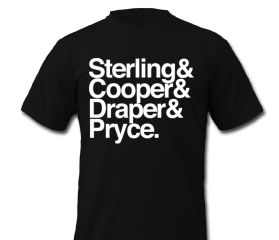
R.I.P. Lane Pryce. We'll miss you, Jared Harris. Also, my show-geek t-shirt is now dated.

Good Things


Brief notes.

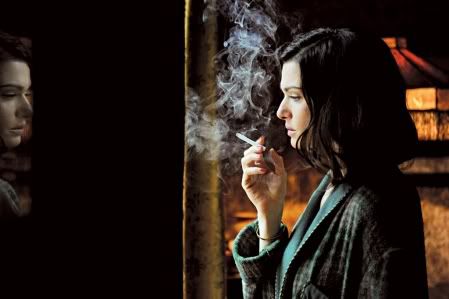
The Deep Blue Sea Terence Davies' latest effort transcribes an intimate narrative of doomed romance and unrequited love onto the highly coded civility and class dynamics of London, circa 1950. As in Davies' exquisite adaptation of The House of Mirth (this one's from a play by Terence Rattigan), the increasingly grim situation of its heroine (a never-better Rachel Weisz) is inextricably tied to the particular historical circumstances of her society and her awkward place within it, allowing Davies to both empathize with her tragic (or as Weisz's Hester corrects another character: "Don't say tragic; it's hardly Sophocles. Sad, maybe...") plight while longing for the lost world of textures, objects, sounds, and manners represented by his lovingly, meticulously recreated post-War England. In this regard, the core concerns and filmic motifs of The Deep Blue Sea connect neatly (and in some ways, perhaps serve to further) the personal/historical preoccupations that Davies has mined from the early classics Distant Voices, Still Lives and The Long Day Closes through to his recent cine-essay Of Time and the City; his standing as Britain's greatest living filmmaker remains firmly intact.

We Need to Talk About Kevin Lynne Ramsay's long-awaited third feature is either a sporadically stunning experiment, diluted somewhat by nods to narrative convention in its second half and by flirtations with too-neat cliches regarding troubled youths. Or it's a pitch-black satirical commentary on the "disturbed child" genre (think: The Omen, The Good Son, etc.) and how the implied failures of maternal essentialism built into the form of these films play in the post-Columbine era. A second viewing might help to determine which direction Ramsay's film is weighted more toward, but as a parent, following up is a less than inviting prospect. Either way, it's strong work and ambitious, to be sure, though it ultimately lacks the hypnotic tone and cadence that made her Morvern Callar so singularly striking.

Kathleen Edwards, Voyageur After many listens to this one, I'm still not quite sure whether Voyageur represents a step forward for Edwards or more of a lateral move, with its Justin Vernon sonics sometimes getting in the way of, or even undermining, the austere beauty of Edwards' aesthetic. A case-in-point is "Chameleon/Comedian," one of the new album's strongest tracks, yet one that registers more affectingly in its rougher-'round-the-edges live version (minus the Bon Iveriness of the studio cut). The sparer "House Full of Empty Rooms," meanwhile, would've fit nicely on Asking for Flowers, an album I'm not sure she'll ever top, even as she keeps on keepin' on as one of the best singer-songwriters working today.

Lana Del Rey, Born to Die Right, there's nothing on here that touches "Video Games," but "Carmen," "Dark Paradise," "Blue Jeans," the title cut and maybe a couple others are good enough that true believers should hold out hope that the duds included on this long-player were hiccups from the beleaguered production/post-production/promotion process--and that the best is yet to come, "Video Games" notwithstanding. For an artist who cites Kurt Cobain and the music from David Lynch movies as primary influences and whose pop instincts are (arguably) more idiosyncratic than Gaga's, I think that optimism is mostly justified.

Britney Spears, "How I Roll" A year since its release, Femme Fatale is the gift that keeps on giving. Take, for example, the chorus of what initially sounded like one of the album's lesser tracks: "{I wanna go) downtown where my posse's at / (because I got) nine lives like a kitty cat." The first half of this couplet contains what might be a euphemism for masturbation (a recurring subject on Britney's later records--sometimes subtly, others times not). Of course, "go downtown" could just as well be taken literally as an off-handed lyric, but the homonymic potential of the directly following "posse" suggests otherwise. Then the simile "like a kitty cat" invites a synonym for "pussy" as in feline but also in slang sexual terms, reinforcing the readings of "posse" as suggestive homonym (clearly mistakable in Brit's delivery) and the "go downtown" as masturbatory. Delivered in isolation, none of these components of the chorus ("go downtown," "where my posse's at" "kitty cat") would necessarily connote much beyond the banal of the lyrically throwaway, but taken together they signify in a way that I can't for the life of me think of a comparable instance in song lyrics, poetry, or prose. Perhaps Nabokov might've pulled off a similar linguistic trick, at some point?

Mad Men, Season 5 So far, so great. Don's dream in last week's episode--controversial in some quarters--felt like a natural extension of his own paranoia, guilt, and profoundly ambivalent feelings toward women. It's a strikingly dark bit of pop-Freudian foreshadowing (?), as effectively realized and memorable as some of the best Sopranos dream sequences; the cut from Don's dream-victim tucked under the bed to poor, scared, drugged Sally asleep under the couch is perhaps the most brilliant edit in the history of this superb series.
The JLT/JLT Ballot


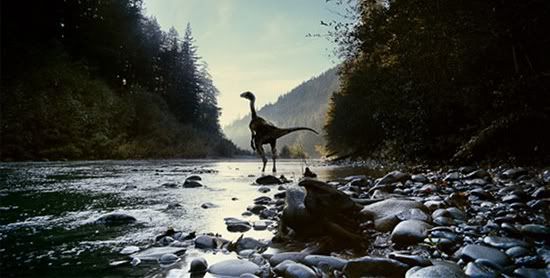
Picks listed in (roughly) descending order by preference. (Right, I like The Tree of Life. A lot. Dinos and all.)


FILM
The Tree of Life
Margaret
This Is Not a Film
Meek's Cutoff
Almayer's Folly


DIRECTOR
Terrence Malick - The Tree of Life
Kelly Reichardt - Meek's Cutoff
Chantal Akerman - Almayer's Folly
Bela Tarr - The Turin Horse
Lars von Trier - Melancholia


ACTRESS
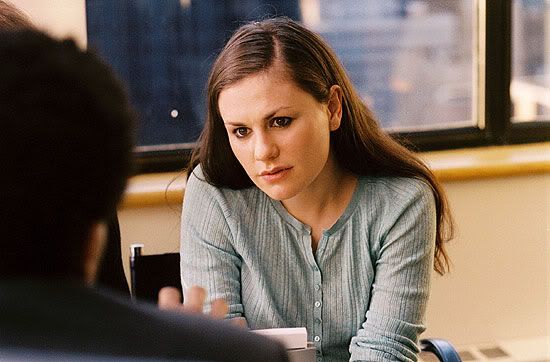
Anna Paquin - Margaret
Kirsten Dunst - Melancholia
Michelle Williams - Meek's Cutoff
Deannie Yip - A Simple Life
Kristen Wiig - Bridesmaids


ACTOR
Brad Pitt - Moneyball
Peyman Maadi - A Separation
Andy Lau - A Simple Life
Antonio Banderas - The Skin I Live In
Vincent Gallo - Essential Killing


SUPPORTING ACTOR
Brad Pitt - The Tree of Life
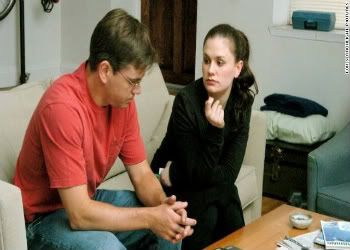
John Hawkes - Martha Marcy May Marlene
Albert Brooks - Drive
Bruce Greenwood - Meek's Cutoff
Viggo Mortensen - A Dangerous Method


SUPPORTING ACTRESS
Jessica Chastain - The Tree of Life
Jeannie Berlin - Margaret
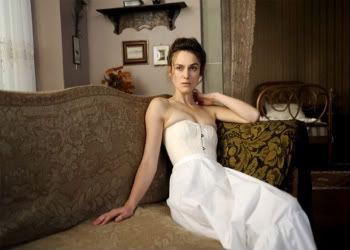
Keira Knightley - A Dangerous Method
J. Smith-Cameron - Margaret
Luna Zimic Mijovic - Dreileben: Beats Being Dead


SCREENPLAY
Kenneth Lonergan - Margaret
Ashgar Farhadi - A Separation
Steven Zaillian and Aaron Sorkin - Moneyball
Kristen Wiig and Annie Mumulo - Bridesmaids
Dustin Lance Black - J. Edgar


CINEMATOGRAPHY
Emmanuel Lubezki - The Tree of Life
Raymond Fromont - Almayer's Folly
Fred Kelemen - The Turin Horse
Christopher Blauvelt - Meek's Cutoff
Manuel Alberto Claro - Melancholia
Creation Myths


In a key scene from Kenneth Lonergan's Margaret, Anna Paquin's Lisa, a teenager who has witnessed (and is partly responsible for) the death of a stranger, confesses to Emily (Jeannie Berlin), the dead woman's closest friend that, in her final moments, the woman may have believed Lisa to be her deceased daughter and that this mistaken identity may have provided the woman some comfort. This line of thought, however, is vitriolically severed when Emily snaps at Lisa for cheapening her friend's death (and, more importantly, her life) by projecting onto it what Emily terms a self-important, juvenile fantasy. In calling bullshit on Lisa's semi-mystical musings (and kicking the stunned teenager out of her apartment), Emily delivers one of the few moments of lucid, forceful articulation in a film that's very much about the difficulty to articulate anything in a way that makes sense or means something to someone else. Emily is right, of course, that most people (and perhaps young adults most of all) tend to reduce the complexity of other lives in the creation of their own (inevitably solipsistic) personal narratives. Yet, reflecting back on the unforgettable death scene that comes near the beginning of Lonergan's film, Lisa isn't necessarily, or wholly, wrong.

Narratives of creation (including but not limited to an artist or artists' career trajectory, issues of authorship and "authenticity", financial constraints, technical elements of production, and the other artists or works that have served as an influence) almost invariably color and inform the way we experience art of all mediums. This is partly because we are taught (by implied example or in academic or professional settings) to ask these sorts of questions of art and partly because we don't interact with art in a vacuum and these narratives seem like natural ways of better "understanding" the work in question (e.g. "what it's doing" or alternately, "what it's trying to do"). This impulse to throw information at art and see what sticks has, if not necessarily intensified in itself, certainly been encouraged and exacerbated by the sheer amount of facts and "facts" accessible online.

Margaret and Lana Del Rey's song "Video Games" are fascinating cases of works that are especially inextricable from their available (recovered or constructed) narratives of creation. The back-stories of both are well-known (at least among those concerned), at this point. (In the interests of not simply embellishing readily available information here, a quick skim of the Wikipedia pages--where else?--and footnoted links for Margaret and Del Rey will catch up the unfamiliar.) Regarding Lonergan's film, Mike D'Angelo (who wrote about, and played a key role in organizing, the "#teammargaret" movement) observes of its belatedly released form and contentious editing process that "now people are having trouble distinguishing (or are just not bothering to distinguish) the ways in which the film is kind of a mess from the ways in which it deliberately employs messiness as a worldview." Margaret presents a unique case in this respect: some scenes, for instance, are so brief and abruptly cut away from that the viewer knows (or at least assumes) that Longergan was forced to slice them into slivers. And yet these scenes, through the few lines of dialogue or expressive notes of body language or facial gesture that remain, always suggest larger, deeper moments in a way that feels curiously intuitive. They also serve to really punctuate the dramatic resonance of lengthier scenes, such as the aforementioned death scene or the intense argument between Lisa and Emily.

That is to say, the fundamental power and brilliance of Margaret remains intact, even if Lonergan's full "vision" for the film does not. If, per the script of devout auteurism, we must class it as a "flawed masterpiece," then so be it. The Magnificent Ambersons and Eyes Wide Shut, to cite two famous examples from this category, are superior to most else in cinema, "fully-realized" or otherwise; if Lonergan's film isn't quite on the level of Welles' and Kubrick's, it is still more interesting and more accomplished than almost any other film released in theaters last year. Filmed more than half a decade ago, it's the only American movie besides Spike Lee's great 25th Hour to truly capture the damaged, confused, and volatile state of post-9/11 America (and in both cases, specifically New York City). It's an allegory that draws its power from pin-point specificity; a work of indelible prose that draws its title from a poem and in which the fragility and impermanence of steel buildings and of human lives are movingly rhymed on screen.

Margaret is also a classic coming-of-age study, examining the various roles that a girl like Lisa is made to pass through or awkwardly shift between as she becomes an adult (like her stage actress mother? her well-meaning math teacher? the bluntly assertive Emily?). In this respect, Lonergan's film has a lot to do with Del Rey. Not so much with her song, "Video Games", which is an exquisite piece of sultry-sad pop that's just about perfect, and maybe more remarkably, comes from what sounds like a fully-formed voice. Rather, Lisa's turbulent process of "becoming"--as well as the lingering question of how authentically representative Margaret is of its writer-director's intentions--intersect tellingly with the exhaustive online detective-work and backlash that shortly proceeded the arrival of Del Rey (whom any music blogger worth his weight in adjectives can tell you is "really" Lizzy Grant) and her superb song.

Writing eloquently about Del Rey's critical reception, Tom Ewing notes, "This fear of being fooled is hardly a new phenomenon, but it's one of many things that Web discourse amplifies and accelerates. The same networks that let crowds celebrate and create around what they love also empower them to strip new culture down, probe it for weaknesses, and demand to know everything about it." Reflecting on discourses surrounding authenticity and performance, Ewing wonders how the blogosphere would have reacted to the constructed persona of a pre-Internet artist like David Bowie. The more recent case of Lady Gaga, reduced from Warholian enigma to tabloid ordinariness, seems somewhat comparable and instructive. I wrote an article five years ago about Britney Spears, upon the release of Blackout and the nadir of her rough patch, and some of the misogynistic hostility I addressed there seems to apply to the narrative of Del Rey's prefab inauthenticity (especially for those who focus on Del Rey's supposed cosmetic surgery). But Bowie, Gaga, and Britney are full-fledged pop stars, and must be considered as such.

Del Rey may yet be (her major label debut, Born to Die, is due out at the end of the month), but for now, she should instead be considered under the Christgau-coined heading of "semi-pop," or else its Internet Era variant, "blog pop." This is not because "Video Games" is a less full-fledged pop song in any generic sense than Adele's "Rolling than Deep," but because YouTube views are not the same thing as units moved. Her peers are M.I.A., Janelle Monae, Azalia Banks, even Lily Allen who "came up" through the music blogs before becoming a bona fide celebrity (at least in her native Britain). And if the mainstream and tabloid media are tough on (seemingly) wayward mega-stars, the professional or semi-pro critics and enthusiastic amateurs that make up the music blogs and webzines are, in their own obtuse way, just as vicious and far more impatient with the artists they cover-- especially female artists, who are categorized as much in terms of their sex appeal or lack thereof as are mainstream celebs by the taboid press. Perhaps this is because, within the echo chamber that is this corner of the Internet, the illusion that artists like Del Rey and Banks are household names like Spears and Gaga implies the subsequent obligation to subject these "viral" up-and-comers to the kind of scrutiny to which Us Weekly and Perez Hilton hold the mega-stars.

It should also be kept in mind, however, that many if not most of the writers in question "came up" (how, where, and by what means one "came up" are always key considerations in narratives of authenticity) on '80's and '90's indie rock, and an ideology of DIY authenticity as religious as cinema's auteur theory. When, in the wake of music's supposed digital democratization, these writers profess devotion to the eccentric pop of Robyn and Janelle Monae, they do so under essentially the same contract terms as stipulated in their bootleg cassette-sharing formative years. This concept of what is or is not "authentic" is then coupled with the notion that music bloggers "made," or created, such artists (as opposed to generally admired major stars like Beyonce, Rihanna, and Justin Timberlake, in whose career trajectories and origin stories music writers have less of a personal stake). Hence, the bitchy reaction against someone like Del Rey, when it is discovered that Lizzy Grant and various industry professionals created Lana Del Rey before "Video Games" went viral.

Ironically, the greatest artist of the '90's and the artist behind last year's finest album, Polly Jean Harvey, has for two decades rejected attempts to "understand" her music through neat conceptions of authenticity and biographical exposition. Shifting ever between voices, roles, and musical styles, Harvey has produced art as (seemingly) personal as it is consciously performative, while blurring such distinctions as if they're beside the point. Judging from "Video Games" (and, to a lesser extent, her other early tracks), Del Rey seems also to be aware of where the boundaries lie and how to fuck with them--a promising sign for her chances of surviving, and maybe transcending, Web stardom.

The hypnotic video for "Video Games," directed and edited by Del Rey herself (!), certainly suggests as much. The clip weaves together disparate archival and contemporary video footage: Hollywood red carpets past and present; palm trees against the California sky; skateboarders navigating empty urban spaces; POV driving shots across bridges and down freeways; an American flag swaying in the breeze; and Del Rey herself, who dangles an unlit cigarette like the kind of Old Hollywood femme fatale her pseudonym suggests as she affectedly delivers the kicker: "I heard that you like the bad girls, honey / Is that true?" Soundtracked by Del Rey's haunting part-Chan Marshall, part-Patsy Cline, part-something-else-altogether croon, the video constructs "real" footage into a dreamy mytho-mosaic of California (made, quite appropriately, by an artist from back East). Lonergan's film, meanwhile, is a work of scripted fiction that captures the essential reality of post-9/11 New York. Both Margaret and "Video Games" are, finally, the real deal: works of art that exist within tangled webs of discourse, and yet transcend the noise of information through something like profundity.
Silence...We're Rolling


Good indicator that I was probably out of step with music culture in 2011: I haven't even heard of the album that won this year's Pazz and Jop poll! Then again, I slotted the poll's runner-up first on my ballot and got my two cents printed on P&J's single of the year. So, maybe I wasn't that out of step?
40 Performances: 2011


01. Anna Paquin - Margaret
02. Kirsten Dunst - Melancholia
03. Michelle Williams - Meek's Cutoff
04. Deannie Yip - A Simple Life
05. Kristen Wiig - Bridesmaids
06. Brad Pitt - Moneyball
07. Brad Pitt - The Tree of Life
08. Jessica Chastain - The Tree of Life
09. Peyman Maadi - A Separation
10. John Hawkes - Martha Marcy May Marlene
[see 11-40 here]