Higher Power


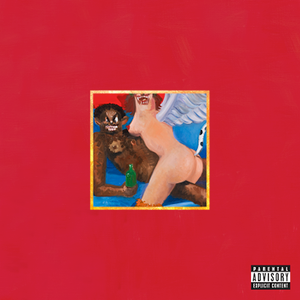
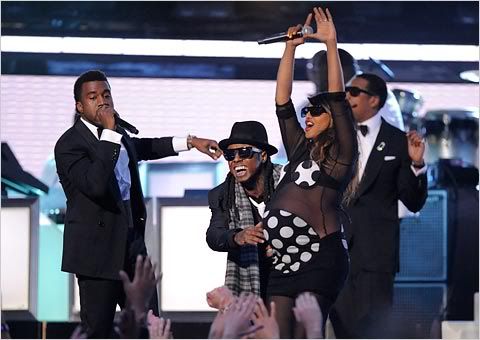
What My Beautiful Dark Twisted Fantasy proves, first and foremost, is that Kanye West is quite simply working at a different level of consistency and creative progress than every other recording artist today. I'll write at greater length about the specifics of this strange, masterful, and indeed very beautiful record in the near future, but after three start-to-finish listens and several more of early favorites, I'm hard-pressed to imagine a better album than this materializing before the year's end. And yet, perhaps most remarkably, it's only--and this verdict, admittedly, will very possibly shift with further and closer listening--my third-favorite Kanye album, though part of a trifecta that I'd unreluctantly call masterpieces followed by two exceptionally fine records that are fairly close (my list, at the moment goes: 808's, Late Registration, My Beautiful Dark..., Graduation, College Dropout, with the classic early mixtape Kon the Louis Vuitton Don meriting mention).

That's personal particulars, granted, but with the consensus forming around this one (the question, at this point, isn't whether it'll win Pazz & Jop but how huge a margin), it certainly begs the question of when the last time an artist or group maintained such an impossibly high standard over a stretch of five or more albums and roughly a decade. PJ Harvey in the '90's comes to mind, but Polly was always basically a cult/critics' artist, which in no way diminishes the accomplishment of her run but it does render it somehow less awe-inspiring and seemingly unlikely. Prince in the '80's, maybe? Or even, the Beatles in the '60's?! That's the league we're talking about here, suggesting that Kanye's legendary ego, however off-putting, maybe isn't too far off the mark. I mean, is it even bragging when you're just that good?
Every Man for Himself and God Against All


Sometimes the film world needs a swift kick in the ass. Especially the (quasi-)historical drama genre. Valhalla Rising is just that and plenty more besides--it's a tough-as-nails, weird-as-fuck work of Pure Cinema. Essentially sui generis, Nicholas Winding Refn's visceral Viking yarn is dubiously speculative as history but any semblance of "plot" here feels largely like an excuse for forging a totally immersive, almost overwhelming visual-aural experience. Refn's film packs more deliriously radical filmic vision in its first twenty minutes than I've found in any full film this year, save for Uncle Boonmee.

That's not a knock to the numerous good-to-great movies 2010 has, thus far, delivered, mind you. Valhalla Rising is just working from a completely different toolbox. There are echoes here of Terrence Malick (human violence contrasted with the sublimity of a lush natural landscape) and, to a more prominent extent, the limit-pushing mad genius of Werner Herzog (with Danish star Mads Mikkelsen standing in well as Refn's Klaus Kinski) and yet, while such points of reference are surely high praise, they actually don't help much in getting to the heart of why this movie matters. Once in a while, words just inevitably fail in expressing the real virtues of a piece of art. This is one of those cases. See it immediately.
Golden Age


The past decade has been arguably the most fruitful and varied in television's young history as a storytelling medium. This is especially true of the hour-long drama format, which dominates my list of the past 10 years' 10 best shows. I'll note, too, that for the list I'm considering any series that aired in the new millennium, no matter how long or short its run, including shows now off the air alongside those still running. In the case of shows that began their run before the 2000's, I'm nevertheless factoring in the entirety of the series as it seems rather pointless to consider a fragment of a work as opposed to its cumulative impact.

First, some runners-up:

-Arrested Development The flat-out funniest show of the new millennium.

-Curb Your Enthusiasm A close second in that department.

-Deadwood I don't love this show as fervently as many do, but it's a tremendous achievement either way.

-Dexter At its worst, Dexter is repetitive, superfluously morbid, and contrived. Yet even then, it's compulsively watchable, due largely to Michael C. Hall's pitch-perfect title turn.

-Firefly My least-favorite Joss Whedon show--partly because, at just one season, it simply didn't have the opportunity to explore some of the more interesting directions it hinted at and partly because (while I like him okay) I don't find Nathan Fillion as compelling or appealing as everyone else apparently does.

And a special mention:

Boardwalk Empire I know, I know--we're only six episodes in, which is why I've reserved this spot for Terrence Winter's brainchild. If the last couple episodes (and especially that awesome musical montage that closed "Nights in Ballygran," the show's best moment thus far) are any indication, this show will deserve a more official slot on such a list as this in the years to come.
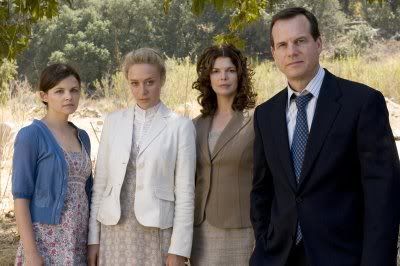

10.Big Love Bill Paxton is very good as Bill Henrickson, a polygamist entrepreneur living with his three wives in suburban Salt Lake City, but the secret to this show's success is its incredible ensemble. Unlike several shows occupying higher slots on this list, Big Love's central themes do not rest permanently, or ultimately, on its male protagonist's shoulders. His wives, played by Jeanne Tripplehorn, Chloe Sevigny, and Ginnifer Goodwin each take turns as the show's dramatic center, and each of these characters (and performances) is rich enough to be up for this unique strategy. It's key supporting performances by Harry Dean Stanton, Grace Zabriske, and Daveigh Chase, though, that serve as the difference-maker in landing this one in my 10-spot ahead of the also-rans.
Best Season: 2
Best Episodes: “The Happiest Girl”; “Sacrament”; “Come, Ye Saints”
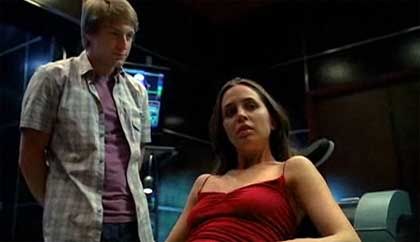

09.Dollhouse Another woefully too-short-lived Whedon work, but at least this one received double the lifespan of poor Firefly. And it uses its two seasons brilliantly, traveling through bold and strange territory previously uncharted on television; word of the show's premature cancellation resulted in over-accelerated plot pacing that's season two's only real, glaring flaw. The narrative arc(s) of that season could've easily sustained three or four. Unfurled in greater detail, they would've no doubt yielded more engrossing drama, perhaps comparable to the heights of Buffy and Angel. Still, what we've got is pretty great. At its peaks, Dollhouse is as awe-inspiringly accomplished as anything Whedon's touched. Like the best of science-fiction, the show is ominous and eerily prescient, forecasting a future less distant than we'd prefer to believe.
Best Season: 2
Best Episodes: “The Attic”; “Belonging”; “Epitaph One”
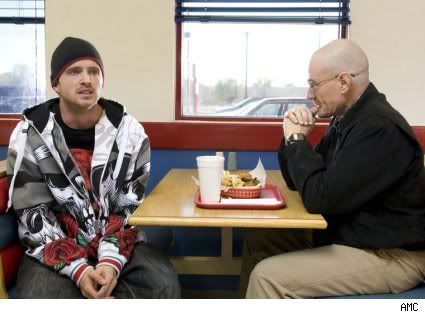

08.Breaking Bad At its core, Vince Gilligan's series is one of the most poignant yet fiercely unsentimental studies of a surrogate father-son bond in any artistic medium. Bryan Cranston and Aaron Paul are both fantastic; their rapport feels so emotionally raw and true. Neither they nor Gilligan ever pander to audience hopes or expectations. The show has a heart, but it's a tough and jagged heart, projecting pride and resentment and bitter frustration and, occasionally, real warmth that's all the more affecting for its infrequency and guardedness.
Best Season: 3
Best Episodes: “Full Measure”; “ABQ”; “Fly”
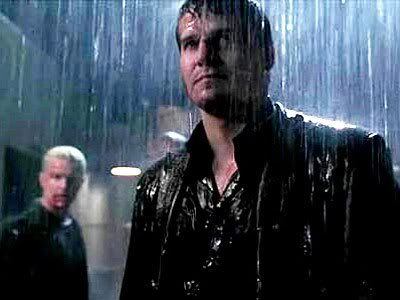

07.Angel To call Angel TV's greatest spin-off means what exactly? That it's better than Frasier? That's certainly an understatement (and I like Frasier). To be sure, Angel had a major advantage from the outset that Whedon's later shows did not have--it was working with characters and a general mythology that we already knew and loved from Buffy. But Angel is very much its own show, transplanting the action from little Sunnydale to big, bad L.A. and from high school, college, and the cemetary to a film noir detective's office, a gorgeous Old Hollywood hotel, and the sleek downtown high-rise of a demonic law firm. Speaking of which, Wolfram and Hart is Angel's secret weapon. It's their sinister shadow behind every small-time villain that ties Angel's five seasons together in a way that Buffy's individual season arcs never so tightly cohere. It's also what brings us to one of the all-time great series finales, “Not Fade Away,” wherein Angel and Co. go all in for the ultimate Good Fight.
Best Season: 5
Best Episodes: “Not Fade Away”; “I Will Remember You”; “Waiting in the Wings”
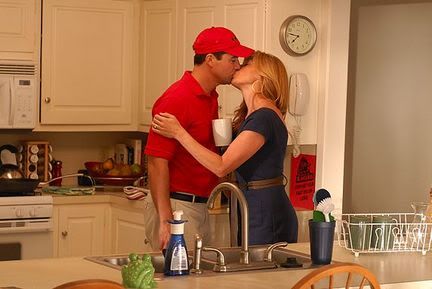

06.Friday Night Lights Small-town Middle America (and more specifically Texas) has never been presented so multi-facetedly on television or in film as it is in Peter Berg's small-screen adaptation of a merely fine film he'd already directed from Buzz Bissinger's famous non-fiction book. The performances across the board are spot-on, but Kyle Chandler and Connie Britton deserve special mention for the most realistic portrait of a (functional) married couple in TV history. Eric and Tami Taylor disagree and they argue; they sometimes bite their tongues and make compromises; they support each other's passions and, at the end of the day, they clearly maintain boundless affection and admiration for the person with whom they've chosen to share their life. Their relationship is, in effect, a microcosm of the care and sensitivity with which this show treats all of its characters, from the ne'er-do-well local lothario to the used car salesman who cares more about winning high school football games than about selling cars.
Best Season: 3
Best Episodes: “New York, New York”; “Tomorrow Blues”: “Laboring”
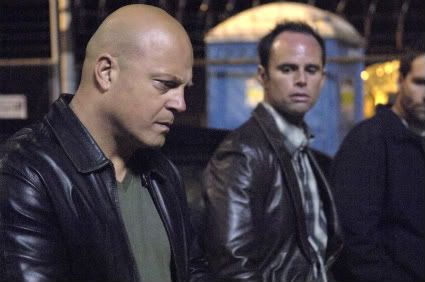

05.The Shield Shawn Ryan's controversial cop drama is one of the Great American Tragedies. And it's a prime example of television's unique advantages in detailing the rise and fall of an anti-hero as deeply layered as Vic Mackey (astonishingly played by Michael Chicklis). As I noted in my film fest blurb on Carlos, there's virtually no way in a two-hour movie that we could feel the many different and conflicting things we come to feel about this ruthless yet magnetic man. It's precisely because, in the early seasons, we relish Mackey's charismatic, bad-boy swagger that the level of his ultimate despicability--and the brutal irony of his end-of-series fate--hits us so hard. The final season, focusing primarily on the fatally soured relationship between Mackey and Strike Team co-founder Shane Vendrell (the amazing Walton Goggins), raises bad-cop pulp to positively operatic heights, culminating in acts of unspeakable violence. It's one of very few shows daring enough, after seven turbulent seasons, to leave longtime viewers with an inevitable bad taste in their mouths. The series finale, "Family Meeting," is a no-holds-barred masterpiece that's impossible to shake and viscerally recolors so much of what's preceded it.
Best Season: 7
Best Episodes: "Family Meeting"; "Postpartum"; "Dominoes Falling"
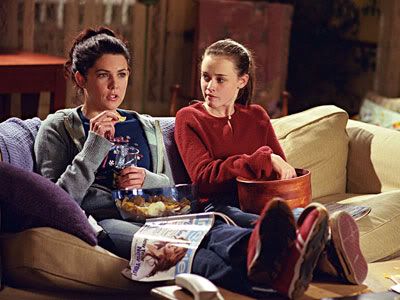

04.Gilmore Girls The most illustrative statement on class divisions and tensions in contemporary America isn't some angry, radical polemical tirade. It's a mother-daughter dramedy set in a scenic Connecticut hamlet populated by well-meaning eccentrics. Amy Sherman-Palladino's series gets it all right. In charting the romantic and financial highs and lows of Lorelai and Rory Gilmore, the show presents both the poisonous effects of money and the lure, comfort, and necessity of it. Among the show's most consistently interesting (and surprising) characters are Lorelai's wealthy parents, Richard and Emily (Edward Hermann and Kelly Bishop, both excellent). The titular twosome's Friday night dinner visits to their Hartford mansion make for many of the show's memorable (and socio-culturally invested) scenes, best of all in the episode, "Friday Night's Alright for Fighting," which ends with an epic series of heated discussions, humorous chats, and repressed family arguments resurrected anew--a nifty encapsulation of Lorelai's complicated relationship with her parents and with her own high-society past.
Best Season: 3
Best Episodes: "They Shoot Gilmores, Don't They?"; "Girls in Bikinis, Boys Doin' the Twist"; "Friday Night's Alright for Fighting"
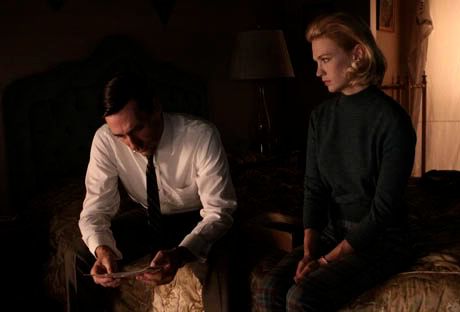

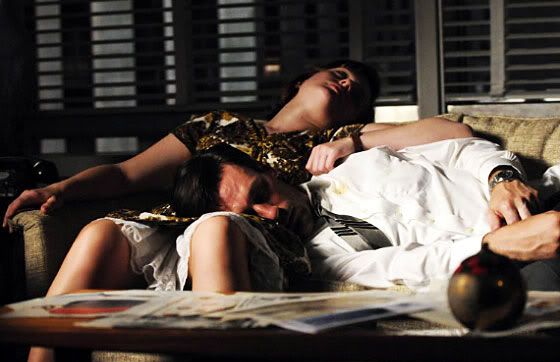
03.Mad Men Whenever I try to convince non-Mad Men watchers to start tuning in (or better yet, play DVD catch-up since the show relies more heavily than most on our recollection of events from previous seasons), they often respond that they've been meaning to because it looks really fun, because they love the era, the fashion, the music, what they perceive as the show's "attitude" or its sense of cool. I encourage their enthusiasm, partly because I like the idea of a world where I can talk Mad Men every in-season Monday with every person I happen to meet and partly because, yeah, the show can be pretty damn cool. But I also can't help but wonder if they'll perhaps be disappointed. The show's marketing and media-exposure focus (understandably) on its stylishness and sexiness, with briskly edited montages of Joan tossing off catty one-liners in a curve-hugging dress and Don looking impossibly dapper, cigarette and glass of Scotch in hand. Let the cameras roll just a second longer, though, and you see disappointment and regret, sexism and addiction, isolation and melancholy. This is one of the most understated and genuinely moody shows to ever air--exactly as schizophrenic as the American cultural psyche of 1960's.
Best Season: 4
Best Episodes: "The Gypsy and the Hobo"; "The Suitcase"; "Babylon"
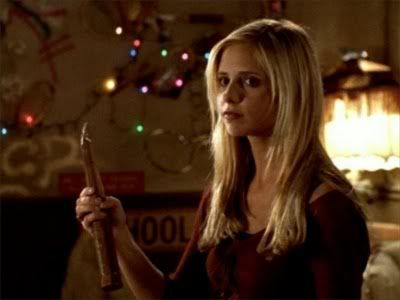

02.Buffy, the Vampire Slayer Unlike most of the other shows on this list (particularly those on premium cable), Buffy was never a fabulous-looking high-budget product. The show's vampires and myriad other creatures often look rather laughable, its fight scenes too noticeably staged and body-doubled, and its sets a little flimsy and over-recycled. But this relative cheapness perfectly suits TV's greatest balancing act between tongue-in-cheek camp and real, piercing drama. The slayers-and-vamps mythology draws you in with its soap-opera irresistibility, but Joss Whedon's signature series wouldn't rank nearly so high on this list if weren't for the exquisitely developed characters and the decidedly non-fantastical or campy problems they frequently face. Buffy Summers doesn't just have to fight the forces of evil--hell, sometimes that seems like the easy part; she also has to deal with the heartache of breaking up with her first serious boyfriend, serve as a mother for her younger sister (while grappling with her own grief) when their mother unexpectedly dies, and pay the bills by working a minimum-wage fast food job. That's life--even when you're the Chosen One.
Best Season: 4
Best Episodes: "Once More, with Feeling"; "Conversations with Dead People"; "The Body"
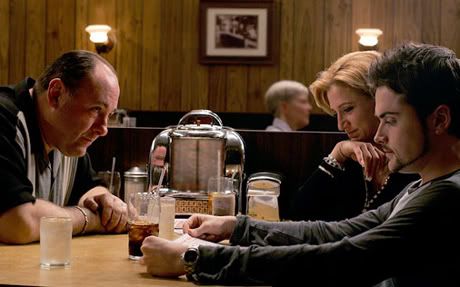

01.The Sopranos What is there left to say, at this point, about The Sopranos? So much has been written and argued about David Chase's landmark series that it's hard to offer a fresh voice in the mix. Yet unlike other pop-cultural touchstones, The Sopranos has lost none of its potency through tireless analysis and dissection. Watch "Whitecaps," for example, the unbearably intense fourth season finale, in which tensions between Tony and Carmela come to a bitter head. It's downright searing. Or the Paulie-and-Christopher-stuck-in-the-woods stand-alone "Pine Barrens." It's just as hysterically funny, and as fascinating a supporting character study, as the night it aired. When in the canonized first season classic "College," Meadow asks her dad if he's in the mafia, we still cringe a little and hold our breath for a second. "There is no mafia," Tony at first testily replies, before conceding a little ground to a daughter he knows is now too smart and perceptive to be completely bullshitted. Tony Soprano is the greatest character in television history, and one of the finest creations in American fiction of any medium, due largely to James Gandolfini's towering performance. He's often repugnant and yet oddly lovable almost despite himself (think of him and A.J. preparing ice cream sundaes to the soundtrack tune of "White Rabbit"); he's nostalgic for a past he over-romanticizes while, at the same time, he's more progressive than he can afford to admit (remember his conversations with Dr. Melfi concerning Vito's homosexuality and his private "live-and-let-live" viewpoint?); he strives to gain greater control over his emotions but recoils from the realization of his anxiety's deep-rooted source (read: Nancy Marchand's Livia Soprano, another of TV's most utterly indelible characters). The show's ambiguous final scene is Chase's ultimate masterstroke. While some viewers bemoaned its lack of clear resolution, a pat conclusion would've felt like a cop-out for a show this unfailingly complex.
Best Season: 5
Best Episodes: "Whitecaps"; "Long Term Parking"; "College"
Godamnit.

It's one thing to be stifled by arguably the best pitcher in baseball--Game 3 was certainly an embarrassment but kind of an inevitable one with the freakish Cliff Lee on the mound. Game 4 was something much, much worse. Hell, right up until that pitch to Bengie Molina, A.J. Burnett was more solid than any of us could've reasonably expected, and better by far than Sabathia or Phil Hughes in the first two ALCS games. And what happens? Our hitters pop up or ground out meekly with runners in scoring position while our bullpen serves (probable and deserved AL MVP) Josh Hamilton batting practice-style home run pitches on a freaking silver platter!

The 8th inning tonight might well have been the most infuriating moment in Yankees baseball since the dreaded 2004 ALCS meltdown against Boston. Down four runs, we miraculously load the bases on three straight walks and with just one out, we...somehow manage to blow it. Christ! Couldn't Nick Swisher follow Jeter's do-whatever-it-takes lead and at least have grimaced a little when that pitch grazed his pant leg? Apparently not. Because he is an idiot who doesn't know how to win.

What else is there to say? I'd bemoan Mark Texiera's hamstring injury if he wasn't a useless 0-for-14 for the series (Cano and maybe Jeter tonight have been our only respectable offensive performers this series ). As recently as this past weekend (see my third film fest post), I genuinely liked the Yankees' chances of repeating as World Series Champions; now the best thing I can realistically look forward to is throwing enough money at Lee to sign him this offseason.
VIFF Wrap-Up: Best of the Fest


Josh

TOP TEN FILMS
01. Karamay (Xu)
02. Uncle Boonmee Who Can Recall His Past Lives (Apichatpong)
03. The Tiger Factory (Woo)
04. I Wish I Knew (Jia)
05. Around a Small Mountain (Rivette)
06. Carlos (Assayass)
07. Winter Vacation (Li)
08. Aurora (Puiu)
09. L.A. Zombie (LaBruce)
10. Dear Prudence (Zlotowski)

FEMALE PERFORMANCE (LEAD)
*Sibel Kikelli - When We Leave

MALE PERFORMANCE (LEAD)
*Edgar Ramirez - Carlos

FEMALE PERFORMANCE (SUPPORTING)
*Nora von Waldstätten - Carlos

MALE PERFORMANCE (SUPPORTING)
*Dustin Hoffman - Barney's Version

Teresa

TOP TEN FILMS
01. Mysteries of Lisbon (Ruiz)
02. Cities on Speed - Mumbai Disconnected & Bogota Change (Nielsson, Jacobi, Dalsgaard)
03. Don't Be Afraid, Bi! (Phan)
04. Dear Prudence (Zlotowski)
05. Peace (Soda)
06. Cold Weather (Katz)
07. Chicks (Letourneur)
08. Certified Copy (Kiarostami)
09. Mammalian (Wolf)
10. City of Life (Mostafa)

FEMALE PERFORMANCE (LEAD)
*Juliette Binoche - Certified Copy

MALE PERFORMANCE (LEAD)
*William Shimell - Certified Copy

FEMALE PERFORMANCE (SUPPORTING)
*Thuy Hoa - Don't Be Afraid, Bi!

MALE PERFORMANCE (SUPPORTING)
*Denden - Cold Fish
VIFF, Part 3: Welcome to the Future


And a few more films, for good measure:

Aurora Cristi Puiu's follow-up to his much-revered The Death of Mr. Lazarescu might well be some sort of rigorously achieved masterpiece, but if so, it's one for which it's exceptionally difficult to find a psychological point-of-entry into the narrative. The three-hour film spans (so far as I can tell) about 36 hours in the life of a Bucharest man. At seemingly random points, the man commits serious crimes, but for the vast majority of the run-time, we watch the man eat, drive around, tinker with his gun, redecorate his apartment, shower, etc. This is not altogether different from Gus Van Sant's approach in Elephant, where the Columbine shootings are considered mainly through the prism of the quotidian events leading up to them, and both Puiu and Van Sant's films employ elliptical structures rather brilliantly. But where Elephant is dreamy and poetic, Aurora is utterly a work of realism, often almost oppressively mundane, though so meticulously composed that Puiu (who also plays the man) keeps his audience firmly at arm's length rather than drawing us in with the you-are-there immediacy of a pseudo-documentary form. The result is a film that, for me anyway, is hard not to "admire" but very hard to actually "like" (or want to sit through again).

The Illusionist Full disclosure:I caught tonight's closing night movie semi-drunk after watching Game 1 of the ALCS at a bar nearby the theatre, which inevitably colored Sylvain Chomet's Tati-inspired charmer in two ways. On the one hand, the film would've had to be an unqualified dud to not benefit from the generousness of my post-game mood. On the other, it would've had to be pretty spectacular to top the Yankees' dramatic come-from-behind win down in Texas. Which is to say: good movie, great game.

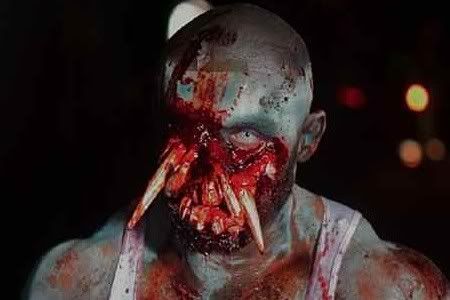
L.A. Zombie Watching Bruce LaBruce's radical, confrontational vision of life on the margins of Los Angeles, I couldn't help but think of the radical, confrontational music of one my favorite bands, X, and especially of the track (alas, from Wild Gift not Los Angeles) "We're Desperate." The chorus goes, "we're desperate/get used to it"; during the first verse Exene Cervenka and
John Doe interject in unison, "Some people give me the creeps!" Either of these lyrics could serve as a tagline for L.A. Zombie, which is most explicitly about gay male ghetto-ization but also examines homelessness and schizophrenia. Saying that this is not for all tastes is a considerable understatement, but it's an explosive fuck-you (literally and figuratively, natch) of a movie--angry, mordantly funny, unflinchingly grotesque, and smarter than you think.
VIFF, Part 2: How Soon Is Now?


Around a Small Mountain If this is indeed Rivette's final film, it's a poignant and effortlessly graceful swansong. It's only "minor" if minor and modest are inextricably synonymous because it is certainly modest in scope and length but it's as quietly masterful as anything he's made in the past couple decades. Observing the rituals, relationships, and secret histories of a French circus troop, Rivette offers the wisdom of not just age but experience on the vitality of performance and of community.

Carlos If length equals ambition, give Olivier Assayas a lot of credit; hell, even if it doesn't (automatically), this is pretty heady, accomplished stuff. It's essentially Goodfellas reworked with the perfect criminal-rock-star-case-study for Assayas' globe-trotting, iconographically hip aesthetic. And if it's politically dubious, it's also inevitably compelling (due in large part to Edgar Ramirez's charismatic, Deniro-worthy transformation/performance) the same way the best examples of modern dramatic television are compelling (wasn't this, in fact, made for French TV?). Of course, Carlos is a hypocritical, egotistical scumbag--so are Tony Soprano and Vic Mackey and Walter White. In a two-hour movie, all of the above would probably seem irredeemable. But with extended run-times come unexpected reserves of empathy. Carlos strives throughout the narrative to be larger than life, something beyond his crimes or the organizations he represents, and finally, ironically he is: he's a sad and bloated human metaphor for a brand of political zeal and militant leftism that has long since passed its expiry date.

Certified Copy I remember reading several years ago that Kiarostami was an enthusiastic admirer of Haneke's Cache--a film I more casually admire, though not nearly as much as any of Kiarostami's films made to that point. I mention this because Certified Copy--not a bad movie per se but the only entry in Kiarostami's oeuvre that I would not recommend--is a tedious, excessively schematic exercise that's neither moving as a commentary on relationships nor edifying as some oblique statement on cinema or performance or artistic authenticity. The driving scene near the beginning is something of a tease for the Kiarostami faithful, while what follows strongly (and in some cases, probably intentionally) evokes myriad superior films--Rossellini's Voyage in Italy, Richard Linklater's Before Sunrise and Before Sunset, Wong's In the Mood for Love, any number of Cassavetes works--that serve as glaring proof of Certified Copy's mannered Euro art-film mediocrity. Kiarostami's signature formal playfulness is present and yet here it feels rather empty and purely semantic; woefully absent in this coolly polished product is the sense of organic spontaneity that has always ranked highly among Kiarostami's aesthetic virtues.

Chicks Sophie Letourneur's film is almost eerily in-step with the late-teen/early-twentysomething urban culture of Right Now, from girls staring seemingly permanently at their cell phone screens to boys relishing the perceived exclusivity of liking films by Hong Sang-soo and Stanley Kwan (and shrugging off one of their girlfriends when she tries to enter the conversation by mentioning Wong Kar-wai, whom they've snobbily moved on from). The cinema-verite style suits the subject nicely, and as the film progresses, individual characters do emerge, though in the film's communal spirit (the superior French title translates as Life at the Ranch) identities and personal problems begin to blur within the group. Characters inevitably complain of boredom when they're momentarily alone or even with just one friend. Letourneur clearly understands the importance of the large, noisy flock to this generation; the only glaring absence here is that of Facebook or MySpace.

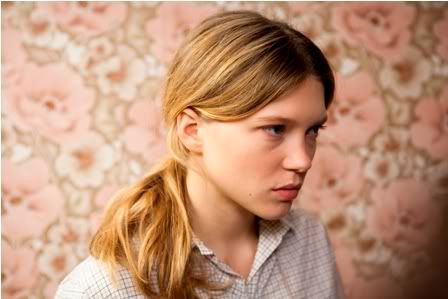
Dear Prudence Rebecca Zlotowski's debut feature is both an uncommonly sensitive coming-of-age story and a deeply personal meditation on how life feels following the death of someone very close to us. It's this balance between universality and specificity--both painful, both true--that makes Dear Prudence something quite special. Zlotowski's use of propulsive pop-rock on the soundtrack is also striking and sometimes prevents her film from registering as too self-consciously Dardenne Bros.-esque. Her frequent use of teenage nudity and sexuality, however, feels closer in spirit to, say, Larry Clark than Catherine Breillat, lingering a tad lecherously over young flesh without really implicating the audience in the act or thinking critically about sexuality; which is to say, if this film were made by a male, he'd likely be called a creep. But, of course, that's a moot point: Zlotowski understands her female characters on a level that someone like Clark could never hope to, and lead actress Lea Seydoux is a revelation, sporadically reminiscent of Anne Wiazemsky in Au hasard Balthazar in her purposeful blankness. The somewhat ambiguous closing moments are tender and beautiful, suggesting some frequency on which death shall have no dominion.

Gold and Copper Not a great film by any stretch, but a fascinating moviegoing experience partly for that reason. Unlike the Kiarostami's and Panahi's Western festival audiences have grown accustomed to as representations of Iranian culture, Gold and Copper is an actual popular, mainstream Iranian movie, having won several awards at Iran's equivalent to the Oscars. Seeing the film with a predominantly Iranian-Canadian audience added an extra dimension of interest. The story--a mullah-in-training moves his family from the country to Tehran, then his wife is stricken with multiple sclerosis and his plans for life begin to spiral out of control--could easily be a Hallmark tear-jerker with only the details switched around. But it's gently subversive in its approach to gender roles--our hero is forced to play Mr. Mom as his wife's health deteriorates--and irresistibly sweet-natured.

I Wish I Knew Jia Zhang-ke's Shanghai movie might be the most successful of his recent documentary-fiction hybrids. The stories from Shanghai lifers and expatriates alike--my favorite scene is an interview with Hou Hsiao-hsien, speaking about Flowers of Shanghai, aboard a train in Taiwan--provide fascinating and haunting details of the city before the Cultural Revolution. Meanwhile, Jia's eternal muse, Zhao Tao, wanders transfixedly around modern-day Shanghai as we mull over just what exactly Jia is getting at. When the generation being interviewed dies out, we can't help but think, will the final links to pre-Mao Shanghai (and China in general) be irrevocably severed? And if so, what will that mean? It's certainly a lot to chew on, and another superb Jia effort.

The Strange Case of Angelica Another wonderful slice of novelistic 19th Century life set conspicuously in the present-day, from the now 101 year-old Manoel de Oliveira. This one focuses on a photographer who is hired to photograph a dead young woman who then appears to him alive in the developed pictures. It's slight and breezy, but slight de Oliveira still beats most else--and the special effects are more memorable and inspired than the vast majority of CGI/3D work so ubiquitous at the multiplex.

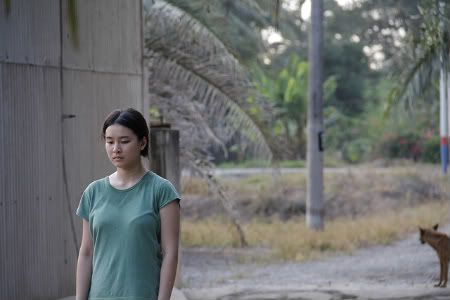
The Tiger Factory An absolute knock-out from Malaysia's Woo Ming Jin, whose last film I managed to catch was The Elephant and the Sea at VIFF '07. I liked that film plenty, but it felt a little too indebted to Tsai Ming-liang in the way talented first-time filmmakers often over-flatter their directorial heroes. The Tiger Factory is something else entirely. In following two teenage girls working a variety of shitty jobs (including surrogate pregnancy and pig insemination) in hopes of moving to Japan, Woo has made a masterpiece where money changing hands supplants dialogue and callousness appears increasingly tied to forward movement. The less I say about plot points the better because you should really go in fresh to this one.

Uncle Boonmee Who Can Recall His Past Lives The most completely pleasurable film I've caught at this year's VIFF, Apichatpong's Palm d'Or winner is a cosmic-comic masterpiece that more than lives up to its considerable hype. If it's not Apichatpong's best film to date--something future viewings will be required to determine--it's certainly his funniest. There's real philosophical thought and impeccable filmic vision behind every laugh--and vice-versa. Surrounded on all sides by movies of all stripes, Uncle Boonmee stands the festival test by feeling fresh and invigorating from start to finish where other films (including very fine ones) start to blur and run together. The final sequence is absolutely golden.

Winter Vacation Li Hongqi's deadpan comedy is one of the most delightfully (and authentically) off-beat films I've seen in a long time. Set in a small village in Inner Mongolia during the winter school break, the film feels like a parody, at times, of both the disaffected-youth-doing-literally-nothing movie and the intergenerational-tapestry-of-family-life genre. It's moody and it's thoughtful and it's deeply, strangely funny; one of a kind, to be sure.
VIFF, Part 1: Out of the Past


Notes on my first batch of films from the 29th Vancouver International Film Festival:

Apichatpong and Hirabayashi Five short films, three by the former and two by the latter. As I'm embarassingly incapable of wrting anything substantial about shorts--a fact that in no way detracts from my appreciation of that distinct form--suffice it to say that the Apichatpong entries showcase the range of his specialties, from the ebullient (The Anthem) to the elusively spiritual (Luminous People) to the cerebral and self-reflexive (A Letter to Uncle Boonmee--I'm seeing the Palm d'Or-winning companion feature tomorrow and will be covering it in my next fest installment). The Hirabayashi shorts (Aramaki and Shikasha) are odd and disturbing and serve as good proof that I should really see more of his work.

Barney's Version This is one of those films where in Scene A a character forgets something rather trivial (e.g. the placement of his car keys), in Scene B he is diagnosed with full-on Alzheimer's and can't remember he's divorced, and in Scene C his ex-wife is visiting his grave. It's a not-particularly-cinematic rip from Woody Allen's late '70's playbook with just enough middlebrow tears thrown in to compete in the awards season. Dustin Hoffman's the best (and funniest) thing in it as the title character's charmingly off-color retired-cop father. Paul Giamatti is Paul Giamatti is Paul Giamatti (for what it's worth).

Karamay
Xu Xin's six-hour documentary is, at once, a meditation on extreme grief, on voids that can never be filled, and an incendiary reaction to the profound insensitivity and thoughtlessness of the Chinese Communist Party's handling of the 1994 fire that killed 323 people (288 of them schoolchildren, aged mainly between 6 and 14) at a theatre performance for government bureaucrats (most of whom survived, due to the now-infamous order "Be quiet. Remain seated. Let the leaders exit first!"). Xu patiently listens as parents of deceased children--including a teacher present at the theatre, whose son, in a different class, didn't escape with her and a mother who observes that the "naughty" kids less inclined to submit to adult authority made it out, while those taught to trust and obey their elders perished--express both inconsolable sadness at their loss and frustration with a government that won't so much as provide them with death certificates; when a group of parents traveled to Beijing to petition the national government, we learn, they were sternly turned away and put on the next flight back to their home province, Xinjiang, in Northwestern China's Gobi desert region. By turns, heartbreaking and infuriating--and always absolutely empathetic--Karamay is one of the great documentaries in cinema, in a class with other epic treatments of tragedy like Claude Lanzmann's Shoah and Alain Resnais' Night and Fog. It also has more to say about China's turbulent, problematic modernity than any film since Jia Zhang-ke's Platform a decade ago.

Kawasaki's Rose Best slot-filler surprise so far this fest. Jan Hrebjk's film--about a Czech professor, revered for his anti-Communist stance, whose collaborationist skeletons come to light via a documentary being worked on by his antagonistic son-in-law--unravels patiently, with unexpected developments and multi-dimensional characters around every corner. Remarkably, the film never feels contrived in its twisting narrative nor heavy-handed in its study of the inextricable connection between the personal and the political. In fact, Kawasaki's Rose compares favorably with Arnaud Desplechin's work and late Chabrol both in its novelistic structure (making the essentially episodic appear seamless) and in the warmth and thoughtful consideration it denies none of its numerous characters.

The Princess of Montpensier The high-quality French costume drama has become something of an annual VIFF tradition for me. Bertrand Tavernier's effort isn't as memorable or varied in its strengths as Rivette's The Duchess of Langeais or Rohmer's The Romance of Astrea and Celadon from fests past. It's just an elegantly transporting, finely mounted doomed romance/swashbuckler. The titular princess--whom every male in the film falls instantly in love with--is a dead-ringer for Amber Benson, aka Tara on Buffy. And her chief love interest (nicknamed "The Scarred"!) looks kind of like Lindsey on Angel, so there's an extra bit of imaginary fun here for Whedon fans.

A Silk Letter This is a prime example of a good, if uneven, film made vastly more interesting in the context of its creation. The story involves two gay teenage boys cooped up in a Seoul studio apartment--one's a high school drop-out, the other a "conscientious objector" to Korea's mandatory military service. The young filmmaker, Kang Sang Woo, spoke in a Q&A session of the film's autobiographical elements: in January, he will begin an 18-month jail term for refusing the draft on the grounds of his sexual orientation. Such information lends the film--which is at its best when it's focusing on the relationship space of its two characters and its most frustratingly amateurish when Kang strays toward the avant-garde--a startling dimension it wouldn't have otherwise possessed.

The Sleeping Beauty Alas, Catherine Breillat's second reinterpretation of a Charles Perrault fairy tale doesn't deliver on the promise of the first. Where Bluebeard derived much of its hypnotic effect from the relative straightfowardness of the main narrative, The Sleeping Beauty meanders and strays all over the place, flitting between curiosity and boredom. The first two-thirds felt overly precious and taken with itself, with nods both high (Claire Denis' The Intruder, Au hasard Balthazar) and low (Labyrinth, Harry Potter); at times, it frankly felt like a Guy Maddin parody of the symbolism-obsessed art film. By the time we reach signature Breillat territory (read: thorny underaged sexuality) in the third act, the transition feels more awkward and disjointed than purposefully jarring a la Fat Girl. It's not without merit or interest by any means--scenes, like the "Ice Queen" sequence, are as captivating as anything Breillat's put to celluloid and I'm pretty sure there are some genuinely provocative ideas about adolescent sexual realization in there somewhere--but it's a decided disappointment.

13 Assassins Excepting maybe one nightmarish scene near the beginning, this is the closest to pure popcorn movie-movie Takashi Miike has probably ever come. It's expertly assembled and thoroughly entertaining, especially when the terrific Koji Yakusho screams: "Kill them! Kill them all!"

When We Leave I have very mixed feelings on this one. On the one hand, it's a fascinating and powerful piece of exposition for a horrific cultural phenomenon we inevitably periodically find mentioned in the news, it's impeccably shot and edited, and the acting is uniformly top-shelf, especially Sibel Kikelli (as dynamic and indelible here as in Fatih Akin's Head-On) in what might be the fest's single strongest performance. On the other, this feels like a film tailor-made to infuriate liberal Western sensibilities. It's emotionally rigorous to the point where one can't help but start to recoil from manipulation; when a character with high blood pressure keels over from a heart attack, he seems momentarily a sort of audience-surrogate. Where similarly themed films by Jafar Panahi and Akin (who also focuses on the Turkish-German diaspora) are etched in sociocultural shades of grey, Feo Aladag's Tribeca fest multiple prize-winner appears fairly black and white. Perhaps viewers with first-hand experience of the film's millieu (like Kikelli herself, whose father severed contact with her when it came out in the German tabloid media that she'd appeared in porn films) might feel differently, but for this liberal Westerner the battle lines seem pretty clearly drawn. When during the sadistically gut-wrenching final scene some guy a few rows behind me in the theatre muttered, "Shoot the motherfucker," I instinctively nodded in agreement of the obvious.

Teresa, covering the fest for Twitch, on Cold Fish.
My Three Favorite Things Right Now


In no particular order:

Mad Men Astonishingly, this show just keeps getting better and better, no? Its rhythms and moods are unlike anything else I've ever seen on television, including The Sopranos. It's so mercurial and unpredictable. And its emotional and psychological resonance have officially caught up with (or even surpassed) its formal and sociopolitical niftiness. With more conventional narrative devices--like Don's shadowy past, his failed marriage, and Peggy's pregnancy--out of the way, the show has truly hit its stride as an uncommonly penetrating character study. Like everyday life and the best of modern TV (Sopranos, Gilmore Girls, Buffy, Friday Night Lights), it merges drama and comedy so seamlessly that it thoroughly transcends such tidy awards show classifications. The last episode, "The Suitcase" was, in particular a series high-point, allowing the show's two pivotal figures more quality time than ever before. Where we go from here is anyone's guess.

Greenberg After viewing number four, I'm now certain that Noah Baumbach's modest masterpiece isn't just my favorite film of 2010, but a movie as rewardingly rewatchable as, say, Before Sunset or Ghost World. Almost every scene's a classic and every ingredient in the mix works splendidly. Harris Savides's cinematography, while not as obviously spectacular as his work for Gus Van Sant, perfectly captures a Los Angeles that feels, at once, lived-in and true and largely unlike any representation of L.A. we've seen onscreen before; shots like that of a hose unfurling inside a swimming pool dreamily encapsulate the languorous, ephermeral nature of summer. James Murphy's score and the pre-recorded stuff are likewise spot-on. The performances, from Ben Stiller to Greta Gerwig to a perfectly utilized Jennifer Jason Leigh and the bit parts are uniformly superb. If films like Greenberg and the incredible Winter's Bone are very much the exception in current American independant cinema, let's hope there's more such pleasures on their heels.

Joanna Newsom, Have One On Me I know this came out months ago, but it's so dense and masssive an endeavor that it takes some time to get one's head around. I still don't love it as fervently as I do Ys, but it's getting closer with every listen. And if the miracle of Ys was that something so dubiously twee-sounding on paper came off so impeccably, Have One On Me's triumph is that, over three discs, there isn't anything resembling filler. At its best ("81," "On a Good Day," "Esme") the album is, in fact, resplendently beautiful, gorgeous in a way that's exceedingly rare if not wholly unique in modern music.
Hallelujah, I'm a Bum


From Shrek to One Tree Hill to the Vancouver Winter Olympics and beyond, is there a song in the English language more overused, over-covered, and over-relied-upon-for-surefire-gooseflesh-catharsis than Leonard Cohen's "Hallelujah"? And yet...is there a more infallibly affecting, more amazingly adaptable, indeed more beautifully written song? I can think of few, if any. There's just something about it: the lulling structure, so hauntingly simple; the words teetering between the exaulted and the sacreligious, somehow capturing some universal conception of love and sex and all the rest of it. The thing of it is, it just fucking gets you. Every time. Whether it's Rufus Wainwright or Jon Bon Jovi or any number of minor American Idol contestants delivering it.

Oddly enough, Cohen's original performance has always struck me as one of the least remarkable renditions, and while I'm probably a philistine for admitting as much, I suspect, at the same time, that I'm not alone in that sentiment. Of course, Jeff Buckley's version has become recognized as the gold standard for "Hallelujah" covers and rightly so, but John Cale's eerily mannered take is, in its way, almost as sublime. And Kate Voegele's (of One Tree Hill fame) has grown on me considerably; her delivery is idiosyncratic and vulnerable in a way that recalls the '90's coffeehouse folk scene that's she far too young to have been a part of but that made Buckley, briefly, a star.

So keep 'em coming, folks--just so long as we don't have to hear Justin Bieber sing "remember when I moved in you / and the Holy Dove was moving too / and every breath we drew was Hallelujah".
Facing East


Teresa on J-Pop in The Guardian--fantastic article!
War Is Hell Is Other People


Air Doll After a decade and a half making movies, Hirokazu Koreeda is looking more and more like one of Japan's key contemporary directors. Here, he takes a Pinocchio-as-inflatable-sex-doll premise and steers it in directions as provocative and poignant as Spielberg navigated A.I.. Major credit goes to Bae Doona as Nozomi, the titular pleasure object come to disoriented life. She's as physically expressive, and as convincingly naive, as a silent film comedienne. And, ultimately, she breaks your heart. Tokyo--murky and grey in the work of many of Koreeda's peers, most notably Kiyoshi Kurosawa--has never looked lovelier on screen.

Chloe Oddly enough, this delivered the camp goods promised (but not delivered) by last year's forgettable Fatal Attraction riff/Beyonce-as-actress vehicle, Obsessed. In that spirit, this is a keeper and one worth returning to on cable, if not necessarily paying to rent. As an entry in Atom Egoyan's ouevre, well...let's just say I hope he was compensated well and that he'll put those funds toward some worthy "one-for-me." Now, to be sure, many of Egoyan's signature themes--dark familial undercurrents, taboo sex, snow--are very much in play here, and it's easy to understand why (besides the paycheck) he decided to direct this remake of a French flick called Nathalie. But anyone hoping for the understated poetry and structural fluidity of Exotica and The Sweet Hereafter will almost certainly be disappointed. Instead, we get a surprisingly restrained Julianne Moore (I kept waiting for her to go all pharmacy-scene-from-Magnolia but it never happened), a juicier big screen role for Amanda Seyfried (who can't quite make the most of it), and an off-the-rails climax that vaults us from Eyes Wide Shut lite to Showgirls sublime.

City of Life and Death Lu Chuan's sprawling account of the Japanese occupation of Nanking must instantly be considered among the greatest war films ever made. Its battle sequences are as brutally, skillfully choreographed as Saving Private Ryan's, and yet it's superior to Spielberg's WWII film, more grittily authentic in its feel, more harrowing in its impact. In fact, in its unflinching depiction of the torture and rape carried out by the Japanese troops, Chuan's film calls to mind none other than Pasolini's Salo. Which is to say, not easy to sit through--but absolutely essential.

Greenberg I know it's only April, but I'll go out on a limb by saying that I'll be very surprised to see a more fascinating or fully-realized performance this year than Ben Stiller's here. On paper, Greenberg sounds like an extended version of that part in Annie Hall where Woody Allen's Alvy goes to L.A. And yet, thanks to Stiller's career-redefining work (plus a superb turn by Greta Gerwig, Noah Baumbach's impressive maturation behind the camera, and subtly gorgeous cinematography by the always awesome Harris Savides) the result is a rather profound commentary on loneliness, neediness, and growing older--you know, the stuff that makes us human and, more precisely, the stuff that often makes being human so goddamn annoying. The final scene is perfect; it's not a happy ending in the usual sense, but its open-endedness--like Scarlett Johansson whispering something in Bill Murray's ear or Julie Delpy cooing "Baby, you are gonna miss that plane" and Ethan Hawke responding "I know" or, for that matter, Mariel Hemingway telling Woody Allen "You've got to have faith in people"--suggests a cautious optimism and allows these characters to live on after the credits have finished rolling.

She's Out of My League This, on the other hand, treads in more conventional boy-meets-girl territory, but that doesn't mean it's not worth its weight in popcorn. What separates this one from inferior romantic comedies (besides that it's maybe the funniest since Knocked Up) is the details: Nate Torrence's scene-stealing turn as a Disney-referencing non-cussing married friend and the inspired decision to shoot the film on location in Pittsburgh--a city most people associate with steel and bridges and steel bridges--plus actually making it work as a romantic locale. Between this and last year's terrific Adventureland, the folks working for Pittsburgh's tourism department have got to be thanking their lucky stars.

24 City I finally caught Jia Zhang-ke's latest through Pacific Cinematheque's Jia retrospective. Following Still Life (my favorite Jia work to date, edging Platform by a hair), Jia seems to have grown (temporarily?) tired of traditional narrative structure and slick digital compositions. 24 City, like the excellent, underseen Useless, eschews standard notions of plot and character in favor of a documentary mode that, particularly in 24 City, registers closely with Kiarostami's later work. Jia's career-long investigation of his country's rapidly changing dynamics here feels also in tune with the Tsai Ming-liang of Goodbye, Dragon Inn, with a state aeronautics factory converted into a luxury condo complex substituting for Tsai's closing Taipei movie house. There's a pervasive sense of you-can't-go-home-again, a sort of conflicted wistfulness, shot through the interviews (some "real" with former factory workers, some staged with actors like Joan Chen and Jia muse Zhao Tao standing in) and musical montages that form this uniquely shaped masterpiece.
Life's a Bitch


Judging from 2009's top awards contenders, that's the mantra of the year: "Life's a bitch." Rape, incest, poverty, HIV; unemployment, when you have a family to provide for and bills to keep ahead on; dismantling Improvised Explosive Devices within the heart of a war zone--choose your poison.

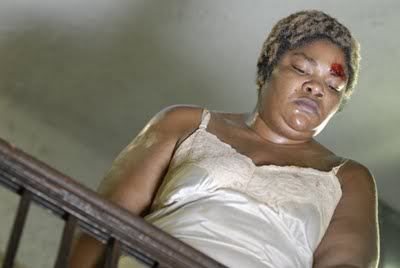
If this bleak worldview has a physical embodiment, it's not Jeremy Renner trudging around in an 80-pound Kevlar suit, nor is it George Clooney collecting air miles en route to deliver worst-case scenarios to unsuspecting employees. It's Mo'Nique dropping a television set over a balcony at her daughter and newborn grandson.

Precious isn't a great movie and Armond White may not be totally off-base in his provocative assessment, but it's an exceptional example of the social-drama-as-horror-film. Up in the Air isn't a great movie either, but it's uncannily on time, on point, and in its scenes of the real-life laid-off playing essentially themselves, it's heartbreaking enough to convince you, me, and the Academy of Motion Picture Arts and Sciences that maybe it's something close to a great movie, after all.

Life's a bitch, and then you die.

Or perhaps you don't. The Hurt Locker is a great movie, and Sergeant Will James is a great movie character, one who almost certainly should be dead, after disarming nearly 900 IED's, yet who isn't. But he isn't entirely alive either--not the way Claireece "Precious" Jones or Ryan Bingham are anyway. It's not too late for either of those protagonists. When James briefly returns home, he stands perplexed in the cereal aisle when asked to pick up a box of cereal, he can't relate with normal parental affection to his toddler son, and he can't hold a conversation with his wife without bombs becoming the subject.

And so he returns to war. The final shot of The Hurt Locker actually echoes that of Precious: James shuffling forward in his unwieldy uniform and Precious carrying her babies down a Harlem street, as, I suppose, Clooney's Bingham glides by somewhere 20,000 feet overhead.

Life's a bitch, and sometimes it just goes on.
100 Albums: 2000-09


After the film feature, I'm kind of blurb'd out for a while so I only wrote up very short notes on the top ten for this. For the record, this list was surprisingly difficult to put together. I had no idea at the outset that by deciding to limit my selections to 100, there wouldn't be room for Missy Elliot, Dizzee Rascal, the Streets, or Neko Case solo, among others who've submitted seriously good work over the past ten years. I guess it was a pretty great decade for music, huh?

100. Aly and AJ - Insomniatic
99. Bruce Springsteen & the E. Street Band - Magic
98. Gretchen Wilson - Here for the Party
97. The Mountain Goats - Heretic Pride
96. Raekwon - Only Built for Cuban Linx...Pt. II
95. Ashlee Simpson - I Am Me
94. Jay-Z - American Gangster
93. Lucinda Williams - Little Honey
92. Cut Copy - Bright Like Neon Love
91. The Pipettes - We Are the Pipettes
90. Joanna Newsom - The Milk-Eyed Mender
89. Taylor Swift - Taylor Swift
88. Gillian Welch - Time (The Revelator)
87. The New Pornographers - Electric Version
86. The Avalanches - Since I Left You
85. Morrissey - Ringleader of the Tormentors
84. Asobi Seksu - Citrus
83. Antony and the Johnsons - I Am a Bird Now
82. Justin Timberlake - Justified
81. S. - Puking and Crying
80. Panjabi MC - Beware
79. Girl Talk - Night Ripper
78. Youssou N'Dour - Egypt
77. Big and Rich - Horse of a Different Color
76. Daft Punk - Discovery
75. Amy Diamond - Still Me, Still Now
74. The Strokes - Is This It
73. Kathleen Edwards - Back to Me
72. Young Jeezy - Let's Get It: Thug Motivation 101
71. Sleater-Kinney - All Hands on the Bad One
70. Rihanna - Good Girl Gone Bad
69. Keren Ann - Not Going Anywhere
68. Bob Dylan - "Love and Theft"
67. Justin Timberlake - FutureSex/LoveSounds
66. Fannypack - See You Next Tuesday
65. Ladytron - Softcore Jukebox
64. Mirah - C'mon Miracle
63. The Game - The Documentary
62. Stephen Malkmus - Stephen Malkmus
61. Brad Paisley - American Saturday Night
60. The Fiery Furnaces - Gallowsbird's Park
59. The Hold Steady - The Hold Steady Almost Killed Me
58. Beck - Sea Change
57. Bjork - Vespertine
56. Lily Allen - My First Mixtape
55. Lucinda Williams - West
54. PJ Harvey - White Chalk
53. The Moldy Peaches - The Moldy Peaches
52. CSS - Cansei de Ser Sexy
51. N.E.R.D. - In Search Of...
50. Kanye West - Graduation
49. The White Stripes - White Blood Cells
48. Sahara Hotnights - Kiss and Tell
47. Northern State - All City
46. Courtney Love - America's Sweetheart
45. Lil Wayne - Tha Carter III
44. Santogold - Santogold
43. M.I.A. & Diplo - Piracy Funds Terrorism
42. Kanye West - The College Dropout
41. Yeah Yeah Yeahs - Fever to Tell
40. Girls Aloud - What Will the Neighbors Say?
39. 50 Cent - Get Rich or Die Tryin'
38. Brad Paisley - 5th Gear
37. David Banner - Mississippi: The Album
36. Cam'ron - Purple Haze
35. The Sounds - Living in America
34. Sleater-Kinney - The Woods
33. Drive-by Truckers - Brighter Than Creation's Dark
32. Ashlee Simpson - Autobiography
31. Eminem - The Marshall Mathers LP
30. Nirvana - Live at Reading
29. Kanye West - Late Registration
28. OutKast - Stankonia
27. Ghostface Killah - Supreme Clientele
26. Metric - Fantasies
25. Adam Lambert - For Your Entertainment
24. Kylie Minogue - Fever
23. Basement Jaxx - Rooty
22. Britney Spears - Blackout
21. Radiohead - Kid A
20. Wilco - Yankee Hotel Foxtrot
19. The Fiery Furnaces - Blueberry Boat
18. Nellie McKay - Get Away from Me
17. The Mountain Goats - Tallahassee
16. The Mountain Goats - The Sunset Tree
15. Lil Wayne - Tha Carter III Mixtape
14. PJ Harvey - Stories from the City, Stories from the Sea
13. Cat Power - You Are Free
12. Solomon Burke - Don't Give Up on Me
11. Kathleen Edwards - Asking for Flowers


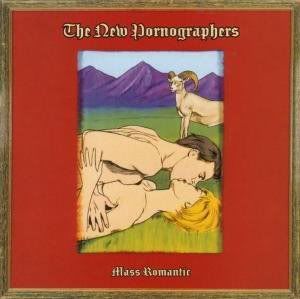
10. The New Pornographers - Mass Romantic Almost definitely the best album spawned to date by the city in which I presently live; "Letter from an Occupant" might just be the finest power-pop track ever recorded.

09. Joanna Newsom - Ys If "singular" is the most appropriate one-word description of Ys, it's also a major understatement. Joanna Newsom's masterwork is lush and dense, allusive and tender, epic and intimate, and...utterly singular.

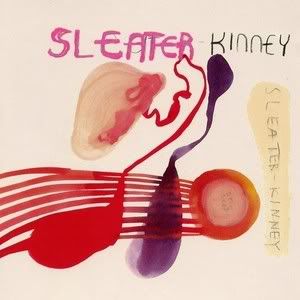
08. Sleater-Kinney - One Beat The most affecting musical response to 9/11 from the finest band of their generation (maybe...ever?).

07. Bubba Sparxxx - Deliverance Country-rap that works seamlessly as both and finds Timbaland at the peak of his powers.

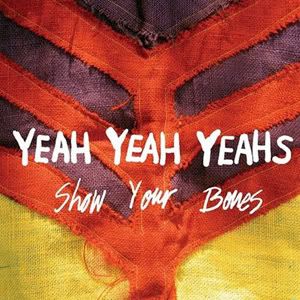
06. Yeah Yeah Yeahs Show Your Bones Who would've thought, judging from the sound and fury of the LP and EPs that preceded it, that Karen O. and Co.'s folk move would be so lovely? There are few records closer to my heart than this one.

05. Robyn - Robyn Pop perfection so far ahead of its time that it somehow took three fucking years to come out in North America. (Sometimes the Internet's a good thing to have.)

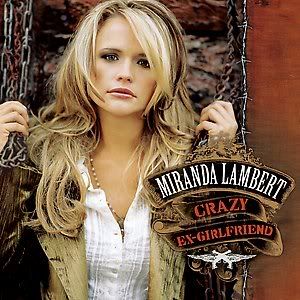
04. Miranda Lambert - Crazy Ex-Girlfriend Not just the best country album of the decade, but one of the all-time greats; she finished third on Nashville Star and will probably never move half as many units as Taylor or Carrie. But she just got the first buck of the season: she made the front page of the Turner Town Gazette.

03. M.I.A. - Arular Kala remains all-over-the-place and deeply overrated (two awesome songs does not a great album make), but it doesn't diminish the front-to-back goodness of M.I.A.'s debut proper. How many artists have ever arrived this fully-formed, this full of energy and ideas and beats? The final minute of "Galang" still sounds as stunning as it did half a decade ago.

02. Kanye West - 808's & Heartbreak The closest thing in hip-hop to Plastic Ono Band, by the only currently working artist whom I actually expect to someday make an even better album than this one.

01. Jay-Z - The Blueprint Certainly, Paid in Full and Raising Hell are more influential. It Takes a Nation of Millions... and Straight Outta Compton are more explosive. But, verse for verse and track for track, The Blueprint is simply the most through-inspired rap record ever made, from "I wanna thank everybody out there for their purchase" to "unless you was me, how could you judge me / I was brought up in pain, ya can't touch me"; from the Nas hit-job to the lone guest spot--Eminem, also at the height of his genius. In short, this album's why no Jay-Z boast, no matter how outlandish, will ever sound entirely like bullshit.
It's Not Me, It's You


In Discovering Orson Welles, Jonathan Rosenbaum's excellent collection of Welles-related essays, Rosenbaum devotes a number of chapters to critiques of Welles biographies. He roughly divides the texts between those sympathetic to Welles and those more harshly critical, as well as making the distinction between biographers who knew Welles personally and ones who did not. What emerges is a dizzying variety of Welleses, including, in the essential This Is Orson Welles (interviews conducted by Peter Bogdanovich), the Man Himself, whose reflective and relatively easy-going manner later in life doesn't in itself debunk any legends of the enfant terrible of War of the Worlds and Citizen Kane.

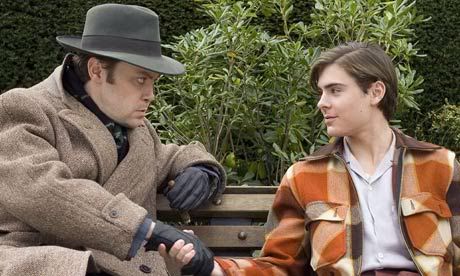
Thankfully, Richard Linklater's thoroughly invigorating Me and Orson Welles isn't a sprawling Welles biopic. In fact, Welles is technically, purposefully something of a supporting character in this story of a high school student with acting ambitions who lands himself a small part in Welles' famous, fascism-skewing 1937 Julius Caesar production. Purposefully, because Welles is (no pun intended, I swear) simply too big for one film or one book--or even two or three books, as evidenced by Simon Callow's admirable yet flawed multi-volume project--to encompass. While both as an artist and as a man Welles seems to somehow grow more fascinating with each passing year, The Magnificent Ambersons and Chimes at Midnight--not to mention the numerous partially completed Welles projects lingering in limbo--remain vastly more edifying than any biography or biopic could ever hope to be.

All that said, Christian McKay's performance is downright eerie. Miles from passable takes like Liev Schreiber's broody Welles in RKO 281 or Vincent D'Onfrio's cameo Welles in Ed Wood, McKay is, at once, both Welles-as-Charles-Foster-Kane (with a few years' age and experience convincingly subtracted) and Welles as you can't help but imagine him while reading those above-mentioned biographies: tremendously ambitious, roguishly charming, and hyper-aware of his own singular brilliance; think: Kanye West before Kanye West, including a political outspokenness that Linklater avoids a little too neatly. So dead-on is McKay's turn that at a couple different points in the film, I actually had to remind myself that I was watching an actor playing Welles and not some miraculously unearthed archival footage of the real O.W. directing Caesar.

McKay owns every scene he's in. He doesn't, however, own the movie. This is very much a quintessential Linklater film--talky, sweet-not-sugary, bursting with growing pains not unlike those of Jesse, Celine, or the cast of Dazed and Confused. If the period detail and magnetism of McKay's Welles inevitably dilute the romantic urgency here, signature Linklater themes--chance encounters and brief stretches of the extraordinary dramatically shaping and coloring the course of a life, the liberating potential of artistic expression, etc.--nevertheless shine through.

And while McKay steals the show, Zach Efron (following good work in the better-than-you'd-assume 17 Again) proves a more than capable young talent; Claire Danes has, perhaps, never been than better than as a Welles assistant with ambitions of her own. When Efron's Richard reacts heartbrokenly that his "girlfriend" is shacking up with the married Welles, Danes' Sonja reminds him that they've only known one another for a week. "This week has changed my life," he shoots back, dropping the cool-kid demeanor he's carefully cultivated and sounding a heck of a lot like Ethan Hawke's Jesse a decade and a half ago--or character-wise, almost sixty years later. When a closer-in-age other-Efron-love-interest recites "Ode on a Grecian Urn," it sounds rather like a working mantra for a filmmaker as indefatigably romantic as romance itself is indefatigable.
Artists of the Year


Adam Lambert and Lady Gaga aren't just the artists of the year. They each represent the culmination of a decade's worth of pop-in-theory (as opposed to literally popular) finally burst through ready-or-not into the mainstream. Which is to say, they're consciously subversive, smart about their own image and fame, clearly fascinated by pop history, sexually outré, wickedly talented--and they're selling lots of records to consumers who don't operate music blogs and/or write for alt-weekly papers.

This must be some kind of golden age. Even Madonna didn't arrive this canny or this provocative, or at least she didn't let on about it until a few years into her career, establishing her chart-topping credentials then making the "Like a Prayer" video and the Sex book. Prince might be the closest point of comparison, and when you have to evoke the Purple One as an exception proofing the rule, you know we're talking about two special entertainers. Plus, Prince sang about fucking women in his little red Corvette (and, okay, getting head from his older sister), which is challenging in its prurience rather than its actual subject, which, with different wording, could've inspired a Don Henley song. Adam Lambert is simulating fellatio and laying a juicy one on his (male) bandmember on a nationally television awards show; the openly bisexual Lady Gaga's new album includes a song about masturbating to a chick she's crushing on, while in an interview, she answers with an entirely straight-face that the only virtue she looks for in a guy is a big dick.

Post-Madonna, the formula has gone provocateur on record and stage/down-to-earth small-town girl (or boy) when the press comes knocking, even when said performer's public activities suggest otherwise (see: Britney, Miley, Rihanna, et. al). But Lady Gaga and Adam Lambert are not from Kentwood, Louisiana, Nashville, or Barbados; they're from New York City and San Diego, respectively, which may or may not have something to do with their divergent approaches to image maintenance.

At any rate, they're both uncommonly open in admitting their individual yearnings for fame. For Gaga, fame is itself an integral part of her persona. If she were merely a critics' pet or performance-art circuit darling (and either, five or ten years ago, would've been a probable career end-point), the sheer larger-than-lifeness of the character she's carefully cultivated would register as, at best, tongue-in-cheek self-parody (see: Peaches, for example). Instead, as she releases killer single after killer single and headlines multi-night gigs at large venues in major world cities, her single-minded ambition feels impressively prophetic.

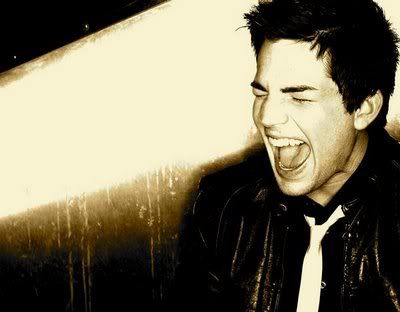
Adam Lambert, meanwhile, was plenty busy before knocking everybody's socks off on American Idol, performing in theatre productions from Broadway to L.A. to Europe. On A.I., Lambert seemed to re-invent himself week after week, whether offering up a glammed-out "Ring of Fire" or achingly beautiful renditions of "Mad World" and "The Tracks of My Years." With all due respect to Kelly Clarkson and Carrie Underwood, he's the most remarkable, and most fully-formed, artist the show has yet produced, and, frankly, this truth was perfectly evident before the season was even half over. That he finished as a runner-up is a footnote that speaks more of American prejudices than the talents of the obscurity-bound Kris Allen.

For Your Entertainment lives up to the promise of his Idol performances, which is saying a lot. It's a consistently surprising (and surprisingly consistent), nicely varied showcase for Lambert as the pop star of the future. On a number of occasions, Lambert has cited the 23 year-old (!) Gaga as an influence, and there are moments on his debut that recall the fashion-forward, pleasure-first headiness she's fast made her signature. But there's also liberal doses of Queen, Bowie, Donna Summer, Justin & Timbaland, MJ, and Prince--the sound is in tune enough with the pop-rock past to stand out from the sameiness of today's top 40 while current enough to avoid retro novelty territory--and yet Lambert, like Gaga, emerges as a distinct voice in the mix. With any luck, their voices will remain distinct, and relevant, through the new decade that's about to begin.
Lives Less Ordinary: Films 1-2


02. Ghost World and 01. Before Sunset So, yeah, if only one film could represent the 2000's in a time-capsule for future generations to discover, it should absolutely be Redacted. But back to what I said above...rewatchability? Great acting? Those (usually) matter, too, and they especially matter when the films you're repeatedly rewatching somehow continue to yield new pleasures and nuances on the tenth or twentieth view. Which is to say, these two aren't my favorite films of the decade because I know every syllable of every line by heart. Rather, I know every syllable of every line by heart because they've both proved so endlessly rewarding to revisit.

That's Ghost World and Before Sunset, for you. Admittedly, neither's going to change the world or the medium of cinema, though both offer fresh takes on seemingly familiar territory. Terry Zwigoff puts a world-weary, quasi-existentialist spin on the coming-of-age movie, while also marrying film style to comic book form more ingeniously than any of the recent comic-based blockbusters. Richard Linklater, meanwhile, pulls off the finest sequel ever made by reducing film romance to its most essential ingredients: two fascinating human beings, time, and the city (in this case, a seldom more gorgeous Paris). The real-time structure of Before Sunset, with Jesse and Celine nervously stalling against the former's scheduled flight home, is an exercise in tension build-up more effective than any Bond or Bourne flick, which naturally makes the release of the classic final scene that much sweeter.

Enid leaves town on the bus, Jesse misses that plane--and both Zwigoff and Linklater are wise enough to know that the future remains uncertain.