Hallelujah, I'm a Bum


From Shrek to One Tree Hill to the Vancouver Winter Olympics and beyond, is there a song in the English language more overused, over-covered, and over-relied-upon-for-surefire-gooseflesh-catharsis than Leonard Cohen's "Hallelujah"? And yet...is there a more infallibly affecting, more amazingly adaptable, indeed more beautifully written song? I can think of few, if any. There's just something about it: the lulling structure, so hauntingly simple; the words teetering between the exaulted and the sacreligious, somehow capturing some universal conception of love and sex and all the rest of it. The thing of it is, it just fucking gets you. Every time. Whether it's Rufus Wainwright or Jon Bon Jovi or any number of minor American Idol contestants delivering it.

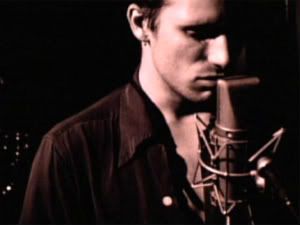
Oddly enough, Cohen's original performance has always struck me as one of the least remarkable renditions, and while I'm probably a philistine for admitting as much, I suspect, at the same time, that I'm not alone in that sentiment. Of course, Jeff Buckley's version has become recognized as the gold standard for "Hallelujah" covers and rightly so, but John Cale's eerily mannered take is, in its way, almost as sublime. And Kate Voegele's (of One Tree Hill fame) has grown on me considerably; her delivery is idiosyncratic and vulnerable in a way that recalls the '90's coffeehouse folk scene that's she far too young to have been a part of but that made Buckley, briefly, a star.

So keep 'em coming, folks--just so long as we don't have to hear Justin Bieber sing "remember when I moved in you / and the Holy Dove was moving too / and every breath we drew was Hallelujah".
Facing East


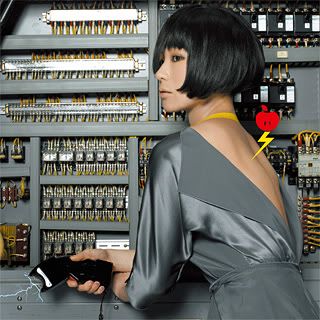
Teresa on J-Pop in The Guardian--fantastic article!
War Is Hell Is Other People
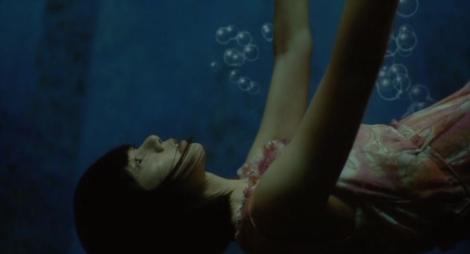

Air Doll After a decade and a half making movies, Hirokazu Koreeda is looking more and more like one of Japan's key contemporary directors. Here, he takes a Pinocchio-as-inflatable-sex-doll premise and steers it in directions as provocative and poignant as Spielberg navigated A.I.. Major credit goes to Bae Doona as Nozomi, the titular pleasure object come to disoriented life. She's as physically expressive, and as convincingly naive, as a silent film comedienne. And, ultimately, she breaks your heart. Tokyo--murky and grey in the work of many of Koreeda's peers, most notably Kiyoshi Kurosawa--has never looked lovelier on screen.

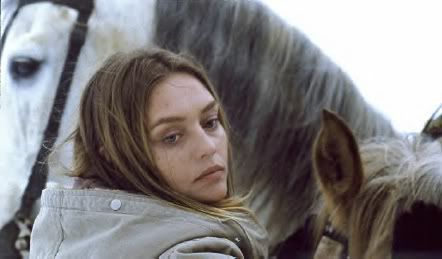
Chloe Oddly enough, this delivered the camp goods promised (but not delivered) by last year's forgettable Fatal Attraction riff/Beyonce-as-actress vehicle, Obsessed. In that spirit, this is a keeper and one worth returning to on cable, if not necessarily paying to rent. As an entry in Atom Egoyan's ouevre, well...let's just say I hope he was compensated well and that he'll put those funds toward some worthy "one-for-me." Now, to be sure, many of Egoyan's signature themes--dark familial undercurrents, taboo sex, snow--are very much in play here, and it's easy to understand why (besides the paycheck) he decided to direct this remake of a French flick called Nathalie. But anyone hoping for the understated poetry and structural fluidity of Exotica and The Sweet Hereafter will almost certainly be disappointed. Instead, we get a surprisingly restrained Julianne Moore (I kept waiting for her to go all pharmacy-scene-from-Magnolia but it never happened), a juicier big screen role for Amanda Seyfried (who can't quite make the most of it), and an off-the-rails climax that vaults us from Eyes Wide Shut lite to Showgirls sublime.

City of Life and Death Lu Chuan's sprawling account of the Japanese occupation of Nanking must instantly be considered among the greatest war films ever made. Its battle sequences are as brutally, skillfully choreographed as Saving Private Ryan's, and yet it's superior to Spielberg's WWII film, more grittily authentic in its feel, more harrowing in its impact. In fact, in its unflinching depiction of the torture and rape carried out by the Japanese troops, Chuan's film calls to mind none other than Pasolini's Salo. Which is to say, not easy to sit through--but absolutely essential.

Greenberg I know it's only April, but I'll go out on a limb by saying that I'll be very surprised to see a more fascinating or fully-realized performance this year than Ben Stiller's here. On paper, Greenberg sounds like an extended version of that part in Annie Hall where Woody Allen's Alvy goes to L.A. And yet, thanks to Stiller's career-redefining work (plus a superb turn by Greta Gerwig, Noah Baumbach's impressive maturation behind the camera, and subtly gorgeous cinematography by the always awesome Harris Savides) the result is a rather profound commentary on loneliness, neediness, and growing older--you know, the stuff that makes us human and, more precisely, the stuff that often makes being human so goddamn annoying. The final scene is perfect; it's not a happy ending in the usual sense, but its open-endedness--like Scarlett Johansson whispering something in Bill Murray's ear or Julie Delpy cooing "Baby, you are gonna miss that plane" and Ethan Hawke responding "I know" or, for that matter, Mariel Hemingway telling Woody Allen "You've got to have faith in people"--suggests a cautious optimism and allows these characters to live on after the credits have finished rolling.

She's Out of My League This, on the other hand, treads in more conventional boy-meets-girl territory, but that doesn't mean it's not worth its weight in popcorn. What separates this one from inferior romantic comedies (besides that it's maybe the funniest since Knocked Up) is the details: Nate Torrence's scene-stealing turn as a Disney-referencing non-cussing married friend and the inspired decision to shoot the film on location in Pittsburgh--a city most people associate with steel and bridges and steel bridges--plus actually making it work as a romantic locale. Between this and last year's terrific Adventureland, the folks working for Pittsburgh's tourism department have got to be thanking their lucky stars.

24 City I finally caught Jia Zhang-ke's latest through Pacific Cinematheque's Jia retrospective. Following Still Life (my favorite Jia work to date, edging Platform by a hair), Jia seems to have grown (temporarily?) tired of traditional narrative structure and slick digital compositions. 24 City, like the excellent, underseen Useless, eschews standard notions of plot and character in favor of a documentary mode that, particularly in 24 City, registers closely with Kiarostami's later work. Jia's career-long investigation of his country's rapidly changing dynamics here feels also in tune with the Tsai Ming-liang of Goodbye, Dragon Inn, with a state aeronautics factory converted into a luxury condo complex substituting for Tsai's closing Taipei movie house. There's a pervasive sense of you-can't-go-home-again, a sort of conflicted wistfulness, shot through the interviews (some "real" with former factory workers, some staged with actors like Joan Chen and Jia muse Zhao Tao standing in) and musical montages that form this uniquely shaped masterpiece.
Life's a Bitch


Judging from 2009's top awards contenders, that's the mantra of the year: "Life's a bitch." Rape, incest, poverty, HIV; unemployment, when you have a family to provide for and bills to keep ahead on; dismantling Improvised Explosive Devices within the heart of a war zone--choose your poison.

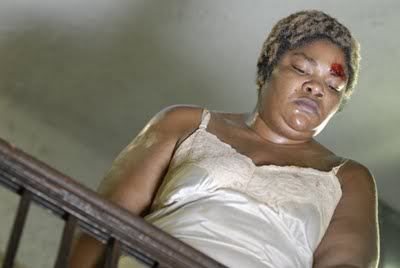
If this bleak worldview has a physical embodiment, it's not Jeremy Renner trudging around in an 80-pound Kevlar suit, nor is it George Clooney collecting air miles en route to deliver worst-case scenarios to unsuspecting employees. It's Mo'Nique dropping a television set over a balcony at her daughter and newborn grandson.

Precious isn't a great movie and Armond White may not be totally off-base in his provocative assessment, but it's an exceptional example of the social-drama-as-horror-film. Up in the Air isn't a great movie either, but it's uncannily on time, on point, and in its scenes of the real-life laid-off playing essentially themselves, it's heartbreaking enough to convince you, me, and the Academy of Motion Picture Arts and Sciences that maybe it's something close to a great movie, after all.

Life's a bitch, and then you die.

Or perhaps you don't. The Hurt Locker is a great movie, and Sergeant Will James is a great movie character, one who almost certainly should be dead, after disarming nearly 900 IED's, yet who isn't. But he isn't entirely alive either--not the way Claireece "Precious" Jones or Ryan Bingham are anyway. It's not too late for either of those protagonists. When James briefly returns home, he stands perplexed in the cereal aisle when asked to pick up a box of cereal, he can't relate with normal parental affection to his toddler son, and he can't hold a conversation with his wife without bombs becoming the subject.

And so he returns to war. The final shot of The Hurt Locker actually echoes that of Precious: James shuffling forward in his unwieldy uniform and Precious carrying her babies down a Harlem street, as, I suppose, Clooney's Bingham glides by somewhere 20,000 feet overhead.

Life's a bitch, and sometimes it just goes on.
100 Albums: 2000-09


After the film feature, I'm kind of blurb'd out for a while so I only wrote up very short notes on the top ten for this. For the record, this list was surprisingly difficult to put together. I had no idea at the outset that by deciding to limit my selections to 100, there wouldn't be room for Missy Elliot, Dizzee Rascal, the Streets, or Neko Case solo, among others who've submitted seriously good work over the past ten years. I guess it was a pretty great decade for music, huh?

100. Aly and AJ - Insomniatic
99. Bruce Springsteen & the E. Street Band - Magic
98. Gretchen Wilson - Here for the Party
97. The Mountain Goats - Heretic Pride
96. Raekwon - Only Built for Cuban Linx...Pt. II
95. Ashlee Simpson - I Am Me
94. Jay-Z - American Gangster
93. Lucinda Williams - Little Honey
92. Cut Copy - Bright Like Neon Love
91. The Pipettes - We Are the Pipettes
90. Joanna Newsom - The Milk-Eyed Mender
89. Taylor Swift - Taylor Swift
88. Gillian Welch - Time (The Revelator)
87. The New Pornographers - Electric Version
86. The Avalanches - Since I Left You
85. Morrissey - Ringleader of the Tormentors
84. Asobi Seksu - Citrus
83. Antony and the Johnsons - I Am a Bird Now
82. Justin Timberlake - Justified
81. S. - Puking and Crying
80. Panjabi MC - Beware
79. Girl Talk - Night Ripper
78. Youssou N'Dour - Egypt
77. Big and Rich - Horse of a Different Color
76. Daft Punk - Discovery
75. Amy Diamond - Still Me, Still Now
74. The Strokes - Is This It
73. Kathleen Edwards - Back to Me
72. Young Jeezy - Let's Get It: Thug Motivation 101
71. Sleater-Kinney - All Hands on the Bad One
70. Rihanna - Good Girl Gone Bad
69. Keren Ann - Not Going Anywhere
68. Bob Dylan - "Love and Theft"
67. Justin Timberlake - FutureSex/LoveSounds
66. Fannypack - See You Next Tuesday
65. Ladytron - Softcore Jukebox
64. Mirah - C'mon Miracle
63. The Game - The Documentary
62. Stephen Malkmus - Stephen Malkmus
61. Brad Paisley - American Saturday Night
60. The Fiery Furnaces - Gallowsbird's Park
59. The Hold Steady - The Hold Steady Almost Killed Me
58. Beck - Sea Change
57. Bjork - Vespertine
56. Lily Allen - My First Mixtape
55. Lucinda Williams - West
54. PJ Harvey - White Chalk
53. The Moldy Peaches - The Moldy Peaches
52. CSS - Cansei de Ser Sexy
51. N.E.R.D. - In Search Of...
50. Kanye West - Graduation
49. The White Stripes - White Blood Cells
48. Sahara Hotnights - Kiss and Tell
47. Northern State - All City
46. Courtney Love - America's Sweetheart
45. Lil Wayne - Tha Carter III
44. Santogold - Santogold
43. M.I.A. & Diplo - Piracy Funds Terrorism
42. Kanye West - The College Dropout
41. Yeah Yeah Yeahs - Fever to Tell
40. Girls Aloud - What Will the Neighbors Say?
39. 50 Cent - Get Rich or Die Tryin'
38. Brad Paisley - 5th Gear
37. David Banner - Mississippi: The Album
36. Cam'ron - Purple Haze
35. The Sounds - Living in America
34. Sleater-Kinney - The Woods
33. Drive-by Truckers - Brighter Than Creation's Dark
32. Ashlee Simpson - Autobiography
31. Eminem - The Marshall Mathers LP
30. Nirvana - Live at Reading
29. Kanye West - Late Registration
28. OutKast - Stankonia
27. Ghostface Killah - Supreme Clientele
26. Metric - Fantasies
25. Adam Lambert - For Your Entertainment
24. Kylie Minogue - Fever
23. Basement Jaxx - Rooty
22. Britney Spears - Blackout
21. Radiohead - Kid A
20. Wilco - Yankee Hotel Foxtrot
19. The Fiery Furnaces - Blueberry Boat
18. Nellie McKay - Get Away from Me
17. The Mountain Goats - Tallahassee
16. The Mountain Goats - The Sunset Tree
15. Lil Wayne - Tha Carter III Mixtape
14. PJ Harvey - Stories from the City, Stories from the Sea
13. Cat Power - You Are Free
12. Solomon Burke - Don't Give Up on Me
11. Kathleen Edwards - Asking for Flowers


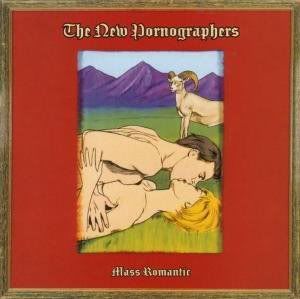
10. The New Pornographers - Mass Romantic Almost definitely the best album spawned to date by the city in which I presently live; "Letter from an Occupant" might just be the finest power-pop track ever recorded.

09. Joanna Newsom - Ys If "singular" is the most appropriate one-word description of Ys, it's also a major understatement. Joanna Newsom's masterwork is lush and dense, allusive and tender, epic and intimate, and...utterly singular.

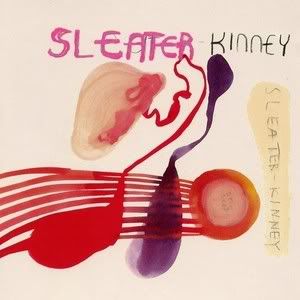
08. Sleater-Kinney - One Beat The most affecting musical response to 9/11 from the finest band of their generation (maybe...ever?).

07. Bubba Sparxxx - Deliverance Country-rap that works seamlessly as both and finds Timbaland at the peak of his powers.

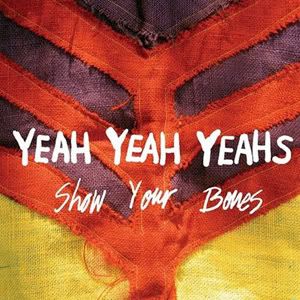
06. Yeah Yeah Yeahs Show Your Bones Who would've thought, judging from the sound and fury of the LP and EPs that preceded it, that Karen O. and Co.'s folk move would be so lovely? There are few records closer to my heart than this one.

05. Robyn - Robyn Pop perfection so far ahead of its time that it somehow took three fucking years to come out in North America. (Sometimes the Internet's a good thing to have.)

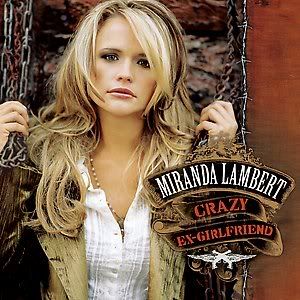
04. Miranda Lambert - Crazy Ex-Girlfriend Not just the best country album of the decade, but one of the all-time greats; she finished third on Nashville Star and will probably never move half as many units as Taylor or Carrie. But she just got the first buck of the season: she made the front page of the Turner Town Gazette.

03. M.I.A. - Arular Kala remains all-over-the-place and deeply overrated (two awesome songs does not a great album make), but it doesn't diminish the front-to-back goodness of M.I.A.'s debut proper. How many artists have ever arrived this fully-formed, this full of energy and ideas and beats? The final minute of "Galang" still sounds as stunning as it did half a decade ago.

02. Kanye West - 808's & Heartbreak The closest thing in hip-hop to Plastic Ono Band, by the only currently working artist whom I actually expect to someday make an even better album than this one.

01. Jay-Z - The Blueprint Certainly, Paid in Full and Raising Hell are more influential. It Takes a Nation of Millions... and Straight Outta Compton are more explosive. But, verse for verse and track for track, The Blueprint is simply the most through-inspired rap record ever made, from "I wanna thank everybody out there for their purchase" to "unless you was me, how could you judge me / I was brought up in pain, ya can't touch me"; from the Nas hit-job to the lone guest spot--Eminem, also at the height of his genius. In short, this album's why no Jay-Z boast, no matter how outlandish, will ever sound entirely like bullshit.
It's Not Me, It's You


In Discovering Orson Welles, Jonathan Rosenbaum's excellent collection of Welles-related essays, Rosenbaum devotes a number of chapters to critiques of Welles biographies. He roughly divides the texts between those sympathetic to Welles and those more harshly critical, as well as making the distinction between biographers who knew Welles personally and ones who did not. What emerges is a dizzying variety of Welleses, including, in the essential This Is Orson Welles (interviews conducted by Peter Bogdanovich), the Man Himself, whose reflective and relatively easy-going manner later in life doesn't in itself debunk any legends of the enfant terrible of War of the Worlds and Citizen Kane.

Thankfully, Richard Linklater's thoroughly invigorating Me and Orson Welles isn't a sprawling Welles biopic. In fact, Welles is technically, purposefully something of a supporting character in this story of a high school student with acting ambitions who lands himself a small part in Welles' famous, fascism-skewing 1937 Julius Caesar production. Purposefully, because Welles is (no pun intended, I swear) simply too big for one film or one book--or even two or three books, as evidenced by Simon Callow's admirable yet flawed multi-volume project--to encompass. While both as an artist and as a man Welles seems to somehow grow more fascinating with each passing year, The Magnificent Ambersons and Chimes at Midnight--not to mention the numerous partially completed Welles projects lingering in limbo--remain vastly more edifying than any biography or biopic could ever hope to be.

All that said, Christian McKay's performance is downright eerie. Miles from passable takes like Liev Schreiber's broody Welles in RKO 281 or Vincent D'Onfrio's cameo Welles in Ed Wood, McKay is, at once, both Welles-as-Charles-Foster-Kane (with a few years' age and experience convincingly subtracted) and Welles as you can't help but imagine him while reading those above-mentioned biographies: tremendously ambitious, roguishly charming, and hyper-aware of his own singular brilliance; think: Kanye West before Kanye West, including a political outspokenness that Linklater avoids a little too neatly. So dead-on is McKay's turn that at a couple different points in the film, I actually had to remind myself that I was watching an actor playing Welles and not some miraculously unearthed archival footage of the real O.W. directing Caesar.

McKay owns every scene he's in. He doesn't, however, own the movie. This is very much a quintessential Linklater film--talky, sweet-not-sugary, bursting with growing pains not unlike those of Jesse, Celine, or the cast of Dazed and Confused. If the period detail and magnetism of McKay's Welles inevitably dilute the romantic urgency here, signature Linklater themes--chance encounters and brief stretches of the extraordinary dramatically shaping and coloring the course of a life, the liberating potential of artistic expression, etc.--nevertheless shine through.

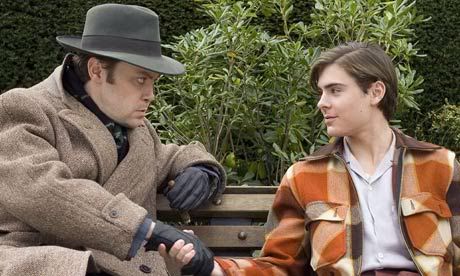
And while McKay steals the show, Zach Efron (following good work in the better-than-you'd-assume 17 Again) proves a more than capable young talent; Claire Danes has, perhaps, never been than better than as a Welles assistant with ambitions of her own. When Efron's Richard reacts heartbrokenly that his "girlfriend" is shacking up with the married Welles, Danes' Sonja reminds him that they've only known one another for a week. "This week has changed my life," he shoots back, dropping the cool-kid demeanor he's carefully cultivated and sounding a heck of a lot like Ethan Hawke's Jesse a decade and a half ago--or character-wise, almost sixty years later. When a closer-in-age other-Efron-love-interest recites "Ode on a Grecian Urn," it sounds rather like a working mantra for a filmmaker as indefatigably romantic as romance itself is indefatigable.
Artists of the Year


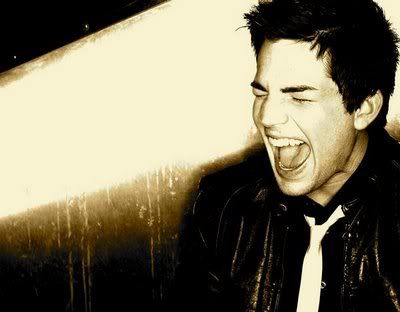
Adam Lambert and Lady Gaga aren't just the artists of the year. They each represent the culmination of a decade's worth of pop-in-theory (as opposed to literally popular) finally burst through ready-or-not into the mainstream. Which is to say, they're consciously subversive, smart about their own image and fame, clearly fascinated by pop history, sexually outré, wickedly talented--and they're selling lots of records to consumers who don't operate music blogs and/or write for alt-weekly papers.

This must be some kind of golden age. Even Madonna didn't arrive this canny or this provocative, or at least she didn't let on about it until a few years into her career, establishing her chart-topping credentials then making the "Like a Prayer" video and the Sex book. Prince might be the closest point of comparison, and when you have to evoke the Purple One as an exception proofing the rule, you know we're talking about two special entertainers. Plus, Prince sang about fucking women in his little red Corvette (and, okay, getting head from his older sister), which is challenging in its prurience rather than its actual subject, which, with different wording, could've inspired a Don Henley song. Adam Lambert is simulating fellatio and laying a juicy one on his (male) bandmember on a nationally television awards show; the openly bisexual Lady Gaga's new album includes a song about masturbating to a chick she's crushing on, while in an interview, she answers with an entirely straight-face that the only virtue she looks for in a guy is a big dick.

Post-Madonna, the formula has gone provocateur on record and stage/down-to-earth small-town girl (or boy) when the press comes knocking, even when said performer's public activities suggest otherwise (see: Britney, Miley, Rihanna, et. al). But Lady Gaga and Adam Lambert are not from Kentwood, Louisiana, Nashville, or Barbados; they're from New York City and San Diego, respectively, which may or may not have something to do with their divergent approaches to image maintenance.

At any rate, they're both uncommonly open in admitting their individual yearnings for fame. For Gaga, fame is itself an integral part of her persona. If she were merely a critics' pet or performance-art circuit darling (and either, five or ten years ago, would've been a probable career end-point), the sheer larger-than-lifeness of the character she's carefully cultivated would register as, at best, tongue-in-cheek self-parody (see: Peaches, for example). Instead, as she releases killer single after killer single and headlines multi-night gigs at large venues in major world cities, her single-minded ambition feels impressively prophetic.

Adam Lambert, meanwhile, was plenty busy before knocking everybody's socks off on American Idol, performing in theatre productions from Broadway to L.A. to Europe. On A.I., Lambert seemed to re-invent himself week after week, whether offering up a glammed-out "Ring of Fire" or achingly beautiful renditions of "Mad World" and "The Tracks of My Years." With all due respect to Kelly Clarkson and Carrie Underwood, he's the most remarkable, and most fully-formed, artist the show has yet produced, and, frankly, this truth was perfectly evident before the season was even half over. That he finished as a runner-up is a footnote that speaks more of American prejudices than the talents of the obscurity-bound Kris Allen.

For Your Entertainment lives up to the promise of his Idol performances, which is saying a lot. It's a consistently surprising (and surprisingly consistent), nicely varied showcase for Lambert as the pop star of the future. On a number of occasions, Lambert has cited the 23 year-old (!) Gaga as an influence, and there are moments on his debut that recall the fashion-forward, pleasure-first headiness she's fast made her signature. But there's also liberal doses of Queen, Bowie, Donna Summer, Justin & Timbaland, MJ, and Prince--the sound is in tune enough with the pop-rock past to stand out from the sameiness of today's top 40 while current enough to avoid retro novelty territory--and yet Lambert, like Gaga, emerges as a distinct voice in the mix. With any luck, their voices will remain distinct, and relevant, through the new decade that's about to begin.
Lives Less Ordinary: Films 1-2


02. Ghost World and 01. Before Sunset So, yeah, if only one film could represent the 2000's in a time-capsule for future generations to discover, it should absolutely be Redacted. But back to what I said above...rewatchability? Great acting? Those (usually) matter, too, and they especially matter when the films you're repeatedly rewatching somehow continue to yield new pleasures and nuances on the tenth or twentieth view. Which is to say, these two aren't my favorite films of the decade because I know every syllable of every line by heart. Rather, I know every syllable of every line by heart because they've both proved so endlessly rewarding to revisit.

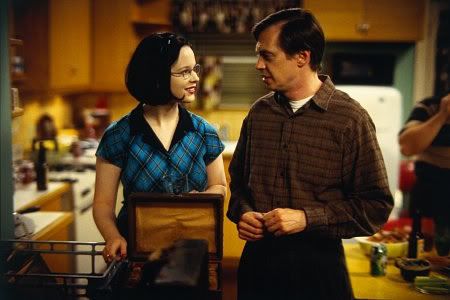
That's Ghost World and Before Sunset, for you. Admittedly, neither's going to change the world or the medium of cinema, though both offer fresh takes on seemingly familiar territory. Terry Zwigoff puts a world-weary, quasi-existentialist spin on the coming-of-age movie, while also marrying film style to comic book form more ingeniously than any of the recent comic-based blockbusters. Richard Linklater, meanwhile, pulls off the finest sequel ever made by reducing film romance to its most essential ingredients: two fascinating human beings, time, and the city (in this case, a seldom more gorgeous Paris). The real-time structure of Before Sunset, with Jesse and Celine nervously stalling against the former's scheduled flight home, is an exercise in tension build-up more effective than any Bond or Bourne flick, which naturally makes the release of the classic final scene that much sweeter.

Enid leaves town on the bus, Jesse misses that plane--and both Zwigoff and Linklater are wise enough to know that the future remains uncertain.
Tomorrow Never Knows: Films 3-5


05. A.I. A.I. certainly retains elements of Kubrick's conception and development of the project, but to consider it as an equal-parts hybrid is to shortchange Spielberg for the greatest film of his career. Icy yet tender, epic and intimate, A.I. is a film like no other--and the much-argued over ending is cinematic storytelling at its most profoundly human.

04. Three Times Three stories--set sequentially in 1966, 1911, and 2005 and starring the same pair of performers, Shu Qi and Chang Chen--centering on relationships and the circumstances that shape them. Only the first vignette, in which Hou Hsiao-hsien borrows fruitfully from the Wong Kar-wai playbook, suggests the possibility of a happy outcome. In the second segment, class and politics stand in the way of romance, while in the third, it's the distractions and fragmentation of modern life. As a sort of Hou greatest hits collection, Three Times is fascinating and particularly rewarding for the longtime Hou faithful, but it also represents a formal step forward for one of the world's foremost narrative filmmakers.

03. Redacted Brian De Palma's incendiary mixed-media assault on the Iraq War machine and the media complicit in its misdeeds is a work of such furious indignation (the YouTube girl delivering an anti-war tirade feels like something of a director surrogate) and unflinching power that, yes, it's more than a little difficult to sit through. So, if inviting rewatchability is your barometer of greatness, look elsewhere; likewise, if traditionally proficient acting is a prerequisite in your grading book (De Palma's no-name cast delivers purposefully heightened, one-dimensional performances). But if thoughtful contributions to an essential social dialogue, a prescient understanding of today's fractured information systems, and a brutal honesty in the face of censorship are virtues to be lauded--and they damn well should be--Redacted may well be the most significant statement put to film this decade.
Impossible Beauty: Films 6-10


10. Tropical Malady, 09. The New World and 08. In the Mood for Love This trio of unconventional romances each rank among the most jaw-droppingly beautiful films ever made. Apichatpong Weerasethakul's strongest outing to date is a gay love story told in two complimentary parts: the first half is a relatively traditional, exceptionally (and almost suspiciously) sunny boy-meets-boy narrative (lots of smiling and spooning), the second finds the pair in the jungle, with one a soldier on the hunt and the other reincarnated as a mysterious tiger-like beast. Terrence Malick's ravishing re-telling of the Pocahontas/John Smith encounter is an exploration of how we communicate--with each other, across barriers of culture and language, and especially with the wilds around us--that finds the master shooting four-for-four in the masterpiece count. Like the ill-fated relationship of Smith and Pocahontas, the never-quite lovers in Wong Kar-wai's greatest film connect deeply, but due to unfortunate circumstances--their closeness develops after learning that their respective spouses are carrying on an affair together and they refuse, despite their emotions, to follow suit--are unable to allow their affections to blossom; they're in the mood for love but in neither the time nor place for it.

07. Still Life and 06. Russian Ark Here, Jia Zhang-ke and Alexander Sokurov attempt to, respectively, take the current temperature and better understand the history of two of the most ancient (and most complex) nations on Earth, while successfully experimenting with the latest in filmmaking technology. Jia and his DP extraordinaire, Nelson Yu Lik-wai, utilize amazing high-definition digital video in exposing the galvanizing effects of the Three Gorges Dam project on Chinese society (see also, Yung Chang's excellent documentary Up the Yangtze). Alexander Sokurov steers one, daringly unbroken 96-minute tracking shot through St. Petersberg's Hermitage museum (formerly, the Winter Palace) and through centuries of contentious Russian history. Both films will take your breath away.
Blood and Guts: Films 11-15


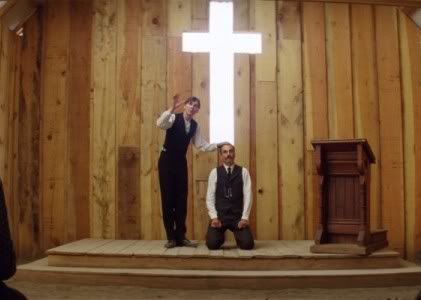
15. There Will Be Blood and 14. The Assassination of Jesse James by the Coward Robert Ford In 2007, Paul Thomas Anderson and Andrew Dominik reinvented the western, crafting not anti-westerns in the Peckinpah sense per se, but rather films that actively investigated the mythology surrounding the settlement of the American West, drawing clear, straight lines to the U.S.A. of today. There Will Be Blood offers scorching illustrations of cut-throat capitalism (namely, the oil business) and born-again Christianity; it also features the decade's most dynamic performance in Daniel Day-Lewis' deviously charismatic, largely inscrutable Daniel Plainview. Dominik's Assassination traces the cult of celebrity back to Jesse James and his sycophant assassin, employing a slow-as-molasses, mood-driven approach. The result is the best Terrence Malick movie ever made by someone not named Terrence Malick.

13. A Talking Picture and 12. The Fog of War The wisdom of elders has rarely felt more perceptive than it does in, respectively, Manoel de Oliveira's survey of the modern world and Errol Morris' extended sit-down with the fascinating Robert S. McNamara. A Talking Picture follows a mother and daughter sailing from de Oliveira's native Portugal to Mumbai, discussing high points in culture and civilization while exploring various ports of call. Late in the film, the narrative shifts to an on-ship current affairs debate led by John Malkovich (representing America) and including an international assortment of female passengers (representing France, Italy, and Greece). The film's leisurely pace and its gently critical tone, however, are no preparation for its shocker of a climax. In The Fog of War, McNamara speaks at length about his roles in World War II, the auto industry, the Kennedy White House, and, most (in)famously, as the "architect" of the Vietnam War; his admissions and hindsight reflections are, at once, illuminating and deeply moving.

11. Platform Rightly lauded as the most significant work to emerge from China's Sixth Generation, Jia Zhangke's underground epic may forever remain his signature achievement. Rarely has the political been made personal as seamlessly as Jia pulls it off here, charting China's awkward transition from strict Maoism to semi-free market via a decade in the lives of a dance performance group.
In Praise of Serious Men: Films 16-20


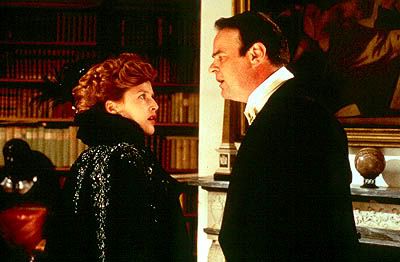
20. The House of Mirth Terence Davies' adaptation of Edith Wharton's novel about a socialite's fall from moneyed grace in turn-of-the-century New York is one of the great literary costume dramas ever put to celluloid--in a league with, say, Kubrick's Barry Lyndon and Ruiz's Time Regained. The entire endeavor is exquisitely accomplished, from the art design (the red, green and purple-dominated color scheme is indelible) to the ensemble cast (Dan Aykroyd, Laura Linney, Eric Stoltz, Anthony LaPaglia--each in peak form) to the lapsed-Catholic gravitas Davies lends the material, but what absolutely seals the deal is Gillian Anderson, who is unexpectedly devastating as the proto-feminist Lily Bart; it's probably the best female performance of the '00's.

19. In Praise of Love While I disagree strongly with Godard's views on Spielberg, it's hard to argue with this late-career masterwork. Not counting the singular achievement that is Histoire(s) du Cinema, this is my favorite Godard film since this blog's half-namesake, and it's compelling proof that the master remains as vital and radical a voice as any in cinema.

18. What Time Is It There? and 17. Paranoid Park The finest offerings to date from two of the most distinctive and adventurous film stylists working today. Tsai Ming-liang's (deservedly) signature film might be both his funniest and saddest work, as a Taipei watch salesman becomes infatuated with a customer departing for Paris, and in response, turns local clocks to Paris time. Few films speak more profoundly to the disconnectedness of modern life. The real joke underlying the seemingly absurd lengths Tsai's characters go to to find love or companionship or sex is that it's finally not a joke at all--in fact, few things could be more serious than the human need to connect with someone else. Paranoid Park is the grand triumph of the Bresson and Tarr-influenced style Van Sant's been tinkering with since re-inventing his aesthetic for the new millennium. But unlike the problematic Elephant and the fairly detestable (if gorgeous-looking) Last Days, Paranoid Park marries this approach with interesting characters that talk and feel like real human beings, as opposed to American Apparel models. While there's elements of crime and budding romance and family problems in the mix here, the film is, above all, a bittersweet paean to youth in all its fleeting, conflicted glory; as the skateboarders glided and grinded over the lovely DV denouement, I couldn't help but wonder where my own youth went.

16. A Serious Man Assuming The Tree of Life doesn't magically materialize before the year's end, this will very likely remain my top film for '09. It would be worth the price of admission for the creepy-hilarious opening scene alone, and it only gets better from there.
"Women's Films": Films 21-25


25. The Intruder Claire Denis' best film this decade (Beau Travail, while released commercially in North America in 2000, played the fests in '99) sounds convoluted on paper--an older, reclusive French man in need of a heart transplant heads to Tahiti in search of a son he's never met, while more or less ignoring his other son and his family in France...then add to that mix a possible murder and a mysterious Queen-of-the-North figure played by Beatrice Dalle--but it's anything but in execution. Denis and longtime DP Agnes Goddard are so infectiously fascinated by textures and moods, ephemeral pleasures and lingering sorrows, that the elliptically structured narrative feels as natural and as logical as your strangest, most vivid dream.

24. The Circle, 23. Wendy and Lucy and 22. Changeling Though only two of these three female-centered films are set in the present, they all deal thoughtfully with issues that couldn't be more relevant right now. Jafar Panahi uses interwoven vignettes to tackle the everyday discrimination facing women under Iran's patriarchal fundamentalism; it rivals Bruno as the movie I'd most like to force Mahmoud Ahmadinejad to sit through. Kelly Reichardt's film was one step ahead of the zeitgeist--made just before the current economic meltdown--in charting the struggles of Wendy (a surprisingly marvelous Michelle Williams), a cash-strapped drifter searching desperately for her missing dog, Lucy, after her car breaks down on the way to Alaska and her financial woes escalate from there. Clint Eastwood, meanwhile, considers corruption in law enforcement and misogynistic double-standards still pervasive today in telling the late '20's/early '30's-set based-on-a-true-story of a woman searching desperately for her missing son; to my tastes, it's Eastwood's strongest work since Unforgiven.

21. Werckmeister Harmonies For viewers not up for SĂ¡tĂ¡ntangĂ³'s hypnotic seven and a half hours, Werckmeister Harmonies (a mere two and a half hours) is probably the next-best place to try and "get" the genius of Bela Tarr. The plot includes a circus--consisting mostly of a giant whale carcass and someone known as "The Prince"--arriving in a small village in the dead of a particularly miserable Hungarian winter; suspicion, manipulation, and wild-eyed theories of the universe follow, leading to one of the decade's most shattering final acts.
High Points: Films 26-30


30. 25th Hour and 29. Solaris Two hit-or-miss, occasionally thrilling American auteurs working near the height of their respective powers. Spike Lee's film is full of anger and anxiety, but, in many ways, it's the most mature of his non-documentary efforts, leaning less on stylization and provocation (though there's healthy doses of both in the mix) and instead focusing on well-constructed characters in difficult situations. This approach is fitting since this is a film that's all about accepting the consequences of our actions--or not, as the extended fantasy sequence near the end suggests--and dealing with life as adults. Edward Norton's never been better than as a convicted drug dealer enjoying his last night of freedom before beginning a lengthy a prison sentence, and the supporting cast--Phillip Seymour Hoffman, Barry Pepper, Rosario Dawson, Brian Cox--is no less superb. Soderbergh's remake of Tarkovsky's Solaris is a stranger creature--not least because it's actually superior to the original. Moody and cerebral, poetic and ambitious--these aren't adjectives typically used to describe expensive Hollywood sci-fi flicks starring a big-name movie star (especially remakes, for which the word "ambitious" would usually seem antithetical). But Soderbergh's film is all these things and others besides--romantic, thought-provoking, gorgeous to look at...; it might just be his masterpiece.

28. demonlover and 27. Esther Kahn To my tastes, these are the most accomplished films to date from two of France's finest contemporary filmmakers, both of whom have earned multiple entries on this list. demonlover is Olivier Assayas at his globe-hopping, coolly stylized, sexy-sleazy best, following a double-agent (a kick-ass Connie Nielsen) through the spheres of high-powered business and Web-centered exploitation and into the space where the two dubiously blur into one; the final scene is a pointed gut-punch. Esther Kahn is also about a woman (a perplexing, possibly brilliant Summer Phoenix) with more going on than we would initially assume. Phoenix plays the title character as an impenetrable blank slate, who only registers flashes of some inner life while acting on the stage. As an exploration of acting as a vocation, Desplechin's film has plenty to say, even if its heroine doesn't. Eating glass kind of speaks for itself, no?

26. Star Spangled to Death If you're looking for a reverent, easily digestible look at modern American history, try Ken Burns or Tom Brokaw. Ken Jacobs' nearly seven-hour opus is uncommonly passionate, unapologetically radical, frequently funny, sometimes intimidating, and rarely dull; reverent or easily digestible--not so much.
Fat Girls and Inglorious Basterds: Films 31-35


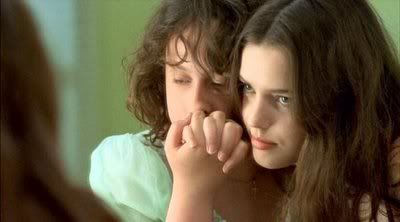
35. Fat Girl Catherine Breillat's molotov cocktail of a movie confounds expectations, ingeniously subverts the teen-romance-on-a-holiday-at-the-beach subgenre, and (admittedly, coming from a male) feels as brutally honest as any representation of sisterly rivalry ever filmed.

34. Unknown Pleasures and 33. Perfect Life Jia Zhangke's expert study of young-adult ennui and fleeting romance, and Jia protege Emily Tang's amazing snapshot of a woman for whom life's once-seemingly limitless possibilities are progressively shrinking. Both speak volumes about the changing face of Chinese society, though they should prove no less resonant for viewers in Vancouver, Vermont, or Venezuela.

32. The White Ribbon and 31. Inglorious Basterds A couple might-be-masterpieces from filmmakers I've always found it easier to like than love. Michael Haneke's '09 Palm d'Or winner is an expansive memory piece wherein a Northern German village plagued by disturbing goings-on stands in for Europe on the eve of the First World War. Tarantino's shrewdest and finest film to date follows the lead of Verhoeven's Black Book in toying with pivotal 20th Century history, while secretly stashing more brains up its sleeve than the more "important" films it's actively criticizing.
Alternate Routes: Films 36-40


40. Millennium Mambo Hou Hsiao-hsien's most underappreciated effort is the "night" to Cafe Lumiere's "day" (a one-two punch reminiscent of Wong Kar-wai's Chungking Express and Fallen Angels in the '90's). Where the later film brilliantly uses sunlight--the way it reflects off and dances around surfaces and people--in telling the story of a single expecting mother and her smitten male friend, Millennium Mambo uses nightclubs and under-lit apartments as it traces the tentative steps forward by Vicky, a mostly aimless young woman (an appropriately disaffected Shu Qi) deciding between two possible suitors. Vicky's trip to Yubari, Japan is one of my favorite Hou sequences, as blinding-white banks of snow provide a lovely contrast to the film's dark/neon-lit aesthetic.

39. Miami Vice and 38. Mystic River A pair of cops-and-criminals films with little else in common. In Michael Mann's movie, style is everything. The plot is negligible, and even the casting of Colin Farrell, Jamie Foxx, and Gong Li has less to do with their acting abilities and more to do with how they look photographed against the Miami skyline or dancing close together in a Havana nightspot. If it's not Mann's masterwork, it's at the very least the apotheosis of his impossibly slick aesthetic. Clint Eastwood's film is a powerful character drama with (I'm by no means the first to observe) Shakespearean overtones. Of course, the whole cast is superb--Eastwood may be the world's greatest actors' director--but Sean Penn channels depths of raw pain rarely tapped into on screen and Laura Linney's controversial Lady MacBeth speech is a flawlessly executed 11th-hour game-changer.

37. Ten and 36. Tarnation Abbas Kiarostami and Jonathan Caouette's respective films are also highly dissimilar, except that they both expertly straddle the line between narrative and non while thinking outside the box about how films are, or should be, made. Kiarostami plants a video camera in a Tehran taxi cab, capturing fascinating conversations between the female cabbie and her passengers, including her own bratty son. Guided rather than scripted or conventionally directed, Ten follows Kiarostami masterpieces Close-up, Taste of Cherry, and the "Earthquake Trilogy" as an exploration of cinema's boundaries and possibilities. Tarnation tells the deeply troubled story of Caouette and his mother, combining old home movies with present-tense video diaries and obscure pop-culture footage, merged via Apple's iMovie program. The result is unforgettable and largely unlike anything else I've ever seen; any attempt to mimic Caouette's breakthrough would inevitably feel derivative.
Histories of Violence: Films 41-50


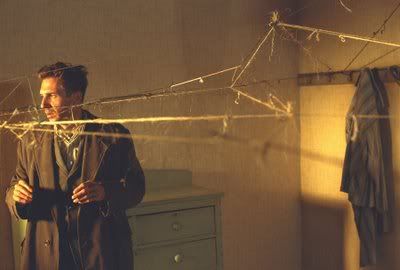
50. Spider and 49. Koma David Cronenberg's best film since either Crash or Dead Ringers (depending on my mood) and the most outrageous Asian horror/dark comedy you've (probably) never seen. Spider is a study of childhood demons deeply suppressed, featuring one of Ralph Fiennes' finest performances and one of the decade's best by Miranda Richardson as a matriarchal hellspawn--perhaps an inspiration for Mo'Nique's much-lauded Precious performance? Koma, by Hong Kong's Law Chi-leung, involves cheating partners, involuntary kidney removal, female rivalry, female bonding, and female identities merging and shifting and switching places. For the psychological territory it's charting, Koma's weirder than Persona and more unexpectedly poignant than Mulholland Drive. And, no--for the record--if it weren't for Teresa, there's no way I would've tracked this one down. Bless her.

48. Cafe Lumiere Further proof that Hou Hsiao-hsien might well be the world's greatest living filmmaker not named Godard or Malick.

47. The Pianist and 46. Black Book Unique, personal journeys through subjects all too familiar to moviegoers--namely, the Holocaust and World War II. Working from material that clearly hits very close to home, Roman Polanski tells the story of Polish Jewish pianist Wladyslaw Szpillman, who barely survives the Holocaust through intelligence, resourcefulness, and--if it can be called such--a whole lot of good luck. Adrien Brody's Oscar win for the title role was richly deserved; the shot near the end of him playing piano--echoing the opening scene--where a grin suddenly crosses his face is about as moving as movies get. Paul Verhoeven's WWII saga takes an altogether less conventional route through war-torn Europe, as a Jewish spy seduces a Nazi officer--dying both the carpet and drapes blonde to disguise her ethnicity and later ending up covered in literal shit by an anti-Nazi assembly. Far more than the usual, sacrosanct Veteran's Day fare, Black Book is a vital commentary on never-ending cycles of violence.

45. The Man from London Bela Tarr goes genre? Not really. Though The Man from London is an adaptation of noirish French novel concerning a sinister brief case full of money, it's also very much a Bela Tarr film. Tarr uses the basic framework of this narrative to once again consider his usual themes of conspiracy, greed, human back-biting, and suffocating insularity within small, remote villages.

44. Notre Musique Godard at his esoteric, densely allusive late-career best, in this case borrowing structurally from Dante for an extended meditation on past and present world conflicts. The final sequence is as beautiful as anything in his filmography.

43. Dogville and 42. Hamlet Two films that employ archaic modes to explore contemporary issues in interesting ways. Lars von Trier stages a bare bones Our Town, by way of Bertolt Brecht and the Old Testament, wherein a Woman In Trouble experiences small-town American hospitality at its worst, before telling Daddy (a brilliantly cast James Caan) to kill 'em all. Michael Almereyda looks at the worlds of high-powered multi-national business and Internet-age disaffection through the lens of Shakespeare's most famous play. The result is Ethan Hawke, Julia Stiles, Kyle McLachlan, and Bill Murray reciting Shakespeare as fluently as anyone in any rigidly faithful Olivier or Branagh adaptation, plus one of the all-time great movie monologues as Hawke's Hamlet delivers the "to be or not to be" speech while strolling through the Action section at Blockbuster.

41. United 93 Released less than five years after the September 11, 2001 terrorist attacks, Paul Greengrass's film pulled off the seemingly impossible: it's a genuinely cathartic experience--neither exploitative, sentimental, or jingoistic--about that tragic, traumatic day. I hope there'll never have to be another film like it.
Lost It at the Movies: Films 51-59


59. Goodbye, Dragon Inn and 58. The Wayward Cloud Tsai Ming-liang at his deadpan, minimalist best: slow-build "jokes," awkward sexual encounters, and eternal static shots. The former is Tsai's version of a Death of Cinema elegy, as a Taipei movie house on the eve of its closing down plays host to a few loyal film fans, guys cruising urinal stalls for quick thrills, and perhaps a ghost or two. The latter is arguably Tsai's most audacious work to date (though Tsai's leading-man/protege Lee Kang Sheng tried to up the ante to muddled effect with Help Me, Eros). It's a sort-of sequel to What Time Is It There? and the most legitimately thoughtful study of romantic fidelity since Eyes Wide Shut. And as in Kubrick's masterpiece, the final scene is (no pun intended) a real headfuck.

57. The World This was initially my least-favorite Jia Zhangke movie--loved the concept, admired the execution in general, less so the curious anime tidbits and seemingly un-Jia-like romantic fatalism of the surprise ending. I watched it again recently, however, and found more to appreciate while being bugged less by what I'd previously perceived as flaws. In fact, if this weren't by a filmmaker from whom I literally expect the world every time out, I'd probably ignore my qualms and flirt heavily with the M-word. But since Jia's work will make three appearances higher up my list, #57 and 'a really fine film' will just have to do.

56. Hunger and 55. Ballast Hands-down the two best films I caught at last year's Victoria Film Festival (though Lyne Charlebois' Borderline, way down at #243 on this list, deserves more fans outside Quebec). Both are by first-time feature directors and both focus on desperate living conditions with only occasional glimmers of hope. Art-world star Steve McQueen recalls the 1981 IRA hunger strikes, though he concentrates more on sustaining his film's hypnotic rhythms--in which haunting stillness is disrupted by sudden bursts of violence--than on either revolutionary politics or triumph-of-the-human-spirit yarns. Lance Hammer's film considers the possibility of redemption within a broken family in one of America's poorest pockets, the Mississippi Delta.

54. I'm Going Home and 53. Yi Yi The story of a near-octogenarian actor (the incredible Michel Piccoli) simultaneously coping with grief and wondering whether to carry on his profession felt, the better part of a decade ago, like a poignant and fitting swansong for Manoel de Oliveira. Now, with de Oliveira turning 101 next month and still actively at work, it's simply another excellent entry in his late-career catalog. Yi Yi, a vibrant and heartfelt portrait of Taiwanese family life, was unexpectedly Edward Yang's final completed film; it will likely remain the work for which he's best remembered.

52. Junebug Another film about familial dynamics, with North Carolina as the locale rather than Taipei. And that's an important detail: few recent films have offered a more honest portrait of today's small-town South; the characters here have their eccentricities, to be sure, but they're warmly painted creations--not judgmental, one-note caricatures. I don't have to add that Amy Adams is the cast's standout in one of the decade's most irresistible turns; her subsequently A-list resume speaks for itself.

51. Mulholland Drive What's left to say about this one, really? Sure, it's probably the best thing Lynch will ever put to celluloid--especially if Inland Empire, for better or worse, is any indication--though I'm kind of partial to The Straight Story...