Days of Being Wild


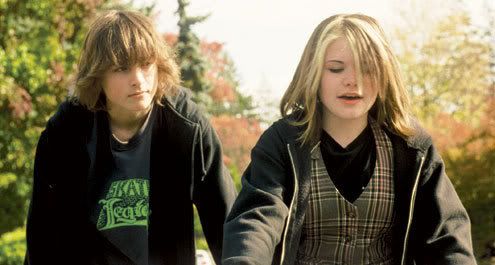
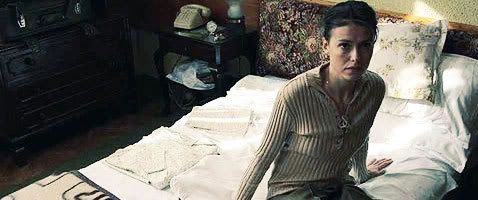
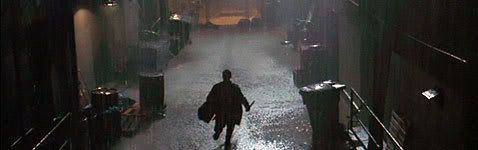
Paranoid Park is the best movie Gus Van Sant's ever made--and by a pretty comfortable distance, at that. I offer this assessment as something less than a fervent Van Sant fan: I can admire Elephant with considerable reservations and without necessarily liking it; more or less detest Last Days, which trades on complex, culturally and personally loaded memories of Kurt Cobain for empty fashion ad martyrdom; couldn't manage to stay awake through two tries at Gerry; only half-buy the spirited defenses I've read of his shot-for-shot Psycho remake (which, regardless, I'd be more than happy to never sit through again, thank you very much); and let's not even bother discussing Finding Good Will Forrester, 'kay? Drugstore Cowboy and My Own Private Idaho, though, represent the Sundance school of Amerindie filmmaking at its most estimable, and prior to now, I'd happily cite the acidic, inexhaustible To Die For as my favorite Van Sant flick.

I should add, too, that--aside from his regrettable detour into the middlebrow wasteland around the close of the last century--I'd be hard-pressed to accuse any Van Sant work of being less than interesting and ambitious; they've just tended to leave me with as many caveats as compliments to offer once the credits start to roll. Paranoid Park combines everything Van Sant's done right technically since ditching the crappy Oscar bait back in '02, with the real emotional resonance and strong characterizations of his early work (virtues his Kubrick/Tarr homages of late have sorely lacked). It's a work of bold formal expression and tremendous lyrical beauty that feels organically achieved where Elephant felt stiff and studied, graceful where Last Days just registered as lifeless.

Critics who've name-checked Bresson aren't off the mark either; from the "doubling" effect of narrating an event via voice-over and later actually showing it occur, which Van Sant skillfully employs several times here, to the loneliness and solitary guilt of the story's central character, Paranoid Park could credibly be re-titled Diary of an Urban Skater Kid. And as a skater kid who grew up into a Bresson buff, this film is all the more compelling. Elephant, I felt, basically failed as an honest study of youth culture, due mostly to Van Sant's artsy photo shoot calculations and over-fetishization of skinny, shaggy-haired teenagers. Paranoid Park also lingers long and hard at lithe, limber frames and delicate features but--thanks in large part to master DP Christopher Doyle--this approach feels more wistful than voyeuristic here. (It also doesn't hurt that Van Sant and his uniformly strong cast endow these characters with genuine, distinct personalities, rather than just coaching them to hold pouty expressions and sulk stylishly through pristine wide-angled compositions.)

The skateboarding sequences are hypnotic, forging a sort of physical poetry out of the convergence of concrete, metal, wood, and bodies that won't always be able to endure rough falls and scrapes so easily. The latter fact ties closely into Van Sant's relentless pursuit of ephemeral pleasures and pains, a preoccupation that achieves its haunting apotheosis with Paranoid Park. Like Atom Egoyan's best films, Exotica and The Sweet Hereafter, Van Sant's masterpiece centers ostensibly on a tragic event so disturbing for those involved that it can only be approached--and eventually realized on-screen--elliptically. It's a structural device that's akin to a kind of cinematic circumnavigation, mirroring the way memory works when it comes to serious trauma, and unlike, say, Pulp Fiction and Memento, it's functionally absent of cheap gimmickry.

The key difference between Paranoid Park and Egoyan's films is that the narrative sequencing in the latter pair seems determined by some silent but all-knowing author, while in Van Sant's, it feels disquietingly confessional, inching us ever closer to not just the scene of the crime but the increasingly troubled psyche of our young protagonist. The unexpected denouement, consisting of video footage of skateboarding tricks, might as well have been copped from some good skate tape, yet in the context of what's preceded, it suggests the possibility of release or redemption or at least defiant perseverance, without guaranteeing anything save for its own singular excellence.

If Van Sant and longtime Wong Kar-wai collaborator Doyle get just about everything right with Paranoid Park, Wong, working entirely apart from Doyle for the first time in his feature filmography, gets just about everything wrong in My Blueberry Nights. While this is almost certainly no coincidence, especially where Blueberry's awful camerawork is concerned, even Doyle's superlative lensing couldn't have saved this legitimately awful film.

Teresa already did a fine job trashing it, but I think I may have liked it even less than she did. The "America" that Wong stumbles across here bares only the vaguest resemblance to any place I've ever visited, which isn't a dis and could've potentially been a fascinating element at work here, but the whole thing is just so muddled and ungainly that this alien quality proves particularly off-putting, and at times, even insulting. Wong's caricatures of restless American souls are as dubiously under-developed as, say, the Tokyo locals in Lost in Translation, except that in My Blueberry Nights, they're all there is to focus on, from Natalie Portman's clingy card shark (a cross between Mae West, Jodie Foster in Maverick, and, uh, Natalie Portman in Closer) to Rachel Weisz's would-be femme fatale with a wretched fake Southern accent to Norah Jones' staggeringly boring heroine.

Trust me, I'd have jumped for joy (and breathed a sigh of relief) had Tony Leung and Maggie Cheung suddenly appeared in lieu of Jones and a no less out-of-place Jude Law, and had Wong's America subsequently receded to the role of picturesque back-drop (ala Argentina in the immeasurably superior Happy Together). Instead, the best we get is David Strathairn bending over backwards to minimize the awkwardness and embarrassment that inevitably comes with such putrid scripting and paper-thin characterizations. He's good in everything, though--like Steve Buscemi. Think: Con-Air. Then, skip this turd and re-watch In the Mood for Love. Or Paranoid Park.
The Words Are Gonna Come Out Slow


Loved the folk move lots; love the 'love songs' best, natch. This, at any rate, is just plain lovely.

Too bad we couldn't make it over to Brooklyn tonight. Oh, well: late to the party, as usual--except, in this instance, three time zones.
Even Gwen Stefani Said She Couldn't Doubt Me


Brief notes, solid-to-exceptional singles, some new, some not-so-new:

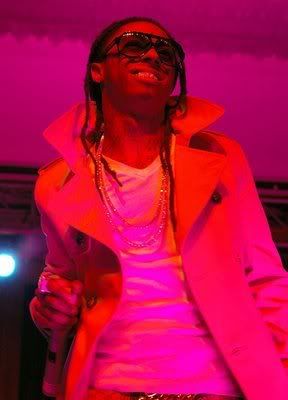
01. Lil Wayne, "A Milli" Some hundred-plus spins in, this sounds increasingly like it might be the high point of Tha Carter III proper. It might also be the single of the year, and, most tellingly, it might be the Single Of The Year in that decidedly rarer, formally reinvigorating sense that those early '00's Missy/Timbo smashes were. It's gibberish gone genius--or vice versa--delivered over a beat so sick-thick that Wayne could be rapping about menstrual bleeds and loose bowels and it would still split your earbuds like nobody's business. Oh wait--Wayne is rapping about menstrual bleeds and loose bowels...and, yep--quick reminder, Wayniacs-- Carter III's the first long-player to sell a milli in its opening sales week since 50's sophomore set.

02. T.I., "No Matter What" T.I. is so damned good at sounding simultaneously wistful and triumphant, rendering his upward mobility yarns poignant where other rappers' rags-to-Benzes narratives feel merely boastful and ring more or less hollow. This is one of his best such tracks yet--a promising marker for the upcoming Paper Trail.

03. Estelle, "No Substitute Love" It's not just summer, but a summer in which music headlines have been momentarily dominated by news of George Michael's North American farewell tour-cum-belated comeback. Which is just plain good timing for this deserving hit, which would sound every bit as nice if it were November and George Michael had opted to stay in England.

04. Hercules & Love Affair, "Blind" Why, three years ago, didn't Antony 'I am a Bird Now' Hegarty's blog-pop disco diva move seem inevitable? Maybe because the closest thing to a "dance" track he'd heretofore contributed to was a CocoRosie song that was decidedly more blog than pop. This one shimmers.

05. Nas, "Hero" This is forceful, cinematic rap music executed impeccably--not Illmatic good, natch, but really as high quality a product as we have any right to expect from Nas in 2008.

06. Kerli, "Walking on Air" Teresa turns up her nose to this Estonian goth-pop up-and-comer; I'm intrigued. But I also like Amy Evanescence, who, appearances aside, Kerli (where's Larry and Moe? Sorry.) reminds me less of than, say, fellow East-European provocateurs T.a.t.u. Or, hell, some of those J-Pop idols Teresa likes so much. That is to say, she's bringing the Otherness--some stuff we aren't getting, or aren't getting enough of, or maybe just aren't getting from reliable enough sources. Either way, if this contributes in some way to Katy Perry being over, I'm even more for it.

07. Taylor Swift - "Teardrops on My Guitar" If it lacks the unstoppable ebullience of "Our Song" and the real intimacy and tossed-off poetry of "Tim McGraw," it nevertheless demonstrates that Swift is still worth keeping an ear out for even when she's not rewriting the New Country playbook. A major talent working minor is preferable to plenty of things, including, usually, that same equation assembled the other way around.

08. Leona Lewis - "Bleeding Love" This is old news by now, granted, but it's a grower, for me. Initially, I was rubbed wrong by the blatant Early Mariah/Wanna-Be Alicia histrionics, but this one gets by on beat and on a sincerity that feels less feigned than it might have--given the generic drama of the material--if Lewis wasn't, in fact, some sort of legit talent. It's no "No One"--not by a long stretch--but beat and sure-footed sincerity are enough for me, and glancing at Lewis's Trans-Atlantic sales figures, it's clearly more than enough for people who still pay for music.

09. Lloyd f/ Lil Wayne - "Girls Around the World" This would be wholly pleasant yet wholly forgettable hot weather fare if not for--surprise, surprise, right?--Mr. Weezy F. Baby, who uses his guest verse to pay homage to "Paid in Full," unsubtly advancing the case for his name's mention alongside Rakim's.

10. Kid Rock - "All Summer Long" Following Nickelback's "Rock Star" last year, this is my big guilty pleasure of '08. I don't like Kid Rock, and--having grown up in a small Southern Illinois town under the mistaken impression that it's nestled somewhere in the Deep South--I'd be perfectly content to never hear "Sweet Home Alabama" or "Freebird" again in my life. And yet...I sort of can't help but sing and nod along when it comes on. Teresa noted a little while back that George Bush would be a pretty amusing buffoon if he wasn't in a position to, say, start wars and deny basic rights. That's sort of where this one's guilty appeal lies (if that makes any sense at all).
Infinity and Beyond (Almost)


The first half or so of WALL*E is utterly superlative, more stunning in its images and more resonant in its ideas than anything Pixar (or any other contemporary animator, for that matter) has previously put to celluloid. Its almost total lack of dialogue and loose, leisurely pace are daringly achieved. Its vision of a lonely "waste allocater" robot patrolling the deserted cityscape of a planet carbon-emitted and big-boxed to near-death is haunting and indelible. Its seamless, rapid-fire nods toward cinema history--from City Lights to 2001 to E.T. to I Am Legend--are legitimately moving, as if our mechanical protagonist and the filmmakers are simultaneously attempting to salvage the profundities and curiosities forged from mankind's moment in the sun.

Had director Andrew Stanton and Co. managed to sustain such brilliance over the course of the film's 98-minute runtime, this would probably be the movie of the year--which, sorry Pixar diehards, it isn't.

Instead, the film's second half (from WALL*E boarding the Death Star-cum-Carnival Cruise spaceship Axiom on) is merely fine and occassionally dazzling (see: the fire-extinguisher-aided, gravity-free dance sequence). The environmental message--delivered with effective grace in the first half--is hammered home too heavy-handedly for those of us past pre-school, while the by-the-numbers narrative that ensues says nothing particularly new from what the superior earlier stretch had already suggested much more poignantly. Which leaves the film as a whole feeling like slightly less than the sum of its parts.

This is understandable, of course, since this is still finally a family film we're talking about--that's still the business that Pixar is in, critical hosannas or no. It's a format that aims to please not just Mom and Dad and cranky Uncle Cinephile, but also (especially) the little tykes, who, in our screening, were beginning to look and sound just a little restless by about the half-hour mark. (Guess they weren't that wowed by those witty Kubrick homages.) As a compromise between ambitious art and popcorn entertainment, WALL*E is as thorough and admirable a success as its box-office receipts and Rotten Tomatoes tally would together indicate.

Perhaps it's too much to wish that it was as good as it might've been.
Action Figures


Decisions, decisions: "History" or historical fantasy? Eurasia circa the 12th Century or AmerAsia (the jungles of Thailand by way of Hollywood) circa the mid-20th? Henry Jones, Jr. or Genghis Khan.

It's your call at multiplexes this summer--air! conditioning!--but either way, you'll be in for more or less than you bargained for, whether you're in search of old-fashioned escapism, CGI-enhanced action spectacle, or (it's an election year, if you haven't noticed by now) politics. The latter's the kicker or the trojan horse--depending on which camp you pitch your tent--since these are both (supposed to be) Big Dumb Summer Blockbusters.

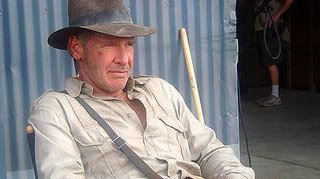
That only one of the two arguably fits that bill should only come as a surprise for viewers who've somehow ignored Steven Spielberg's output between now and his last Indiana Jones outing--a nearly two-decade-long creative hot streak rivaled only by Hou Hsiao-hsien within that timeframe. If Kingdom of the Crystal Skull isn't as good as The Last Crusade, it's still a total pleasure from its breathtaking, extended opening sequence to its sweetly satisfying denouement. Its message of defiant patriotism--early in the film, Indiana Jones is questioned by federal agents about potentially "un-American" activities"--warrants a Fourth of July revisit from America's better half as they prepare to finally give Bush the boot.

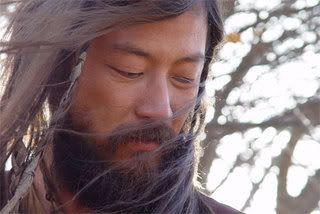
Meanwhile, the Oscar-nominated, upper middle-brow Mongol functions most effectively as a relocated remake of Braveheart, thankfully minus most of the more repugnant elements that marred Mel Gibson's Academy Award winner. Making a romantic action epic based on the life of a real-life figure who's been dead for the better part of a millennium is a dubious proposition to begin with; revisionism engineered for purposes other than cheap fun (which, I'll concede, Mongol mostly delivers on) calls for more than rolled eyeballs.

Where Gibson used a 13th Century Scottish warrior's loose story as an excuse to turn back the clock on 700 hundred years' worth of progress toward gay rights and feed his own persistent Christ complex, Mongol merely recasts Genghis Khan as a proto-Wyatt Earp with a supremely shitty childhood. He's let off the hook for a life devoted to war-mongering imperialism because he (according to this movie) introduced concepts of law and order to a region and culture previously defined by quasi-anarchistic (and, apparently, regularly mutinous) tribalism. Is this somewhat less repugnant than, say, whitewashing a biopic of Hitler? Sure, but the point at which History (or, again, "history") becomes Ancient History is an oft-obscured division worth mulling over. Mongol's romanticization of Genghis Khan makes Zhang Yimou's Hero look down-right apolitical--or, for that matter, Indiana Jones treacherously un-American.
This Year's Girl

Surprise: We’re both huge, rabid, geeky Buffy, the Vampire Slayer fans! Oh, wait, we already mentioned that? Yeah? Well, did we also note that if our baby was a girl, Cordelia was on the shortlist of names? Or that back in those kinder, gentler pre-blogosphere days of the Interweb, Teresa operated a Buffy fansite?

Anywho, blogger/Buffy nerds that we are (and--come on, admit it--that most of y’all reading this are, too), we put our heads together to assemble the “ultimate” (okay, highly subjective and personal) list of episodes from the Greater Whedonverse (Buffy, plus Angel and Firefly). We wrote a little bit about our ten favorites; click the link below that for the 40 we like only a little bit less.
-Josh

10. "Selfless"
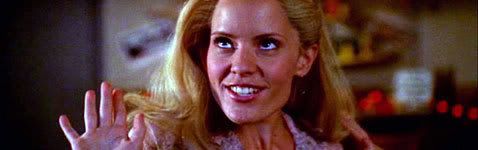
There are surely some valuable lessons to be gleaned from this Season 7 gem – what should one do, for example, when a close friend crosses a line between condonable and uncondonable behavior; or the extent to which heartbreak hardens us, often leading, in turn, to others being similarly hurt by our consequent lack of feeling. These strong ideas are certainly in the mix in “Selfless,” but, let’s be clear here: it’s “Mrs.,” Anya’s gorgeously tender aria, that really seals the deal on this one. It’s funny, too, natch – “Mrs. Anya Lame-Ass Made-Up Maiden Name…Harris” – which only sharpens the (literal) blow that brings us jarringly back from memory to the here and now. [Josh]

09. "Who Are You?"
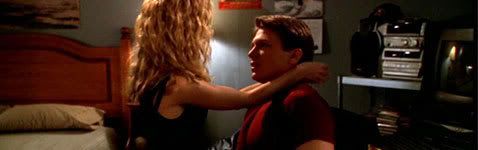
You can tell by the charisma that drips off the screen in this episode (Buffy, season 4), and in many episodes where she plays The First in season 7: Sarah Michelle Gellar loves playing bad. And she’s rarely better than when she’s doing just that. “Who Are You?” allows our flaxen haired heroine to slip into the skin of Faith, and Gellar into the role of the rogue, rebellious slayer who will stop at nothing to tear down every aspect of her rival’s “perfect” life. From hitting on Spike, making fun of Willow’s new gal and lifestyle, to taking her game as far it’ll go (sleeping with Riley and buying plane tickets out of town before anyone notices), Whedon doesn’t just use the setup as an excuse to let Gellar have some leather fun. He also allows moments of major vulnerability for Faith to show through, and the scene where she--still in Buffy’s body--pummels the hell out of her own face (with Buffy inside of it) is one of the more disturbing, ingeniously revealing moments for any Whedon character. [Teresa]

08. "Fool for Love"
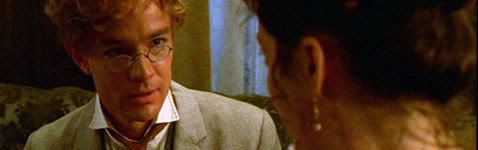
Ah, Spike: to be sure, one of Whedon’s most interesting and – more often than not – likeable characters. But, the question is, when do we like him best? Right from the get-go, terrorizing Buffy & Co. in Season 2? Or during the last couple seasons of the show’s run, when he and Buffy are alternately (and sometimes simultaneously, as in “Smashed”) getting down and dirty in, uh, each sense of the term? Perhaps, instead, you prefer him, back from oblivion and in Los Angeles just in time for Angel’s final season? For our money, Spike’s at his best when he’s straddling that tenuous line between straight-up villain and reluctant hero – namely, in Buffy Seasons 4 and 5 and, most specifically, in the wonderful “Fool for Love.” Spike’s moral crossroads is, in fact, best exemplified in the episode’s concluding scene, wherein Spike decides to blow Buffy’s head off with a shotgun…until he notices her crying on the porch and opts instead to console his long-time nemesis. [Josh]

07. "Conversations with Dead People"
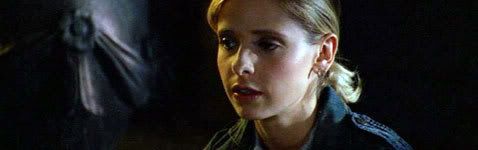
From the very first frames of Buffy, walking through a graveyard as usual, intercut with a band setting up to play at the Bronze, you can tell this episode will be one of the artsy-fartsy ones (always a good sign). “Conversations with Dead People,” in being so artsy, really pulled the so-far drab season 7 into a higher gear. For the first time, the severity of the situation--and the sadness that this really would be the last season--became impossible to ignore. It was also one of the earliest episodes to really utilize The First, and the tricky fact that it could take on the form of any dead person. This allows for the reappearance of Joyce, albeit in a less lovable, mom-like state. Her scenes are undoubtedly some of the most genuinely scary ones in Buffy (which is saying something, as the show’s monsters are usually campy or overly humanized to the point of being anything but scary). There’s also the interesting decision--possibly caused by behind the scenes conflicts, of schedules or otherwise--to have a minor, one episode character stand in for Tara (instead of Amber Benson) in Willow‘s segment. Somehow it works, as not to be overwhelmed with blasts from the past, the story and conversations are the main attraction. It’s also the only Xander-less episode, and it’s good enough that you won’t even miss him. I wouldn’t have minded seeing him having another chat with Snyder, though. [Teresa]

06. "Soul Purpose"
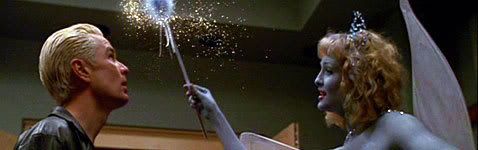
“Soul Purpose,” (Angel, season 5) one of the finest episodes of any Whedon series--any series period--oddly enough is also the directorial debut of star David Boreanaz. While he obviously played Angel as no one else could, and pulled off a roller coaster of character paths and changes, no one had any reason to suspect he was a daring visual artist with an eye for the absurd and grotesque. And yet, the episode, not unlike “Restless,” uses dreams (in this case, poison-creature-induced fever dreams had by a sweaty, bed-ridden Angel) as springboards to act out a character’s inner turmoils in the most outlandish, colorful, yet still plot-advancing ways. The difference between this and Buffy’s season 4 finale is that Angel was already totally weird and audacious by the time it aired “Soul Purpose.” Thus, instead of being a revelation, it was simply a graceful, compelling feat of storytelling to hammer home the show’s greatness as it neared the untimely end of its final season. [Teresa]

05. "Hush"
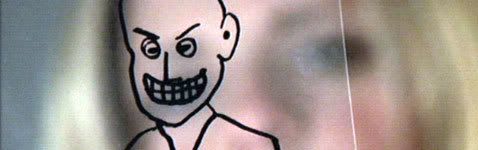
Within Whedon-centric circles, what is there really left to say about this one? That it saw the level of innovation at work on Buffy graduate to a new level, paving the way for future experiments like “Restless,” “The Body” and “Once More with Feeling.”? That it challenged TV’s most talented cast and crew in ways they’d never really previously been challenged, and that they all rose brilliantly to the occasion? That the Gentlmen might be Our Man Joss’s single creepiest creation? That it remains a real pleasure to watch, from start to finish? [Josh]

04. "The Body"
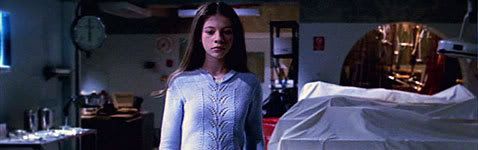
The most realistic depiction of the moments directly after learning of a loved one’s death that I‘ve ever seen, “The Body” (Buffy, season 5) spans just one day--one long, confusing, foggy-headed day--where most episodes cover around a week in Sunnydale time. Buffy returns home to find her mother, Joyce (who we’d cruelly been led to believe had fully recovered from her brain tumor), dead on their living room couch. She reacts with disbelief, violently shaking Joyce’s corpse, as though she’s simply stuck in a midafternoon nap. Then with denial, as she fantasizes about getting home just a little earlier, and saving her mother’s life. The most heartbreaking moment in the episode, however, comes from the unlikely source of ex-demon Anya, already coming to terms with the fact that she herself now has to eventually sleep with the fishes. “Joyce will never have any more fruit punch ever, and she’ll never have eggs, or yawn, or brush her hair, not ever, and no one will explain to me why.” [Teresa]

03. "Once More with Feeling"
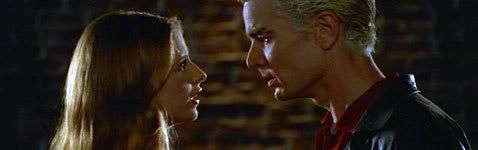
A friend of mine, who is a tremendous fan of both Buffy and musical theatre, once tried to make a case that this universally adored classic isn’t one of the series’ Great Episodes. His argument, in a nutshell, went something like this: “Once More” exists for its own sake, without really advancing the arc of the season, whereas Buffy’s best episodes tend to work well as stand-alone’s while also serving to further their season’s narrative. I disagree. Aside from the obvious plot-progressing moments – Tara discovering Willow’s manipulation of her, Buffy revealing to the gang that she was actually in Heaven while dead, Buffy and Spike locking lips as the curtains close – it seems to me this episode captures, and represents, a very significant turning point in the larger arc of the series. The Scoobies are drifting in different directions, with feelings of alienation and ambivalence precisely inserted into almost every musical number, from Xander and Anya’s deceptively sunny “I’ll Never Tell” to the aptly titled closer, “Where Do We Go from Here?”. [Josh]

02. "Restless"

You may not think of a show that’s essentially about a teenage girl demon-killing machine and her various conflicts as ‘conventional,’ but everything in Buffy up to the point of “Restless” (season 4) was just that, in comparison. Joss Whedon--after four successful seasons and no longer fearing the outside of his own box--let go of the standard arc formula after “Primeval,” which aired just before the dizzy, surrealistic finale. No one saw it coming at the time--but shock/awe factor aside, the episode is still endlessly rewatchable. Each viewing reveals something new, hidden in the dreams of the Scoobies; something that alludes to the past of the series, or brilliantly foreshadows future events. Whedon also achieves some of the most stunning visual coups ever seen on television (the now iconic image of Buffy, alone--or not quite--and barefoot in a vast desert, for example). There is not one wasted frame in “Restless,” with every corner of the gang’s psyche crammed to bursting with rewards for those of us willing to delve in and explore. Although, there is the matter of the apparently meaningless Cheese Man… but we’ll let that one slide. [Teresa]

01. "Not Fade Away"
Some of the Whedonverse’s most memorable season closers are action-packed, dramatically charged thrill rides (see the first few seasons of Buffy, or the excellent “Tomorrow,” Angel’s dynamic Season 3 finale), while others serve as portentous, moody denouements, which effectively leave us hanging (think “Restless” and “Home” from Seasons 4 of Buffy and Angel, respectively). “Not Fade Away,” Angel’s controversial final episode, falls into both categories. On the one hand, the Godfather-style series of executions dictate a close to break-neck pace, and Wesley’s death scene is as heartrending as any moment on either show. That final bit’s the kicker, though: there’s no epic battle sequence; no grand, tidy wrap-up, with questions answered and problems solved; hell, we don’t even get to see if Angel manages to slay that goddamn dragon. Before the Sopranos cut to black, this was the ultimate cliff-hanger, an ingenious non-conclusion for a program centering largely on immortality and its discontents, and, right, a major reason why this one catapulted to the top of our list. [Josh]

Our Full Top 50...

Pregnancy in Film

It was a popular trend in film last year, and it just so happened to be one I could newly relate to. Three of the movies discussed were ones I saw while pregnant, and the other three I look back to reflect on them in a different light. They'll be discussed not only on their merits as art, but in their accuracy to their subject. In other words, whether or not they made me scoff "oh, yeah right!" or nod approvingly. Some spoilers ahead.

-

J U N O

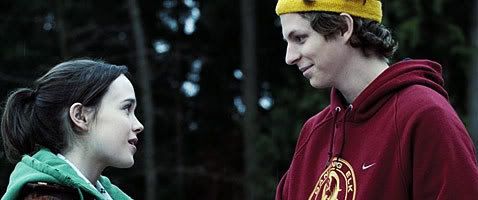
Of course, the pregnancy-is-hilarious-especially-on-a-teen! blockbuster loved by many must be addressed here. Juno is more concerned with using a big, buddha belly and various other physical symptoms as comedy devices than really exploring their psychological consequences. Ellen Page's wacky teen only gets more wacky, and cranky, as a result of her steadily progressing condition. I must admit, when I saw the flick I very much expected it to end with Juno growing attached to the little sea monkey within, and deciding to keep it. I was wrong, and initially impressed that the movie didn't give in to such a predictable path. However, Juno's complete lack of affection towards the baby--I can now safely say at 8 months--is a little perplexing.
Accuracy Level: Low. After a tiny-waisted Page finds the test positive, the movie jumps ahead by about two months to show her bursting at the seams as though she's about to pop at any moment. Um, I know everyone's different, but...no. Screenwriter Diablo Cody clearly put together every tidbit and cliche about pregnancy she could find, and spent more time coming up with 'funny' names for her characters than anything else.

-

R O S E M A R Y ' S / B A B Y

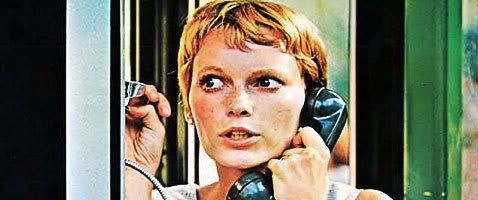
One of my all-time favorite movies in general, I wish I still had the DVD so I could revisit it now. Most women probably wouldn't be keen on watching it while pregnant, but I've never been squeamish; nor have I ever found Rosemary's Baby particularly frightening. It has its eerie, moments, sure--but mostly I love it for the kitsch-rich texture, over the top storyline, and indulgent, theatrical acting. An exuberant film that's datedness only makes it more enjoyable throughout the years.
Accuracy Level: Low. Of course it's not very likely that someone could really be impregnated by "the Devil" and subsequently give birth to its demon spawn all because her husband wanted to further his acting career. That said, it feels painfully real to see such a skinny, fragile gal trying to endure the huge physical burden of pregnancy and struggling; even if she's also trying to escape from her creepy, brightly dressed, satan-worshipping neighbors. Not to mention those nasty tannis root smoothies, which make my prenatals and iron pills seem like candy corn. The grand finale, the image of Rosemary gazing at her baby with extremely unconditional love, is almost kinda cute.

-

K N O C K E D / U P

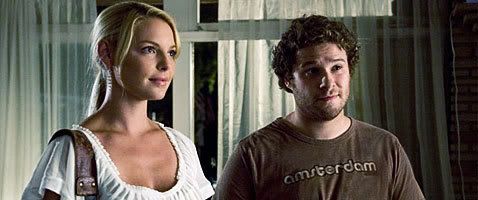
Knocked Up wasn't a smash hit for its pregnancy perceptiveness, or because it was an unflinching portrait of a young woman comically, excitedly, and terrify-edly(?) embarking into parenthood with a newfound, unreliable partner. Yet it was both of those things, in shimmering moments between the awkward sex scenes and pot-smoking jokes. Katherine Heigl herself has complained that her character had no friends and lived with her sister, even with a good job, and how unrealistic that was. I agree, and the film could have racked up still more brownie points if it'd made a point of showing her grow apart from friends after becoming pregnant--not before.
Accuracy Level: Moderately high. As mentioned before, amidst all the potty-humor is some damn insightful stuff. Even aside from the pregnancy, I remember relating to it for what the film had to say about the sometimes gargantuan differences between men and women--and how that affects their relationships. But back to the titular situation: Knocked Up, like Juno, plays the bump for laughs. However, surprisingly (given this one was not penned by a woman), it lets Seth Rogan's character shoulder most of the humiliations and allows Heigl's to progress with some respect. And her reactions to everything are very genuine. Judd Apatow movies may not be known for realistic pairings (the whole sloppy, bumbling slacker dude wins over megahottie trend), but they're not all wild fantasies. This is proof.

-

T H E / E Y E / 2

First of all, anyone who's seen both knows that The Eye 2 has absolutely nothing to do with the first one. It tells the tale of a young, hip, but emotionally co-dependent lady named Joey (Shu Qi) who finds herself in pieces after her boyfriend dumps her. Oh, and she's pregnant, of course. On top of all that, she starts being stalked by a ghostly presence (or, a few of 'em, really). Soon enough she realizes something not-so-good is up with the thing growing inside of her. She tries to abort the mission, so to speak, even by trying to hang herself and jumping off a building repeatedly. But something won't allow that. Not so pleasant, right? Yet Joey eventually develops a fierce maternal instinct, and Shu Qi pulls all the silliness off marvelously. You don't realize how outlandish the situation is until the credits roll and you reflect on what you've just seen.
Accuracy Level: Very low. If you're looking for a fun, edgy horror fix, and you like the Pang brothers, give it a look. If you think this will give you any insight into being "in a family way," you're in the wrong place. Duh. (Other Asian horrors dealing with pregnancy: The Unborn, Unborn But Forgotten, Dumplings, Nang Nak).

-

W A I T R E S S

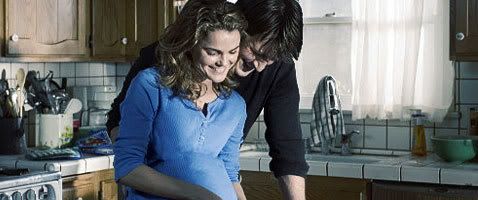
A bittersweet--mostly bitter--little yarn about, yes, a waitress. One who finds herself expecting a bundle of joy, even though she's woefully unhappy in her marriage ("I bet it was that night he got me drunk...") and doesn't want any part of being a mamma. She does, however inexplicably, decide to keep it (not pro-choice I guess) and save up tip money to flee her husband. But before it becomes a Thelma & Louise type of thing, she falls for her gyno and begins getting her groove back, via an affair with him. She receives some moderate joy from this, but is still mostly miserable and dreading the baby's arrival--keeping track of her life's events by writing terse, matter of fact letters addressed to her future child ("Dear Damn Baby:").
Accuracy Level: High. Our leading lady makes her way through the entire nine months with minimal montages, and gradual tummy growth. While her husband may be ridiculously oblivious, everything else is pretty much as accurately documented as a normal, healthy pregnancy can be. Maybe that's why the movie is at times dull, and uneventful. Okay, scratch the "maybe."

-

4 / M O N T H S, / 3 / W E E K S, / A N D / 2 / D A Y S

More than Rosemary's Baby, or The Eye 2, this Palme d'Or winner makes having a bun in the oven scary as hell. Maybe not for those of us lucky enough to be in 21st century first world countries, but still. I just want to say that it's a masterful, excellent movie...in most ways. If I saw this without ever having been pregnant, I may have enjoyed it even more. Alas, read below for my probably overwrought, medical/scientific consistency complaint.
Accuracy Level: Very low. Okay, yeah. This character, who by the way is about 19 inches around the hips (i.e. very freaking thin) is supposed to be--right--4 months, 3 weeks, and 2 days pregnant. Assuming each month is exactly 30 days, this makes her roughly 20 weeks pregnant. Even aside from her total lack of even the slightest bump, the movie makes things worse by having her abdomen inspected. Apparently she's clearly almost 5 months along. I was about the same amount 'along' when I watched this. Josh suggested maybe she wasn't showing because she was malnourished. Maybe. But then there's the shot of the fetus itself, on the bathroom floor, about as big as a thimble. Babies at week 20 are at least 5 inches crown-to-rump, not even counting the legs! This one was barely 2 inches in total. I don't care how malnourished you are, no baby can be that stunted without a miscarriage occurring. Totally gave me less respect for the movie.

In conclusion, if you're considering writing, filming, singing, or even painting about pregnancy...be pregnant first. K thx.
Flyer Than Beetle Juice Beetle Juice Beetle Juice


Sporadic readers of this blog have likely surmised that I like Lil Wayne a whole lot. Devoted readers of this blog (if such a constituency exists, that is) are probably surprised that it's taken me this long to post something on Tha Carter III--hey, I've been busy and, besides, I wanted to give this one the time that it deserves to gel.

My first response to the long-awaited official album was that it's not as strong a collection as the "leaked" version/mixtape of the same name that I wrote about at length last year, nor the mammoth, much-praised Da Drought 3 set. While further, and closer, listening haven't served to switch my initial verdict per se, I'm certainly not going complain.

I'm not going to complain that the finished product feels, at times, too calculated and polished for its own good, in contrast to the thrilling, off-the-cuff vibe prevalent in Wayne's mixtapes; that most (not all--Jay-Z, Juelz Santana, Fabolous, Static Major, and Betty Wright bring the goods) of the guest appearances are superfluous (T-Pain, Babyface, Bobby Valentino) or worse (Robin Thicke, Busta Rhymes, Brisco); that late OutKast-style stunt tracks like "Dr. Carter" and "Phone Home," while amusing, don't really hold up over repeat listens--though all these things are true.

And I'm absolutely not going to complain about what's here versus what isn't. Sure, "Upgrade U" and "Something You Forgot" and "I Feel Like Dying" and the Kanye-helmed "La La La" (not to be confused with the inferior, David Banner-helmed "La La," which made the cut) are better than at least half the material on Tha Carter III, but they're already on my hard drive, and have been for, like, a year. Only spoiled brat music bloggers and album format-obsessed rockist nit-pickers would bitch that Wayne is generous enough to offer up over a dozen new tracks--some great, some good, some so-so--rather than recycling the greatest hits of his retail hiatus.

The other reason I won't gripe is that this is the best studio album Wayne's released to date, and depending how the chips fall over the next six months, it might well be the album of the year, too. Opener "Threepeat" finds Wayne at his unhinged, free-associative best ("swallow my words, taste my thoughts / and if it's too nasty / spit it back at me"); "Mr. Carter" (featuring rap's other prominent Carter) is an instant classic, miles ahead of American Gangster's "Hello Brooklyn," on which Weezy guested; on "A Milli," Wayne rides an early beat-of-the-year candidate like a mechanical bull; the moody "Shoot Me Down" is an ideal vehicle for Wayne's arresting intense streak; and, while I prefer some of the remixes, "Lollipop" sounds more like a left-field summer anthem with every spin.

Tha Carter III concludes with the Nina Simone-sampling "Don'tGetIt," and more specifically with a nearly seven-minute, spoken word soliloquy that finds Weezy waxing political on some glaring social double-standards: arbitrary distinctions in the degree of criminality attached to similar drugs, racial disparities in American prisons, the amount of money it takes to keep a person in jail versus what it costs to send them to college, and Al Sharpton ("you are no MLK, you are no Jesse Jackson, you are nobody to me / you're just another Don King, with a perm"). If it's not quite Wayne's George-Bush-Doesn't-Care-About-Black-People moment, it's something close, but more long-winded and idiosyncratic and revealing--which, of course, is only appropriate. It's Weezy!
Happy Bloomsday!


On June 16, 2007, while on the ferry from Vancouver to my new hometown of Victoria, British Columbia, I spotted an ad in the (consistently excellent) local alt-weekly for someplace called the "James Joyce Bistro," which was hosting a Bloomsday celebration. As a devout Joycian, I suspected from that point--before ever actually setting foot in downtown Victoria--that I would be right at home in the provincial capital.

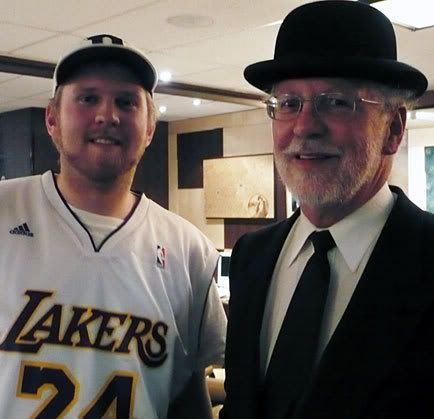
Today, on the one-year anniversary of our cross-continent move's final leg and the 104th anniversary of the original Bloomsday, we were lucky enough to join in the literary fun at the exquisitely (and very appropriately) designed James Joyce Bistro, where fans--including owner David Peacock (dressed as Joyce in the picture above, with yours truly) and local artist Robert Amos (wearing a suit emblazoned with text from Joyce's work)--offered readings from favorite passages of Ulysses and Finnegans Wake. Teresa and I, meanwhile, passed on the mic in favor of some nachos and fancy pizza with caramelized onions, pesto, pine nuts, and mozzarella (enthusiastically recommended!).
Forget-Me-Not's


Forgetting Sarah Marshall was good (I'm thinking now my favorite thing about these Apatow productions, besides that they're funnier and smarter and more humane than your standard-issue rom-com, is that they're just a little bit longer, too, which lets the material breathe and allows for scenes that aren't shorthand for anything--often, the movies' best moments, like the one where Paul Rudd teaches the writer-star-protag to surf or the puppet Dracula denoument, the most ecstatically odd theatrical set-piece since Stuck on You's Bonnie and Clyde musical); Metric was better (the new stuff sounds as strong as the old stuff, "Dead Disco" remains one of the five or ten most compelling rock tracks of the past five or ten years, and Emily Haines is a force of nature up front, though her posture is almost as lousy as mine and, damn, I wish they'd played for longer than an hour-fifteen, but what can you do, right?).
We Major


Top 40, 2008: As always, the list is limited mostly, if not quite exclusively, to artists who've released new material within the past 18 months or so, and rankings are based much more on recent work than older stuff, though consistency is a significant determining factor.

40.

39.

38.

37.

36.

35.

34.

33.

32.

31.

30.

29.

28.


27.


26.

25.

24.

23.

22.

21.

20.

19.

18.

17.

16.

15.

14.

13.

12.

11.

10.

09.


08.


07.


06.


05.

04.

03.

02.

01.