It's the pictures that got small


This is, admittedly, profoundly dumb, but I would've been at least a little interested to hear him continue with a stream-of-consciousness list of movies that should've instead won Best Picture (putting aside the obvious problem that movies from 1939 or 1950 can't be named the Best Picture of 2019): Gone with the Wind...Sunset Boulevard: the former might be demographic pandering, but the latter is an interesting off-the-top-of-his-head pick; what comes next, I wonder? We already know he loves Citizen Kane.

My guesses for what else would've qualified for the Trump Hollywood Classics Canon had he continued naming movies: High Noon, Butch Cassidy and the Sundance Kid, Lawrence of Arabia and/or Dr. Zhivago, The Alamo and/or The Green Berets, The Great Escape, It's a Wonderful Life, Mr. Smith Goes to Washington, The Ten Commandments, North by Northwest (I feel like this would be his favourite Hitchcock, or at least the first one that would come to mind***), and, if anything since 1980, Unforgiven, A Christmas Story, The Passion of the Christ (demo pandering pick), The Shawshank Redemption, Saving Private Ryan.


***Edit/reconsideration: His actual favourite Hitchcock movie is probably Vertigo (though he might still reflexively claim the safer NbNw), as it seems like there's a very high-percentage chance that he finds it intensely relatable in the same way he apparently does Kane. BUT does he relate more to the Jimmy Stewart protagonist or to the rich guy who hires him to spy on his wife? Inquiring minds want to know!
Picks


PICTURE
will win: 1917
should win: The Irishman
should have been nominated: A Hidden Life

DIRECTOR
will win: Bong Joon-ho, Parasite
should win: Martin Scorsese, The Irishman
should have been nominated: Terrence Malick, A Hidden Life

ACTRESS
will win: Renee Zellweger, Judy
should win: Charlize Theron, Bombshell
should have been nominated: Rooney Mara, Mary Magdalene

ACTOR
will win: Joaquin Phoenix, Joker
should win: Jonathan Pryce, The Two Popes
should have been nominated: Joaquin Phoenix, Mary Magdalene and Adam Sandler, Uncut Gems

SUPPORTING ACTRESS
will win: Laura Dern, Marriage Story
should win: Florence Pugh, Little Women
should have been nominated: Juliette Binoche, High Life

SUPPORTING ACTOR
will win: Brad Pitt, Once upon a Time in Hollywood
should win: Joe Pesci, The Irishman or Anthony Hopkins, The Two Popes
should have been nominated: Willem Dafoe, The Lighthouse

ADAPTED SCREENPLAY
will win: Taika Waititi, Jojo Rabbit
should win: Steven Zaillian, The Irishman
should have been nominated: Arnaud Desplechin and Léa Mysius, Oh Mercy!

ORIGINAL SCREENPLAY
will win: Bong Joon-ho and Han Jin-won, Parasite
should win: Bong Joon-ho and Han Jin-won, Parasite
should have been nominated: Céline Sciamma, Portrait of a Lady on Fire

CINEMATOGRAPHY
will win: Roger Deakins, 1917
should win: Roger Deakins, 1917
should have been nominated: Jörg Widmer, A Hidden Life

Novum Testamentum


Paolo Sorrentino is some kind of genius.

Without missing a beat, The New Pope continues the sui generis brilliance of The Young People, and yet it's somehow--if possible!--even more blissfully bizarre, sporadically profound, perversely hilarious, and full of weirdly perfect off-handed moments (we already have this season's equivalent to the Greenland Prime Minister closing credits dance).

It's a cliché at this point to observe that the best TV shows feel "cinematic." Sorrentino's ravishing, surprising compositions are undoubtedly that, but both Popes also rely heavily on the gradual, episodic structure of their medium, allowing for digressive interludes with minor characters and highly idiosyncratic sub-plots that few movies would have time to make work. And, in Sorrentino's baroque vision of the world, it all signifies--the high and the low, the sacred and the profane, the huge and the miniscule. This is Sopranos- or Twin Peaks-level Great Television, projected up onto the ceiling of the Sistine Chapel.
Childhood's End


I've been watching NBA basketball for literally my entire life. Some of my earliest memories directly centre on it--staying up late on school-nights to watch west coast games that went into overtime(s); idolizing the '92 Dream Team and putting up decal cut-outs of all of them on my bedroom walls; collecting and trading basketball cards with NBA-obsessed friends; getting jerseys, Starter jackets, and player-endorsed sneakers for birthdays and Christmases; wearing said jerseys, jackets, and sneakers while shooting hoops for countless hours, pretending to be my favourite players.

It truthfully was my first love, and I still love it. My earliest "career goal" was to someday play in the league, though the reality of my limited talents set in soon enough. Nevertheless, some of the happiest (and, admittedly, most painfully disappointing!) moments in my life that did not actually involve me personally or directly were NBA-specific moments, including, most recently, experiencing the Raptors' championship run together with scores of exuberant Canadian basketball fans.

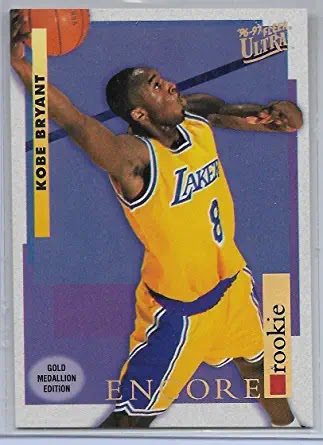
As a lifelong NBA viewer, watching Kobe Bryant was a supreme pleasure. He was just the best of the best: a totally singular combination of otherworldly talent, ferocious tenacity, and indefatigable dedication to his craft. Whether in the Finals or in an otherwise unremarkable regular-season game, he always threatened to do something stunning, something unforgettable, something that even the most constant and attentive of basketball fans had never quite seen before. His 81-point game (against the Raptors) and his 60-point swansong are just two notable examples among so many. He wasn't perfect (on or off the court), but it was his relentless, if quixotic, pursuit of absolute basketball perfection that made him so utterly compelling to watch--a drive brilliantly captured in Spike Lee's Kobe Doin' Work.

I guess I did know on some level that he was only 41, or around that age. It just feels like he's been present in my life for so damned long. Which, come to think of it, makes perfect sense, really--I've grown up alongside him, watching him enter the league as a teenager, straight out of high school, then rapidly ascend to dominate for most of two decades. That elusive sixth ring notwithstanding, his basketball career felt extraordinarily complete. His life after the NBA, so tragically, was not--and that tragedy is multiplied exponentially by the deaths of his young daughter and others. It's surreal, and it's awful.
2010s: 100 Movies + 50 Albums

Decade favourites here.
2019: Traumas past and present (and future)


FILMS
01. A Hidden Life (Malick)
02. The Irishman (Scorsese)
03. Lost Course (Li)
04. Dwelling in the Fuchun Mountains (Gu)
05. Portrait of a Lady on Fire (Sciamma)
06. High Life (Denis)
07. Ad Astra (Gray)
08. Mary Magdalene (Davis)
09. MS Slavic 7 (Bohdanowicz/Campbell)
10. The Body Remembers When the World Broke Open (Tailfeathers/Hepburn)
11. Atlantics (Diop)
12. Jojo Rabbit (Waititi)
13. The Lodge (Franz/Fiala)
14. Midsommar (Aster)
15. Oh Mercy! (Desplechin)
16. 1917 (Mendes)
17. One Day in the Life of Noah Piugattuk (Kunuk)
18. Once upon a Time in Hollywood (Tarantino)
19. Uncut Gems (Safdie/Safdie)
20. Young Ahmed (Dardenne/Dardenne)
21. The Lighthouse (Eggers)
22. Parasite (Bong)
23. Toy Story 4 (Cooley)
24. Little Women (Gerwig)
25. US (Peele)
26. Koko-di Koko-da (Nyholm)
27. The Twentieth Century (Rankin)
28. High-Flying Bird (Soderbergh)
29. The Farewell (Wang)
30. The Two Popes (Meirelles)

PERFORMANCES
01. Jonathan Pryce and Anthony Hopkins, The Two Popes
02. Joaquin Phoenix and Rooney Mara, Mary Magdalene
03. Willem Dafoe and Robert Pattinson, The Lighthouse
04. Joe Pesci, Al Pacino, and Robert De Niro, The Irishman
05. Brad Pitt, Leonardo DiCaprio, and Margot Robbie, Once upon a Time in Hollywood
06. Adam Sandler, Uncut Gems
07. Juliette Binoche, High Life
08. Lupita Nyong'o, US
09. Riley Keough, The Lodge
10. Deragh Campbell, Anne at 13,000 Feet
11. Florence Pugh, Little Women
12. Adèle Haenel and Noémie Merlant, Portrait of a Lady on Fire
13. Awkwafina and Zhao Shuzhen, The Farewell
14. Roschdy Zem, Sarah Forestier, and Léa Seydoux, Oh Mercy!
15. The entire cast of Parasite

ALBUMS
01. FKA twigs, Magdalene
02. Billie Eilish, When We All Fall Asleep, Where Do We Go?
03. Ariana Grande, Thank U, Next
04. Carly Rae Jepsen, Dedicated
05. Mount Eerie and Julie Doiron, Lost Wisdom pt. 2
06. Taylor Swift, Lover
07. Solange, When I Get Home
08. Kanye West, Jesus Is King
09. Lizzo, Cuz I Love You
10. Sleater-Kinney, The Center Won't Hold

Listen to Your Heart

One of the all-time great power ballads. RIP.
In Storms of Steel


Sam Mendes's 1917 may very well be the most intensely realistic war movie ever made, a hypnotic hybrid of immersive VR and the grim matter-of-fact-ness of Ernst Jünger's war prose, or else like the famous opening sequence of Saving Private Ryan extended to two full hours and transported from the beaches of WWII Normandy to the rat-infested trenches and no man's land of the First World War. It's appropriately exhausting, in the expected, rigorous war-epic way but also uncommonly demanding on the viewer's eyes; the sustained illusion of a single, largely mobile shot, masterfully executed by Roger Deakins, provides little opportunity to blink or relax. Few movies more palpably express the feeling that there could be fatal danger anywhere and everywhere. As in Jünger's memoir, staying alive is a matter of constant luck and split-second decision-making.

With its genuinely nightmarish atmosphere and pervasive sense of dread and terror, 1917 is also (more so than most war films) a great horror movie, though, like many great horror movies, it relies too heavily on its musical score to build tension and foreshadow. In this otherwise ultra-realistic film, such artifice feels especially superfluous, undermining the immediacy of the action. It is also, just occasionally, too sentimental, attempting to win the audience's sympathy through calculated bits of character exposition –– another common horror-movie misstep. Yet, the best sequences in Mendes's film –– particularly one set amidst the hellish ruins of a burnt-out French town –– feel like something new and urgently powerful, summoning up the visceral lived experience of a war that almost no one still living can personally remember.
It's, like, one of the best movies I've ever seen in my life

Kicks Inside


Add to the examples of Mary Magdalene's enduring, modern pop-cultural clout the best album of 2019. Every time I listen to it (must be 50x-plus at this point), I hear new, strange and interesting things. I also, by turns, hear flashes of Björk, Kate Bush, Polly Jean Harvey, Tori Amos, Tricky, and EMA; Teresa, in cluing me into how fucking great this record is, suggested Kanye and Portishead, which I can sometimes hear, too. And yet, taken as a cohesive whole, played front to back (as it really should be, to an extent that few albums these days necessitate), it's finally, thrillingly sui generis––somehow huge and dramatic and, at the same time, hyperintimate, moving and tender and weird and wonderful. A gift that keeps on giving. She does it like Mary Magdalene.
Unknown Pleasures


Upon reflection, this might be my favourite movie moment of the past decade.
Last Rites


I hope Martin Scorsese lives to be 120 and makes two dozen more movies, like an American Manoel de Oliveira, confounding critics who keep approaching each new film as a de facto swansong. But if, by sad chance, Silence and The Irishman turn out to be his last two narrative features, they would arguably stand as the most stunning, and apt, one-two punch to conclude any great oeuvre. The former is, in my view, his best film; the latter is very close. Both are overwhelmingly powerful products of a true master working not only in the autumn of his career but at the peak of his talents. Silence feels like a summation of the aching, ambivalent spirituality that pervades so much of Scorsese's filmography, building and improving upon earlier works like The Last Temptation of Christ and Kundun. The Irishman is a meditation on the criminal culture surveyed in GoodFellas and Casino, and more broadly on the changing sociopolitical landscape of twentieth-century America.

But if GoodFellas was Stagecoach, The Irishman is Scorsese's The Searchers, or maybe Cheyenne Autumn. (Movie analogies seem like a particularly appropriate way of assessing the work of this most intensely cinephillic of filmmakers.) It's about the end of things: careers, lives, a century, a culture. Like Silence, it's a film of serious and uncomfortable questioning, of wondering whether any of it was worth it –– worth the effort, the journey, the sacrifices, the sin. These are not simply "greatest hits" films, although they do summarize much of what Scorsese does best; they are retractationes, mature reconsiderations of a life's work. More than any film since Scorsese's first masterpiece, Mean Streets, The Irishman merges together nearly all of his major themes and concerns. To be sure, he made some movies before Mean Streets and hopefully he'll make many more after The Irishman (he just turned 77; perhaps he should run for president?), but these may still be rightly read as the bookends of a singular, vital corpus.
Fuck school shooters.
Fuck guns.
Fuck gun manufacturers, who literally profit from death and the sociopathic urge to kill other living beings.
Fuck the idiotic, anachronistic 2nd Amendment.
Fuck the piece-of-shit, cowardly politicians who hide behind it as an excuse to never change anything.
Fuck the cartoonishly evil NRA.
Fuck the cartoonishly evil, cult-of-personality GOP.
Fuck the excuse that people need guns because they like to murder animals for fun.
Hidden Lives


Jojo Rabbit is so much better than I expected it to be. I mostly went to see it because it looked more or less kid-friendly and didn't involve superheroes or low-quality digital animation. The premise, though, sounded like it could make for a Life Is Beautiful–level disaster of appallingly misplaced comedy. It's not that. The comedy actually works, not only as a way of highlighting the deep absurdity of the Third Reich and its ideology, but also as one way of explaining how its methods of mass brainwashing functioned, particularly for an impressionable, naive kid whose personal conception of the Führer bore only a vague, superficial resemblance to reality. This is a genuinely great coming-of-age movie and, at the same time, a fairy tale about how sudden familiarity with the vilified Other is (sometimes) all it takes to break the spell of cultural indoctrination––a universal parable that speaks powerfully to present circumstances. Although Taika Waititi conceived of this project almost a decade ago, presumably without the aid of a crystal ball, it's especially resonant right now, with far-right, semi-fascist, and white supremacist forces having crept squarely into the mainstream of Western politics.

As a truly incisive satire, Jojo Rabbit isn't nearly as effective as, say, The Death of Stalin, mainly because it's too warm and humane. Some critics have derided the film's ultimate "conventionality," implying that it's a kind of dirty secret concealed (though not well enough) by Waititi's more radical, anarchic flourishes. But I think there's something to be said for this straightforward, poignant storytelling, even if takes some of the edge off the satire. The last scene is as classically lovely, and touching, as anything in recent cinema, even calling to mind Chaplin–––specifically, the final moments of City Lights, not The Great Dictator. Above all, Waititi's movie is a modest ode to those who summon up the courage to resist evil, those who, as the film's characters put it, did "what they could." This is not a particularly original theme, but it's a perennially important one, which it shares with the year's best film, Malick's A Hidden Life. Both are unapologetically sentimental histories; and both, under layers of artistic license and distinctively aestheticized representation, are essentially built from the stuff of "conventional" storytelling. They would make for a bizarre, yet potentially fruitful, double bill.