No Girl So Sweet


It's rare, at this point, to read an article or hear a commentator speak about Madonna without mentioning her knack for reinvention, but PJ Harvey deserves nearly as much credit for doing over almost-two decades on the semi-pop sidelines what Madge has done over almost-three decades front-and-center. The key difference between the two isn't 10 or so years of maintained relevance--any time we're talking decades-plural in such a fickle industry, that's certainly rarefied air. Rather, it's that Madonna has reinvented her music and image along a trajectory more or less consistent with the pulse of Euro-American popular culture, sometimes dictating the next steps and other times playing quick catch-up. Harvey, on the other hand, has forged a path entirely her own, and keeping with her legendarily private nature, one that's largely, willfully oblivious to whatever else is going on. Back in 2007, was ghostly Victorian chamber music burning up your playlist? Was 2011 supposed to be the year of the macabre "war album," grimly looking back on the First World War and considering its far-reaching consequences on the development of the English nation? Well, tough shit. Because with all due respect to Madonna (and Prince and Springsteen and Sleater-Kinney and Jay-Z, et al), Polly Jean Harvey is nothing less than the supreme musical artist of my lifetime.

Let England Shake is another masterpiece in a career impossibly full of them, and it could hardly be more different than its predecessor, the under-appreciated White Chalk. The first four songs clearly stake out Harvey's musical terrain and lyrical concerns this time out. The title track opener is a deceptively jangly piece, simultaneously a soldier's wife's lament as prelude ("Another day, Bobby, for you to come home") for the war scenes to come and an epilogue-as-preface ("The West's asleep, let England shake / weighted down with silent dead / I fear our blood won't rise again") to the discomfiting material she's tackling. The next number, "The Last Living Rose," establishes the album's blackly nostalgic tone as she opens with, "Goddamn Europeans / take me back to beautiful England," then a little later, "Let me walk through the stinking alleys / to the music of drunken beatings"; this is not a nationalistic ode to Merrie Old England, as evidenced further by the next track's scarily catchy call-and-response chant, "What is the glorious fruit of our land? / Its fruit is deformed children." And then on the stunning "The Words That Maketh Murder," she invokes Eddie Cochran, turning an off-handed lyric into a desperately repeated plea in the doomed hope of exorcising more than just the "Summertime Blues": "What if I take my problem to the United Nations?" (Bringing her oeuvre full circle, I was reminded of the South Pacific-borrowed and similarly recontextualized "I'm gonna wash that man right outta my hair" from her breakthrough classic "Sheela-Na-Gig.")

Of course, Harvey has never been Miss Mary Sunshine, from "don't you wish you never met her?" to "I know these chalk hills will rot my bones"; excepting the fleeting romance of Stories from the City, Stories from the Sea, she's modern music's consummate pessimist. But for an artist who insisted early on not to be labeled a "feminist" and who has always been more concerned with personal drama (whether her own or that of the characters she seamlessly inhabits) than with the broader socio-cultural sphere, this is her first unabashedly political record. And yet it feels no less urgently personal than anything in her catalogue. The music is gorgeous and melodic, in purposefully stark contrast to the harrowing subjects of these songs. Her words are eerily imagistic, as on lead-off single "Written on the Forehead," where over a reggae sample, Harvey sings, "Date palms, orange / and tangerine trees / and eyes are crying / for everything." This is the hypnotic soundtrack to a great, blistering anti-war film that exists only in Polly Jean Harvey's singular imagination. Its connection to the modern world--and not just Harvey's native England, but Iran, Egypt, Afghanistan, America and beyond--is the truly disturbing part.
Make This Happen, Part II


Five reasons why this really needs to happen--and hopefully sooner rather than later:

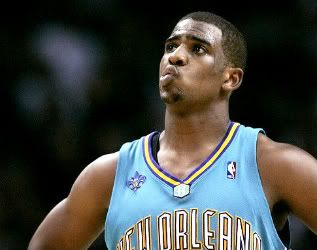
01. Since the Grizzlies moved to Memphis in 2001, Vancouverites missed out on the renaissance of NBA talent over the past decade: just for starters, LeBron James, Dwayne Wade, Carmelo Anthony, Dwight Howard, Kevin Durant, Deron Williams, and Chris Paul, who (at least in theory--messy contract realities aside) would play 41 games a year here in beautiful British Columbia if the Hornets indeed relocated to Vancouver.

02. Portland is too far to travel to catch an NBA game--especially when Brandon Roy's wearing a suit rather than a jersey.

03. Yes, Seattle also lost their NBA franchise. But Vancouver lost theirs first, so we should get one back first, right? Plus, sports-wise, Seattle has the Mariners, the Seahawks, and the Pac-10 Huskies. We have the best team in the NHL (!), but, with minimal disrespect to the CFL, the BC Lions are never going to draw Peyton Manning, Tom Brady, or Aaron Rodgers to town as the opposition and high-stakes college sports are sadly a south-of-the-border phenomenon.

04. Unlike a lot of recession-damaged and long-stagnant urban areas on this continent, Vancouver is a rapidly growing, prosperous market that demonstrated with the success of last year's Winter Olympics that it's also a great sports city. While admittedly not as glamorous or sunny as Miami or Los Angeles, Vancouver's much hipper than, say, Cleveland or Milwaukee or Salt Lake City and the basketball season weather is considerably milder than in most non-Southern NBA cities.

05. I want to see a Blake Griffin dunk. In person. ASAP.
Empire State of Mind


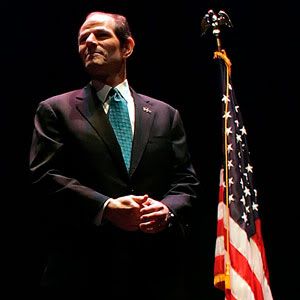
Last year's most engrossing character study has recently arrived on DVD--and it's not a fictional narrative. Instead, Alex Gibney's Client 9: The Rise and Fall of Eliot Spitzer follows the lead of films such as The Fog of War, Errol Morris' thoughtful reconsideration of Robert S. McNamara, in detailing the sins and triumphs of the disgraced former Attorney General and Governor of New York; Spitzer, who granted Gibney interview access as part of his attempt at image rehabilitation (and probably with the advance knowledge that the resulting film would be sympathetic to his plight), is nearly as fascinating in front of the camera as McNamara was, if equally evasive when the toughest questions surface. When, asked about the fatal flaw that effectively ended his promising political career, Spitzer invokes an anecdote about "hubris" and compares himself to a Greek tragic hero, Gibney must've secretly grinned, as his star subject had just saved him the breath of having to explicate his unsubtle thesis.

Client 9's greatest value lies finally in its close study of a man whose personal battles seem, at once, archetypal within a history of fallen heroes and uttery of-this-moment as he squares off with white-collar criminals on Wall Street over some of the same egregious practices that would soon lead to a major economic crisis. But it also offers an uncommonly persuasive conspiracy theory. While I'm always deeply skeptical of work aimed at convincing me of some secret, sinister misdeeds and while Gibney never quite produces the smoking-gun he must've been searching high and low for, it's the interviews that he was astonishingly able to secure with some of Spitzer's most high-profile enemies (including former AIG CEO Maurice "Hank" Greenberg, NYSE bigwigs Ken Langone and Dick Grasso, and eccentric Republican political hit-man Roger Stone) that mostly sell me on Gibney's belief that Spitzer's--known while Attorney General as "The Sheriff of Wall Street" and sometimes even thought to be the future first Jewish President--precipitous fall from grace was aided by some powerful, adversarial outside interests. (Surely, if Michael Moore had come knocking, he would've been brusquely turned away, but with just a quick IMDb investigation, shouldn't the likes of Greenberg and Langone have known that the man who made Enron: The Smartest Guys in the Room probably wouldn't be much friendlier with his camera? Apparently not, because they gush to Gibney, stopping just short of admitting that they helped to orchestrate Spitzer's demise but appearing unmistakably like the cat(s)-who-swallowed-the-canary.)

Even if you only take the conspiracy angle with a grain of salt, it's hard not to conclude that the greater good Spitzer accomplished and would've likely fought for further had he remained in office massively outweighs his escort agency infidelities. There's no denial, of course, on Spitzer's or Gibney's part that Spitzer did hire high-priced escorts for sex or that he (hypocritically) prosecuted similar institutions while serving as Attorney General--though the deeper question of whether Spitzer ordering escorts from The Emperor's Club VIP, an agency used by New York's most rich and powerful residents, suggests a conflicted sense of identification with the white-collar above-the-law types he was ostensibly fighting to hold accountable remains mostly, tantalizingly unaddressed. This is a man of many contradictions, speaking thoughtfully and introspectively on camera but reportedly possessing a scarily brutal temper, championing increased cooperation in speeches but deeply iconoclastic and even hostile in his interactions with political colleagues, seemingly hopeful (and once-capable) of rising to even greater heights and constantly paranoid of making a false step but stupidly incapable of keeping his dick in his pants. Sound familiar?
You Say Y-E-S to Everything


What else is on (besides Last Train to Paris and My Beautiful Dark Twisted Fantasy):

Marina and the Diamonds, The Family Jewels The full-length debut from Marina and the Diamonds (real name Marina Diamandis--we, the fans, are "the Diamonds," says our heroine) is, at times, a tad on-the-nose and slightly-too-clever, like on the opening track when she rhymes "satisfied" with "sad inside" or the title of the next one, "Shampain," which, like her real name/"band" name combo, suggests an over-eager penchant for puns. But when on the chorus of track three, Marina sings, "Guess what / I am not a robot," we begin to suspect she's onto something. By the time the fourth opens with "Look like a girl / but I think like a guy," we're basically under her thumb--even if you haven't yet heard the brilliant 3OH!3 cover that ostensibly confirms but actually refutes that lyric. Marina's territory is located precisely between Polly Jean Harvey and Lady Gaga, which, needless to say, is a deeply fertile stretch of aesthetic real estate. With her to-die-for pipes and ear for irresistible hooks, she'll likely make a better album someday (maybe even later this year, when sophomore LP Die Life drops), but she might never make one more full of would-be hits. There isn't a song on the The Family Jewels that's without considerable charms, including the one I initially bristled at, where British Marina confesses that she's "obsessed with the mess that's America." It's called "Hollywood" and the best part goes: "He said, 'Oh my gawd, you look just like Shakira / No, no, you're Catherine Zeta' / 'Actually, my name's Marina'."

M.I.A., Vicki Leekx Even if Maya isn't quite the flat-out disaster it was quickly branded as in most quarters ("XXXO" drills its way into your head upon repeat listens) and some of the venom was unwarranted onto-the-next-blog-darling backlash, it's hard not to see it as a disappointment. Not that I personally liked the otherwise much-acclaimed Kala half as much as I did Arular. And come to think of it, her Piracy Funds Terrorism mixtape might finally be better-by-a-hair than the debut proper it preceded--which brings us to Vicki Leekx, the mix M.I.A. released this past New Year's Eve. Where Maya sounds, technically, like a million bucks and surely cost much more than that to record, Vicki Leekx feels raw and spontaneous. Like the Piracy classic "Lady Killer," it finds M.I.A. completely in her element, a zone where catchy gibberish (on one track, she sounds like Gollum from Lord of the Rings, chanting "ish my freshish") and political sloganeering blur together disorientingly over hard, low-tech beats. Who would've thought she (still) had it in her? You should've, for one, and I should've, too. This is where she re-earns the benefit of the doubt. [Thanks to Teresa for turning me onto both this one and the Marina!]

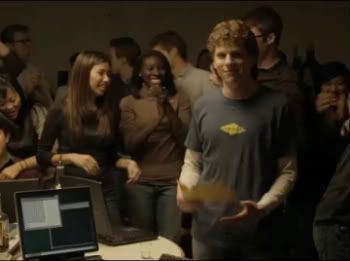
Girl Talk, All Day If there's room at the party for Miley Cyrus and Jay-Z, Springsteen and Foxy Brown, Radiohead's "Creep" and Skee-Lo's "I Wish," there's plenty of room for you, too, no matter which combination of the above artists makes appearances in your iTunes. And let's not forget the part of the Cyrus song included here where Miley gets into a L.A. cab "and a Jay-Z song was on." Which is to very indirectly say, this isn't just Greg Gillis' best collection to date, it's also his most legitimately of-the-moment, despite the fact that, you know, mash-ups are so 2003 and the pair of tracks that open the album (Ludacris' "Stand Up" and Black Sabbath's "War Pigs") are seven and 40 years old, respectively. As Justin Timberlake's Sean Parker so eloquently observed in The Social Network, "We lived on farms, then we lived in cities, and now we're gonna live on the internet." All Day is the utopian up-side not just to music consumption's online democratization but to the broader what-we've-lost nostalgia argued for implicitly by Aaron Sorkin and David Fincher and explicitly by Zadie Smith. Once the album ends--with UGK rapping over, not coincidentally, John Lennon's "Imagine"--I'm back in the ambivalent middle: Facebook gives me the creeps, but Girl Talk's pretty great.
Make This Happen


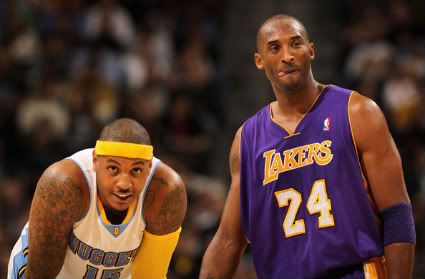
Long-hyped as Shaq 2.0, Andrew Bynum has actually been closer to the rich man's Greg Oden. Bynum for Carmelo is a no-brainer. Can you imagine heading into the playoffs with a starting five of Kobe, Melo, Pau, Odom, and Fisher, with Ron-Ron possibly coming back to life when it really matters? Top seed locked up or not, the Spurs would be much less of a worry, and as far as the Eastern Conference is concerned, I'd certainly like the Lakers' chances against Boston, Miami, Orlando, or Chicago. Hell, as a core-three I'd take Kobe-Melo-Pau (or even Odom for Pau this season) over Wade-LeBron-Bosh or KG-Pierce-Allen (Rondo does theoretically give the Celtics an edge at the point, but Fisher is almost Robert Horry-good in the postseason.)

Let's not get too ahead of ourselves with this parlor game, but Jerry West and Magic have been loudly opining that the Lakers need "new blood," and, wow, if this happens, it will radically alter the NBA landscape!
Another Keeper


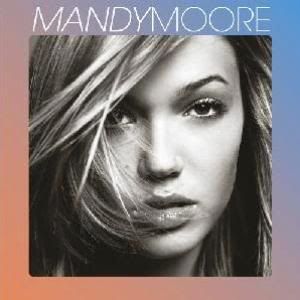
Soon after posting my list of underrated 2000's albums, I realized I'd accidentally left off an album as good--and as underappreciated--as most of those I'd included: Mandy Moore's self-titled third album. The reason for this is likely that I myself didn't hear it until five years after its release so, in consulting my year-end lists to put together the one below, it was nowhere in sight; I finally caught up with Moore's excellent 2001 disc in 2006 thanks to Teresa's enthusiasm for it.

It's an album that bravely defies what one would expect a Mandy Moore album (or an album by any turn-of-the-21st-Century American pop starlet) is supposed to sound like; those who, having never head this one, write Moore off as the less risky, blandly MOR alternative to edgier contemporaries Britney and Christina should certainly play catch-up. In terms of gossip column overexposure, sure, Mandy has never held a candle to them and never will, but the music on Mandy Moore ranges from smart-sensitive folk to Eastern-tinged pop to club-ready dance cuts--all of which she nails impeccably. Perhaps it's not surprising that the album's sales were disappointing (a decade later, it still hasn't gone Gold); while there's not a track in sight that constitutes filler, there's also nothing as tailor-made for Top 40 radio as "Candy." Moore was just 17 when the album was released--there's an ironically mature-sounding track titled "17" located about midway through the record--and much of her presumed fanbase at that point was likely younger yet. Those with less of an excuse for missing the boat are music critics, in theory, trained to recognize and reward artistic growth and ambition, both clearly on display on Mandy Moore. Plus, the songs are great--which always is, and should be, the bottom line.
Unknown Pleasures


With the first decade of the new millennium now in the rear view mirror, I think it's a good time to look back at the 2000's albums that were entirely slept-on, deeply underrated, or that, for whatever reason (the artist or group quickly disappeared from prominence, they released subsequent work that felt redundant or generally less interesting, they were part of a "sound" or "scene" that didn't have legs to it), people liked enough at the time and yet now no one really mentions them--or, as is often the case with the albums on my list below, some combination of those fates. My chief consideration in putting together this list from previous ones I've made year to year is whether the music still holds up or whether I find myself second-guessing my own enthusiasm of years past. I've tried to avoid albums from the the last couple years of the decade because it seems too soon to know both how they'll hold up and where critical and popular opinion will ultimately land. Without further introduction, here's my top ten-plus.

10.
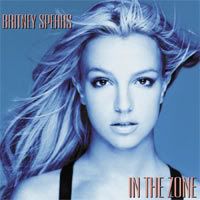
Blackout is a bona fide masterpiece and certainly Britney's high-water mark, but I've already written at length about it and, so far as I can discern, there does seem to be some general critical appreciation of Britney's "comeback" record and its dark, clubby sound. In the Zone, from its uber-cheap-looking cover shot to its classic-hit ("Toxic")/forgettable hit ("Me Against the Music")/filler rep, seems due for reconsideration. "Everytime" remains the finest ballad she's ever recorded; "(I Got That) Boom Boom," Britney's Ying Yang Twins-aided stab at crunk, while silly, isn't half-bad; and the R. Kelly-penned "Outrageous" lives up to its title. Yes, "Toxic" is the best track and by a fair margin, but it's a good point-of-entry, not a stopping point when looking at this transitional moment in Britney's career.
Key Songs:: "Toxic"; "Everytime"; "Brave New Girl"

09.

Nellie McKay (deservedly) got a ton of press for 2004's Get Away from Me. The problem is that the (fun but lazy) Eminem-meets-Doris Day angle most writers took covering Nellie's debut essentially pegged a prodigiously talented young artist, still very much in the process of finding her voice and style, as a one-trick pony. Pretty Little Head is a spottier affair than Get Away from Me, but it's also a more mature record, evincing nuanced growth in both McKay's songwriting and her politics. It's just as clever and as varied as its predecessor; unfortunately, outside of devoted fans, relatively few listeners bothered to keep in step with Nellie.
Key Songs: "Real Life"; "There You Are In Me"; "The Down Low"

08.
With all due respect to Introducing Cadallaca... and The Friends of Rachel Worth, this is the best non-S-K record featuring a Sleater-Kinney member. It's also hands-down the best thing Janet Weiss ever made with her ex-husband Sam Coomes. And yet, even among S-K diehards, who still talks about this album? 2001 wasn't that long ago and The Sword of God still sounds terrific.
Key Songs: "The Curse of Having It All"; "It's Raining"; "Fuck Hollywood"

07.
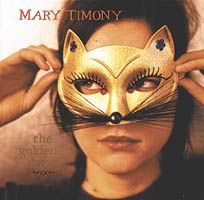
In a perfect world, Mary Timony's superb 2002 album would've come out five years later and capitalized on the good will generated by Joanna Newsom's much-acclaimed Ys, another album that dabbles affectionately in the archaic. Instead, the ex-Helium frontwoman was marginalized as a Renaissance fair geek. Ironically, she's much more interested in blurring the contemporary world with the ancient one than Newsom is on Ys; often, mundane 21st Century reality serves as a sort of jarring punchline for Timony's romantic fantasy leanings. The real story with the boy who turned into the titular "golden dove" and flew away, she tells us a line later: He "moved to California."
Key Songs: "Dr. Cat"; "Look a Ghost in the Eye"; "Musik and Charming Melodee"

06.
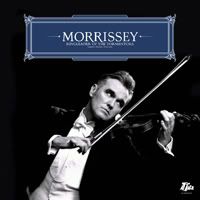
Legitimate comebacks that registered as mere blips on the popular/critical radar screen. Ringleader of the Tormentors might, start to finish, be the strongest record of Morrissey's post-Smiths career. 3121 isn't on par with Sign o' the Times or Purple Rain, but it's as good as Parade or Lovesexy, which is hardly faint praise.
Key Tracks (Ringleader of the Tormentors): "You Have Killed Me"; "I Just Want to See the Boy Happy"; "Life Is a Pigsty"
Key Tracks (3121): "Lolita"; "Black Sweat"; "The Word"

05.
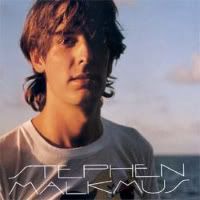
Stephen Malkmus and Courtney Love were among the most critically lionized artists of the '90's; their solo debuts provoked comparatively little interest, excepting scorn hissed in Courtney's direction. For my money, Malkmus' self-titled disc is the most through-inspired collection he's been wholly or partly responsible for since 1994's Crooked Rain Crooked Rain and it remains my favorite among his post-Pavement output. America's Sweetheart, meanwhile, was more or less critically reviled, but it's a much stronger set than Hole's mostly positively reviewed Celebrity Skin. Love actually picks up where that album's standout track, "Northern Star," leaves off--America's Sweetheart is all raw energy and open wounds. It's an updated distillation of the sound and fury that led 1994's Live Through This to top every critics' poll in sight; if it's sometimes hypnotic the same way the scene of a car crash is hypnotic, well, that's certainly more than can be said for most rock records.
Key Songs (Stephen Malkmus): "Jenny and the Ess-Dog"; "Church on White"; "Black Book"
Key Songs (America's Sweetheart): "Mono"; "All the Drugs"; "Hold on to Me"

04.
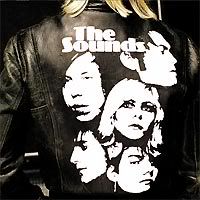
In a decade where "retro-" so often preceded descriptions of "rock" that it was eventually left off and assumed to be the case, I'll take these two over, say, Is This It and White Blood Cells. Those are both very good albums, to be sure, but they don't consistently make me grin the way the '80's-indebted Living in America and Kiss and Tell do. Only the New Pornographers did smart/sugary power-pop better in the 2000's--and their best work has no shortage of admirers.
Key Songs (Living in America): "Rock n' Roll"; "Like a Lady"; "Seven Days a Week"
Key Songs (Kiss and Tell): "Stay/Stay Away"; "Stupid Tricks"; "The Difference Between Love and Hell"

03.

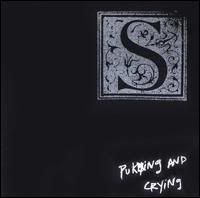
With Cat Power emerging this decade from relative obscurity into legitimate celebrity status, why not these three female singer-songwriters? Keren Ann enjoyed 15 minutes of minor notability on the heels of her excellent Not Going Anywhere, but at least on this continent, she's scarcely mentioned these days. Mirah remains a minor player within a certain segment of the indie rock establishment, due in part to her association with Super Cult Artist Phil Elvrum, but C'mon Miracle is among the most beautiful records of the decade and deserves substantially more credit. Meanwhile, S. (aka Jenn Ghetto) is probably the least-known of the three and 2004's perfectly titled Puking and Crying is at least as effective a soundtrack for depression (romantically-induced or otherwise) as Ms. Marshall's Moon Pix or Myra Lee.
Key Songs (Not Going Anywhere): "End of May"; "Right Now and Right Here"; "By the Cathedral"
Key Songs (C'mon Miracle): "Jerusalem"; "Look Up!"; "You've Gone Away Enough"
Key Songs (Puking and Crying): "Crushed"; "5 Dollars"; "100x"

02.
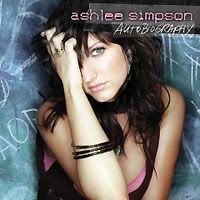
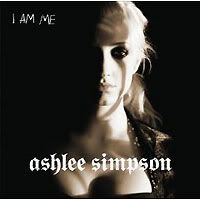
In the contest for most consistently underappreciated artist of the decade, Ashlee Simpson takes it by more than--sorry, terrible pun coming...--a nose. Her first two albums and, to a lesser extent her third, the decidedly spottier Bittersweet World, are upper-90th percentile all the way, which is much more than can be said for a large swath of '00's artists who came by praise and popular admiration a heck of a lot easier. Why? Because--and I can't stress this enough--Ashlee is much, much better at making appealing music than she is at being an appealing public personality. This is not the only trait Simpson shares with her artistic godmother, Courtney Love. On tracks like "Autobiography," "Love Me for Me," "I am Me," and "Coming Back for More," she summons a throaty, guttural growl worthy of Ms. Love or her late husband. When I caught her live shortly after her debut's release, she actually covered "Celebrity Skin." It was fun, but her highly specific vocal talents would've been much better suited to, say, "Rock Star" or "Doll Parts."
Key Songs (Autobiography): "Love Me for Me"; "Autobiography"; "La La"
Key Songs (I am Me): "Coming Back for More"; "I am Me"; "Boyfriend"

01.
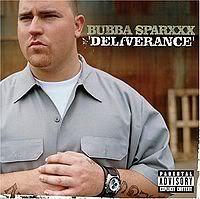
In a decade that began and ended with Eminem at or near the top of the charts and on the cover of innumerable magazines, it's really too bad that the other white rapper of note (no, I'm not talking about Mike Skinner) was relegated to the novelty/minor celebrity shelf. Bubba Sparxxx's first and third albums are completely likable collections with a handful of standout moments; his second is a masterpiece. In a cultural moment where the dots connecting rap to country suddenly appeared markedly less faint, Bubba is the only artist--with apologies to Kid Rock and Cowboy Troy--to really put it all together. It's also the absolute high-point of Timbaland's period of sonic dominance. The reviews were mostly positive (I'm proud to say that I gave it an 'A' back in '03), but the sales were disappointingly timid and Deliverance was sadly absent from most publications' best-of-the-2000's lists.
Key Songs: "Comin' Round"; "She Tried"; "Nowhere"; "Warrant"; "Deliverance"
Joie de vivre


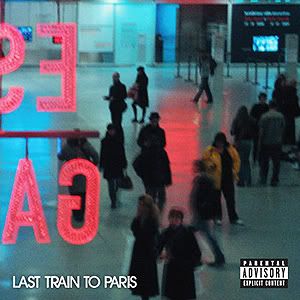
As usual these days, I'm late to the party on Last Train to Paris, but...damn! I mean, a show of hands please for those of you who fully expected Diddy to someday release a cohesive, visionary masterwork?

Yeah, me neither and I like the guy just fine and enjoy no fewer than a dozen (and perhaps as many as twenty) pre-Last Train tracks with his name attached as the primary artist. But the almost-non-stop brilliance of his latest, released under the moniker Diddy-Dirty Money (the latter being the duo of Dawn Richard and Kalenna Vick, both terrific vocalists), can't help but feel astonishingly out of the blue.

Near the beginning of the record we're told that "this is a brand new sound" and that "this will change your life." It's hyperbole, sure, but it's no more hollow boasting than Kanye's famous egotism. Of course, among late 2010 hip hop releases, the obvious point of comparison for Last Train is My Beautiful Dark Twisted Fantasy, both personal tours-de-force built around a singular musical vision working from well outside contemporary hip hop's comfort zone. No, Diddy's record isn't as great as Kanye's--though it comes closer than just about anything else released over the past few years--but it's every bit as fascinatingly reflective of its creator's persona and worldview.

What both albums share is a preoccupation with high fashion (which I don't give a shit about, frankly, but Diddy and Kanye are passionate enough that I'm temporarily interested insofar as fashion is tied to the music's central themes, especially on Last Train) and a superb use of their all-star slate of guest performers. This latter similarity, one might argue, is common to most current rap, which is true, but these two albums aren't merely upping the name-recognition quotient (as is typically the case)--they're employing a varied, sometimes reoccurring cast of players to enhance the narrative scope, the uncannily "cinematic" feel, of their respective records. On Last Train, Diddy himself is almost like Orson Welles' Harry Lime in The Third Man, often lurking in the shadows, but rather than being lost in the mix, his overriding presence is felt throughout; this puppetmaster-like effect squares nicely with his checks-not-rhymes CEO persona.

Unlike My Beautiful Dark Twisted Fantasy, which frequently has the confessional feel of psychotherapy, Diddy doesn't get truly personal until near the end of his album on the song "Coming Home"; not coincidentally, this is also where the music of Last Train--which has run the gamut from frenetic Euro-dance styles to moody minimalist arrangements--reaches its ebullient climax. "What am I 'posed to do when the club lights come on?" Diddy asks, "It's easy to be Puff, but it's harder to be Sean/ What if my twins ask me why I didn't marry their mom?/ Damn, how do I respond?/ What if my son stares with a face like my own / and says he wants to be like me when he's grown? / Shit, but I ain't finished growin'/ another night the inevitable prolongs." That's not poetry--it's better. It feels like nothing short of an honest-to-goodness epiphany captured on record.
For Whom the Bell Tolls


Fellow Sopranos diehards: If you haven't already come across this, it will very likely blow your mind.

Personally, I was always on the fence about what the final scene of the series "means," but this extremely close, necessarily lengthy analysis (including seemingly revealing David Chase remarks I'd never before encountered) now has me sold that Tony sleeps with fishes.
Addendum


I've added a list of my 50 favorite performances of last year to my best-of-2010 page.

Here's the top ten:

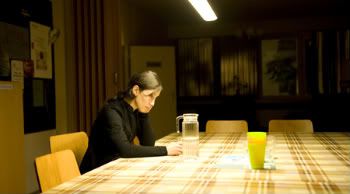
01. Sibel Kikelli - When We Leave
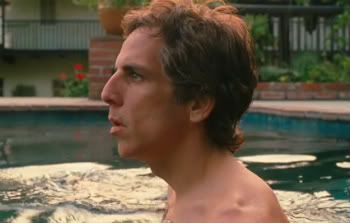
02. Ben Stiller - Greenberg
03. Greta Gerwig - Greenberg
04. Jennifer Lawrence - Winter's Bone
05. Edgar Ramirez - Carlos
06. Justin Timberlake - The Social Network
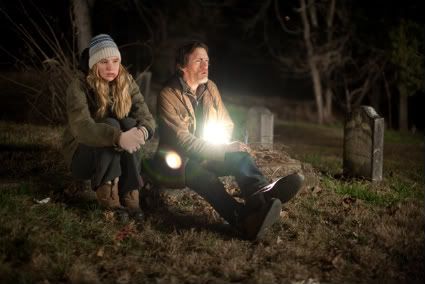
07. John Hawkes - Winter's Bone
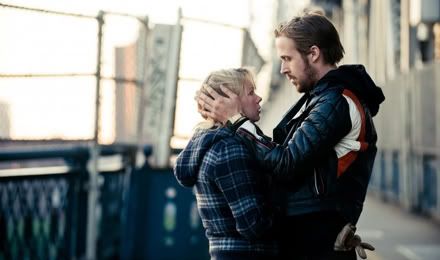
08. Michelle Williams - Blue Valentine
09. Ryan Gosling - Blue Valentine
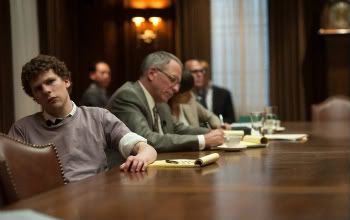
10. Jesse Eisenberg - The Social Network
see 11-50
Los Angeles Plays Itself


One of American cinema's most interesting trends in 2010 was an uncommon wealth of Los Angeles-set films that offer a unique feel or perspective of what life in L.A. is actually like, at least for some segments of its population--as opposed to the annual slew of Hollywood-made/Hollywood-set movies that recycle the same familiar Greater Los Angeles locations without offering much insight outside of lazy SoCal shorthand.

The two most atypical L.A. films this year must be Bruce LaBruce's gay porn-horror hybrid L.A. Zombie, which navigates some of the seedier haunts of L.A.'s homeless community in an allegory that ponders both the AIDS epidemic and the cultural ghettoization of gay men while expertly walking the line between confrontational art and gloriously bad taste; and Banksy's Exit Through the Gift Shop, which makes pointed detours to London, Paris, and New York but situates its story mainly in a Los Angeles counterculture that's refreshingly rough around the edges. Whether Banksy's now Oscar-nominated work is a "hoax," or rather the extent to which it is, matters little for our purposes: the grungy, communal L.A. that shines through his sly, F for Fake-like commentary on artistic authenticity is something excitingly new for most of us non-Angelenos.

The Kids Are All Right and Greenberg are a decidedly more conventional pair, but they also subtly shift long-held ideas about what constitutes an "L.A. movie." Unlike LaBruce and Banksy's films, they're set in upscale areas of Los Angeles, but they're not excessively glamorous environs--a key distinction to make when talking about Southern California on film (think, for example of Norma Desmond's estate in Sunset Boulevard or much more recently, of Cher's palatial residence in Clueless). These are leafy, exquisitely manicured, to be sure, but ultimately cozy neighborhoods in which one can imagine buying a house and raising a family. Or at least that might be true if one is a doctor (like Annette Bening's Nic in Kids), a successful entrepreneur (Mark Ruffalo's Paul in Kids, who was, at one point, apparently broke enough to donate sperm for a little cash), or a hotel chain executive (Ben Stiller's brother in Greenberg, for whom he's house-sitting). Noah Baumbach said that he wanted to show an L.A. where relatively normal people live and raise their kids, but for the film's achievement of this, a debt of recognition must be paid to DP extraordinaire Harris Savides, whose images depict a warm, lived-in city that feels a universe away from the mythic, impossibly luxurious destination that most of us have come to associate with a real place that over four million people call home.

Savides also shot Sofia Coppola's superb Somewhere, which along with the equally underappreciated Marie Antoinette, I'd say represents the stronger half of her filmography. Because Somewhere is about a movie star named Johnny Marco (played beautifully by Stephen Dorff, a performance that's gone sadly neglected in the current awards sweepstakes) who takes up permanent residence at the legendary Chateau Marmont, the film necessarily harnesses L.A. iconicity to a greater degree than those titles listed above, but in a manner not dissimilar from David Lynch's now-canonical Mulholland Drive, it subverts and ultimately upends our expectations of what such imagery means.

It's also one of the truest, most deeply felt portraits of fatherhood ever put to film. The scenes between Johnny and his daughter Cleo (Elle Fanning, whose understated, never overly precious performance is vastly preferable to Hailee Steinfeld's insufferably precocious sassy-adult-trapped-in-a-child's-body True Grit turn, which just earned a cringe-inducing Oscar nomination) are so sweet and so tender, whether they're competing at Guitar Hero in Johnny's hotel room, ordering late-night gelato from room service while Johnny's promoting his latest movie in Milan, or clowning around in the hotel pool and then lounging on deck chairs soaking up the warmth of some Southern Californian sunshine. (The most comparable on-screen dynamic that comes to mind is the surrogate father-son relationship between Kevin Costner and T.J. Lowther in Clint Eastwood's great A Perfect World.) When Cleo, who seems to be as well-adjusted and happy and normal as any 11 year-old girl might be under the odd circumstances, finally breaks down and cries in her dad's Ferrari, it's genuinely affecting because, by that point, we truly care about both characters.

On the other hand, the scenes minus Cleo are among the saddest and loneliest Coppola's ever put to film; while "stylish" and "moody" are obvious adjectives for describing her work, Somewhere marks the first instance where such moments are actually poignant and resonant rather than just playing like atmospheric fashion ads. The air literally goes out of the film when Johnny's on his own--or even in the presence of pole-dancing twins, who entertain him in his room while he dozes off from booze and pills. When late in the film, Johnny phones an ex and desperately complains, "I'm nothing...I'm not even a person," he's articulating a little too explicitly what Dorff's incredible body language (the Cleo-less scenes find Dorff essentially acting in a silent movie) and Coppola and Savides' often-breathtaking compositions have already made abundantly clear. But it's also a necessary moment: Johnny has finally accepted and even embraced his role as a father and now Cleo is gone to summer camp; in her absence, he realizes what many well-meaning dads (myself included) have before him, which is how oppressively boring and seemingly meaningless life can feel in the absence of that amazing, brilliant little person that we somehow managed to help create. If this scene also serves as a bitter critique of Hollywood artifice, it's simply icing on the cake.

It's the remarkable human dimension of Somewhere that marks Coppola's maturation (whereas, conversely, it's new-found formal intelligence that makes Greenberg a significant leap forward for Baumbach). She's always been a preternaturally gifted, if heavily allusive, visual stylist and one of the more intuitive filmmakers of her generation when it comes to using music (though her interesting employment here of tunes as commonplace as the Foo Fighters' "My Hero," Ashanti's "1 Thing," and Gwen Stefani's "Cool" strikes me as more impressive than leaning on already-hip material by My Bloody Valentine, Roxy Music, and Phoenix), but Somewhere's charm lies in the details. By the end of the film, the Chateau Marmont feels as dully familiar to us as it must to Johnny and after returning from Milan, it can't help but feel a little shabby compared to the more opulent Italian version of luxury; to say that it's the third major character in the film, while a cliche, is certainly not untrue. Even the endless parade of model-looking women vying for Johnny's attention begins to feel relatably tiresome, though such attention is obviously far from the reality of everyday life for most of us. The frustrations and discontents of privilege is Coppola's great theme, and where I once (see: the overrated Lost in Translation) couldn't resist the impulse to brand her as solipsistic for it, she's now able to make that palpably register for viewers who didn't grow up rich and famous in Hollywood.

Part of the difference is that she's working (mostly) on her home turf this time rather than in, say, Tokyo or 18th Century France--though Marie Antoinette has plenty else to recommend it. (The trip to Milan borders on dubious, as its depictions of wacky Italian culture aren't far off from Lost in Translation's gross representations of Japan, but at least in this case, Sofia is Italian-American and Johnny and Cleo's reactions seem more fondly bemused than condescending or xenophobic) Her portrait of Los Angeles, meanwhile, is essentially affectionate. If the insularity and mechanic motions of Hollywood celebrity are something Johnny feels he must escape to stop spinning his wheels in circles, the palm trees swaying in the Pacific breeze above a nondescript ice-skating rink are something Coppola clearly wouldn't care to leave behind for too long. I'm reminded of the song, "West Coast," by Sofia's cousin, Jason Schwartzman and his band Coconut Records. "I miss you / I'm going back home to the West Coast," sings Schwartzman wistfully. Films like Somewhere, Greenberg, and the rest I've mentioned here show us what's to miss.
A Hundred (or So) Films


Like an oil change for your car or spring cleaning around the house, re-thinking and tweaking a top 100 films list is, every so often, one of those mental necessities for a lot of cinephiles, myself included. Below is the latest ordering for my personal list.

As you may notice, there are some rather glaring omissions. Most of these are intentional, though many would be rectified if I were to expand the list to two or even three hundred films rather than just a hundred. There is no Lang, Tarkovsky, Herzog, Fellini, Kurosawa, Ray (Nicholas or Satyajit), Akerman, Visconti, Feuillade, Bunel, Eisenstein, Cronenberg, Polanski, Cassavetes, Bergman; no pre-Fifth Generation Chinese films; nothing whatsoever from Africa or South America (I plead very embarrassing ignorance here aside from a few names [Martel, Ruiz, Sembene] that just missed the cut); nothing animated, only three shorts; and only four films by female directors. Included, instead, are all four Malick features to date; four Welles entries in the top 25 (and a fifth in the top 50); Barry Lyndon and Eyes Wide Shut but not 2001 or Dr. Strangelove; Ghost World, Jurassic Park, Heathers, Clueless, and Showgirls. I'm preemptively conceding all these likely criticisms as revealing of my specific preferences and as an acknowledgment that this is not, in any sense save for the inadvertent, a stab at canon formation. It's simply a (hopefully pretty accurate) reflection of what I love or value the most in film as of early 2011.

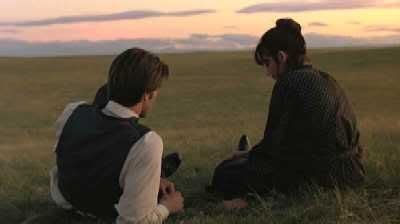
01. Days of Heaven (Malick, 78)
02. Au hasard Balthazar (Bresson, 66)
03. The Passion of Joan of Arc (Dreyer, 28)
04. Citizen Kane (Welles, 41)
05. The Magnificent Ambersons (Welles, 42)
06. Sunrise (Murnau, 27)
07. Before Sunrise/Before Sunset (Linklater, 95/04)
08. The Night of the Hunter (Laughton, 55)
09. Vertigo (Hitchcock, 58)
10. Taste of Cherry (Kiarostami, 97)
11. Histoire(s) du Cinema (Godard, 88-98)
12. City Lights (Chaplin, 31)
13. Tokyo Story (Ozu, 53)
14. Chimes at Midnight (Welles, 65)
15. Shoah (Lanzmann, 85)
16. Sátántangó (Tarr, 94)
17. Barry Lyndon (Kubrick, 75)
18. The Thin Red Line (Malick, 98)
19. The Searchers (Ford, 56)
20. Diary of a Country Priest (Bresson, 51)
21. Singin' in the Rain (Donen/Kelley, 52)
22. Eyes Wide Shut (Kubrick, 99)
23. Flowers of Shanghai (Hou, 98)
24. Touch of Evil (Welles, 58)
25. The Story of the Late Chrysanthemums (Mizoguchi, 39)
26. L'Atalante (Vigo, 34)
27. Day of Wrath (Dreyer, 43)
28. Intolerance (Griffith, 16)
29. Two or Three Things I Know About Her (Godard, 67)
30. Karamay (Xu, 10)
31. I Was Born, But... (Ozu, 32)
32. Voyage in Italy (Rossellini, 54)
33. Ninotchka (Lubitsch, 39)
34. Ghost World (Zwigoff, 01)
35. Walkabout (Roeg, 71)
36. The Big Sleep (Hawks, 46)
37. The General (Keaton/Bruckman, 26)
38. The Misfits (Huston, 61)
39. The Lady Eve (Sturges, 41)
40. Notorious (Hitchcock, 46)
41. The Rules of the Game (Renoir, 39)
42. F for Fake (Welles, 73)
43. Redacted (De Palma, 07)
44. Night and Fog (Resnais, 55)
45. The House Is Black (Farrokhzad, 62)
46. Three Times (Hou, 05)
47. Gertrud (Dreyer, 64)
48. Ordet (Dreyer, 55)
49. A Man Escaped (Bresson, 56)
50. A.I. (Spielberg, 01)
51. Monsieur Verdoux (Chaplin, 47)
52. Unforgiven (Eastwood, 92)
53. Rio Bravo (Hawks, 59)
54. The Trial of Joan of Arc (Bresson, 62)
55. A Hard Day's Night (Lester, 64)
56. Letter from an Unknown Woman (Ophuls, 48)
57. Window Water Baby Moving (Brakhage, 59)
58. The Man with the Movie Camera (Vertov, 29)
59. Russian Ark (Sokurov, 02)
60. Still Life (Jia, 06)
61. Swing Time (Stevens, 36)
62. Nosferatu (Murnau, 22)
63. Close-up (Kiarostami, 90)
64. Young Mr. Lincoln (Ford, 39)
65. A Star Is Born (Cukor, 54)
66. Celine and Julie Go Boating (Rivette, 74)
67. Gentlemen Prefer Blondes (Hawks, 53)
68. Showgirls (Verhoeven, 95)
69. Contempt (Godard, 63)
70. The New World (Malick, 05)
71. Badlands (Malick, 73)
72. The Piano (Campion, 93)
73. Lolita (Kubrick, 62)
74. Jurassic Park (Spielberg, 93)
75. Masculin-Feminin (Godard, 66)
76. Do the Right Thing (Lee, 89)
77. Tabu (Murnau/Flaherty, 31)
78. Rear Window (Hitchcock, 54)
79. The Bitter Tears of Petra von Kant (Fassbinder, 72)
80. Beau Travail (Denis, 99)
81. Raging Bull (Scorsese, 80)
82. In the Mood for Love (Wong, 00)
83. Shock Corridor (Fuller, 63)
84. Tropical Malady (Apichatpong, 04)
85. Platform (Jia, 00)
86. E.T. the Extra-Terrestrial (Spielberg, 82)
87. L'Avventura (Antonioni, 60)
88. Play Time (Tati, 67)
89. A Talking Picture (de Oliveira, 03)
90. Manhattan (Allen, 79)
91. Actress (Kwan, 92)
92. Amadeus (Forman, 84)
93. Early Summer (Ozu, 51)
94. Day for Night (Truffaut, 73)
95. The Fog of War (Morris, 03)
96. Don't Look Now (Roeg, 73)
97. Heathers (Lehmann, 89)
98. Clueless (Heckerling, 95)
99. McCabe and Mrs. Miller (Altman, 71)
100. One from the Heart (Coppola, 82)
The Words Will Never Come Out

This is amazing (especially when you consider the original!).
What We Liked the Most


Not surprisingly but certainly hearteningly (with the dubious likes of Animal Collective, TV on the Radio, and LCD Soundsystem as the last three album winners), Kanye won this year's Pazz and Jop. By a landslide; My Beautiful Dark Twisted Fantasy finished a mere 18 points shy of doubling the total for LCD's runner-up This Is Happening! "Fuck You!" topped the singles side of the poll; frankly, I can take it or leave it, but it could've been much worse.

Here's my ballot. And (if you scroll about halfway down the page) here's a comment I made comparing Kanye to Don Draper that the Voice apparently decided to publish.
The JLT/JLT Ballot


With the Golden Globes airing tonight and the Oscar nominations soon to be announced, I figured it was a good time to post my picks for the year's best work. As with my top films list posted late last month, I am not limiting my picks to Oscar-eligible work; anything I saw in 2010 is fair game. My choices in each category are listed in roughly preferential order.


FILM
Karamay
Greenberg
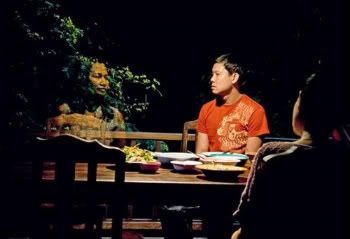
Uncle Boonmee Who Can Recall His Past Lives
Valhalla Rising
City of Life and Death


DIRECTOR
Apichatpong Weerasethakul - Uncle Boonmee Who Can Recall His Past Lives
Xu Xin - Karamay
Nicholas Winding Refn - Valhalla Rising
Lu Chuan - City of Life and Death
Jia Zhangke - I Wish I Knew


ACTRESS
Sibel Kikelli - When We Leave
Jennifer Lawrence - Winter's Bone
Michelle Williams - Blue Valentine
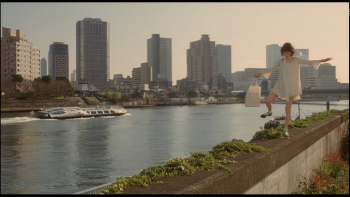
Doona Bae - Air Doll
Fooi Mun Lai - The Tiger Factory


ACTOR
Ben Stiller - Greenberg
Edgar Ramirez - Carlos
Ryan Gosling - Blue Valentine
Jesse Eisenberg - The Social Network
Stephen Dorff - Somewhere


SUPPORTING ACTRESS
Greta Gerwig - Greenberg
Nora von Waldstatten - Carlos
Olivia Williams - The Ghost Writer
Jennifer Jason Leigh - Greenberg
Elle Fanning - Somewhere


SUPPORTING ACTOR
Justin Timberlake - The Social Network
John Hawkes - Winter's Bone
Rhys Ifans - Greenberg
Dominique Thomas - Bluebeard
Mark Ruffalo - The Kids Are All Right


SCREENPLAY
Aaron Sorkin - The Social Network
Noah Baumbach and Jennifer Jason Leigh - Greenberg
Michael Arndt, John Lasseter, Andrew Stanton and Lee Unkrich - Toy Story 3
Stuart Blumberg and Lisa Cholodenko - The Kids Are All Right
Robert Harris and Roman Polanski - The Ghost Writer


CINEMATOGRAPHY
Lee Ping-bin - Air Doll
Nelson Yu Lik-wai - I Wish I Knew and Dream Home
Yukontorn Mingmongkon and Sayombhu Mukdeeprom - Uncle Boonmee Who Can Recall His Past Lives
Xu Xin - Karamay
Harris Savides - Greenberg and Somewhere


SCORE
Trent Reznor and Atticus Ross - The Social Network
James Murphy - Greenberg
World's End Girlfriend - Air Doll
Thomas Bangalter - Enter the Void
Carter Burwell - True Grit
Work in Progress


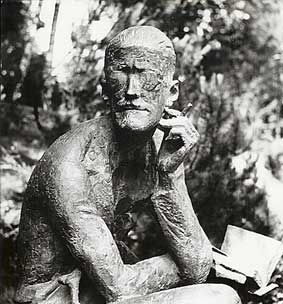
James Joyce died 70 years ago today. A few quotes in his honor.

"One of the things I could never get accustomed to in my youth was the difference I found between life and literature." (Joyce to a friend)

"Welcome, O life, I go to encounter for the millionth time the reality of experience and to forge in the smithy of my soul the uncreated conscience of my race. Old father, old artificer, stand me now and ever in good stead." (from A Portrait of the Artist as a Young Man)

"...I was a Flower of the mountain yes when I put the rose in my hair like the Andalusian girls used or shall I wear a red yes and how he kissed me under the Moorish wall and I thought well as well him as another and then I asked him with my eyes to ask again yes and then he asked me would I yes to say yes my mountain flower and first I put my arms around him yes and drew him down to me so he could feel my breasts all perfume yes and his heart was going like mad and yes I said yes I will Yes. " (from the Molly Bloom "Penelope" soliloquy that concludes Ulysses)
Bad Omens


2011 has not started off well.

First, in Pakistan, the governor of Punjab province, Salman Taseer, was assassinated by one of his own bodyguards coming out of a cafe where he'd eaten his lunch. Then, closer to home, an Arizona congresswoman was shot while holding an informal meeting with local constituents in a grocery store; six people were killed while 12 more were wounded, including Rep. Gabrielle Giffords.

Of course, it's deeply saddening when any acts of such horrific violence occur, against anyone, anywhere in the world. But what makes the combination of these two recent events sting additionally is that both Taseer and Giffords have been infallibly described as "moderates." Both were voices of compromise and peaceful progress fighting the good fights in profoundly polarized cultural spheres.

Taseer was a controversial figure in Pakistan for his efforts to liberalize the strict, Islamic blasphemy laws within his country's most populous province; his admirable resolve was apparently strengthened in the wake of a Pakistani female having recently been executed for supposedly defaming the Prophet Muhammad. (Extremely worrisome is the fact that, following Taseer's death, his bodyguard/assassin has garnered thousands of new social networking "friends.") Giffords, meanwhile, was a supporter of the Obama healthcare bill--a piece of legislation that, even in watered-down form, will provide serious assistance to millions of Americans, though the true scale of its impact may take decades to measure. A centrist Democrat, Giffords was reportedly one of the last "yea" votes swayed before the bill finally made it through the House of Representatives.

All I can do is hope that this pair of early January tragedies isn't portending darker days to come.
This Is Happening


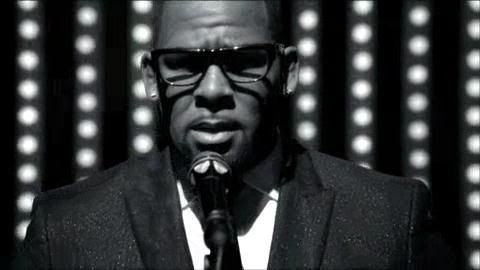
R. Kelly's "When a Woman Loves" is what's on.

Rosenbaum on Kiarostami's place in Iranian (and World) Cinema.

Armond White's annual "Better-Than" list--always a must-read, even if you mostly disagree.

I'm not a Poetry Person per se, but I really like this poem by Michael Ondaatje.

Joanna Newsom and Andy Samberg are the most adorable celeb couple that I didn't know existed until a couple days ago.