Joie de vivre


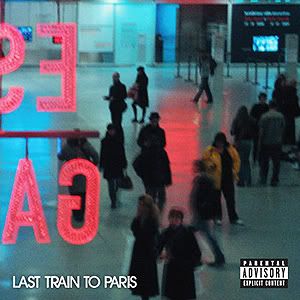
As usual these days, I'm late to the party on Last Train to Paris, but...damn! I mean, a show of hands please for those of you who fully expected Diddy to someday release a cohesive, visionary masterwork?

Yeah, me neither and I like the guy just fine and enjoy no fewer than a dozen (and perhaps as many as twenty) pre-Last Train tracks with his name attached as the primary artist. But the almost-non-stop brilliance of his latest, released under the moniker Diddy-Dirty Money (the latter being the duo of Dawn Richard and Kalenna Vick, both terrific vocalists), can't help but feel astonishingly out of the blue.

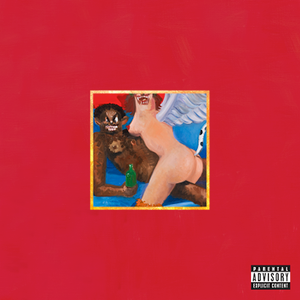
Near the beginning of the record we're told that "this is a brand new sound" and that "this will change your life." It's hyperbole, sure, but it's no more hollow boasting than Kanye's famous egotism. Of course, among late 2010 hip hop releases, the obvious point of comparison for Last Train is My Beautiful Dark Twisted Fantasy, both personal tours-de-force built around a singular musical vision working from well outside contemporary hip hop's comfort zone. No, Diddy's record isn't as great as Kanye's--though it comes closer than just about anything else released over the past few years--but it's every bit as fascinatingly reflective of its creator's persona and worldview.

What both albums share is a preoccupation with high fashion (which I don't give a shit about, frankly, but Diddy and Kanye are passionate enough that I'm temporarily interested insofar as fashion is tied to the music's central themes, especially on Last Train) and a superb use of their all-star slate of guest performers. This latter similarity, one might argue, is common to most current rap, which is true, but these two albums aren't merely upping the name-recognition quotient (as is typically the case)--they're employing a varied, sometimes reoccurring cast of players to enhance the narrative scope, the uncannily "cinematic" feel, of their respective records. On Last Train, Diddy himself is almost like Orson Welles' Harry Lime in The Third Man, often lurking in the shadows, but rather than being lost in the mix, his overriding presence is felt throughout; this puppetmaster-like effect squares nicely with his checks-not-rhymes CEO persona.

Unlike My Beautiful Dark Twisted Fantasy, which frequently has the confessional feel of psychotherapy, Diddy doesn't get truly personal until near the end of his album on the song "Coming Home"; not coincidentally, this is also where the music of Last Train--which has run the gamut from frenetic Euro-dance styles to moody minimalist arrangements--reaches its ebullient climax. "What am I 'posed to do when the club lights come on?" Diddy asks, "It's easy to be Puff, but it's harder to be Sean/ What if my twins ask me why I didn't marry their mom?/ Damn, how do I respond?/ What if my son stares with a face like my own / and says he wants to be like me when he's grown? / Shit, but I ain't finished growin'/ another night the inevitable prolongs." That's not poetry--it's better. It feels like nothing short of an honest-to-goodness epiphany captured on record.
For Whom the Bell Tolls


Fellow Sopranos diehards: If you haven't already come across this, it will very likely blow your mind.

Personally, I was always on the fence about what the final scene of the series "means," but this extremely close, necessarily lengthy analysis (including seemingly revealing David Chase remarks I'd never before encountered) now has me sold that Tony sleeps with fishes.
Addendum


I've added a list of my 50 favorite performances of last year to my best-of-2010 page.

Here's the top ten:

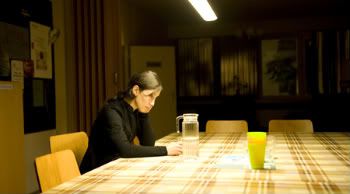
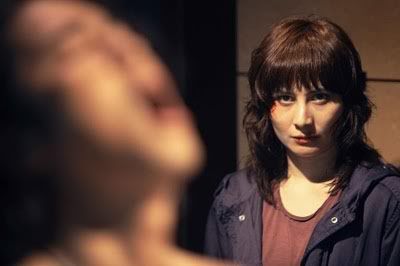
01. Sibel Kikelli - When We Leave
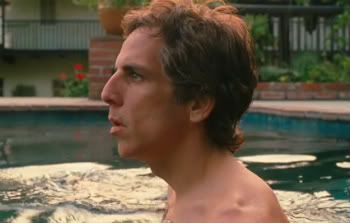
02. Ben Stiller - Greenberg
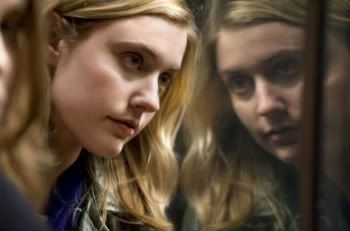
03. Greta Gerwig - Greenberg
04. Jennifer Lawrence - Winter's Bone
05. Edgar Ramirez - Carlos
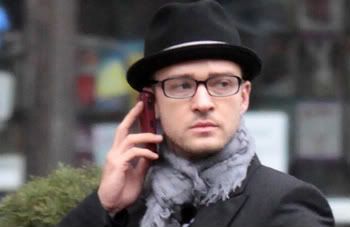
06. Justin Timberlake - The Social Network
07. John Hawkes - Winter's Bone
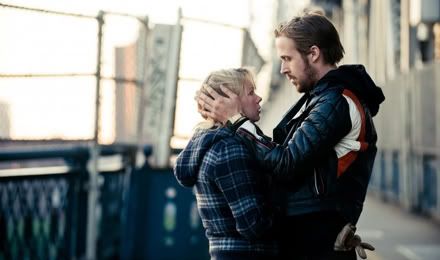
08. Michelle Williams - Blue Valentine
09. Ryan Gosling - Blue Valentine
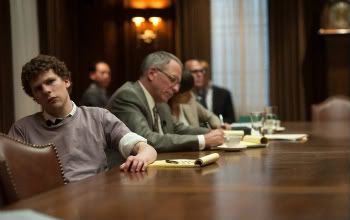
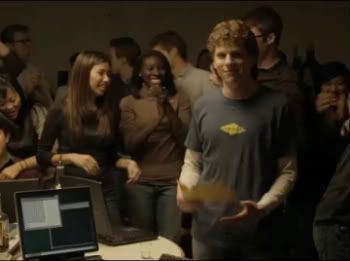
10. Jesse Eisenberg - The Social Network
see 11-50
Los Angeles Plays Itself


One of American cinema's most interesting trends in 2010 was an uncommon wealth of Los Angeles-set films that offer a unique feel or perspective of what life in L.A. is actually like, at least for some segments of its population--as opposed to the annual slew of Hollywood-made/Hollywood-set movies that recycle the same familiar Greater Los Angeles locations without offering much insight outside of lazy SoCal shorthand.

The two most atypical L.A. films this year must be Bruce LaBruce's gay porn-horror hybrid L.A. Zombie, which navigates some of the seedier haunts of L.A.'s homeless community in an allegory that ponders both the AIDS epidemic and the cultural ghettoization of gay men while expertly walking the line between confrontational art and gloriously bad taste; and Banksy's Exit Through the Gift Shop, which makes pointed detours to London, Paris, and New York but situates its story mainly in a Los Angeles counterculture that's refreshingly rough around the edges. Whether Banksy's now Oscar-nominated work is a "hoax," or rather the extent to which it is, matters little for our purposes: the grungy, communal L.A. that shines through his sly, F for Fake-like commentary on artistic authenticity is something excitingly new for most of us non-Angelenos.

The Kids Are All Right and Greenberg are a decidedly more conventional pair, but they also subtly shift long-held ideas about what constitutes an "L.A. movie." Unlike LaBruce and Banksy's films, they're set in upscale areas of Los Angeles, but they're not excessively glamorous environs--a key distinction to make when talking about Southern California on film (think, for example of Norma Desmond's estate in Sunset Boulevard or much more recently, of Cher's palatial residence in Clueless). These are leafy, exquisitely manicured, to be sure, but ultimately cozy neighborhoods in which one can imagine buying a house and raising a family. Or at least that might be true if one is a doctor (like Annette Bening's Nic in Kids), a successful entrepreneur (Mark Ruffalo's Paul in Kids, who was, at one point, apparently broke enough to donate sperm for a little cash), or a hotel chain executive (Ben Stiller's brother in Greenberg, for whom he's house-sitting). Noah Baumbach said that he wanted to show an L.A. where relatively normal people live and raise their kids, but for the film's achievement of this, a debt of recognition must be paid to DP extraordinaire Harris Savides, whose images depict a warm, lived-in city that feels a universe away from the mythic, impossibly luxurious destination that most of us have come to associate with a real place that over four million people call home.

Savides also shot Sofia Coppola's superb Somewhere, which along with the equally underappreciated Marie Antoinette, I'd say represents the stronger half of her filmography. Because Somewhere is about a movie star named Johnny Marco (played beautifully by Stephen Dorff, a performance that's gone sadly neglected in the current awards sweepstakes) who takes up permanent residence at the legendary Chateau Marmont, the film necessarily harnesses L.A. iconicity to a greater degree than those titles listed above, but in a manner not dissimilar from David Lynch's now-canonical Mulholland Drive, it subverts and ultimately upends our expectations of what such imagery means.

It's also one of the truest, most deeply felt portraits of fatherhood ever put to film. The scenes between Johnny and his daughter Cleo (Elle Fanning, whose understated, never overly precious performance is vastly preferable to Hailee Steinfeld's insufferably precocious sassy-adult-trapped-in-a-child's-body True Grit turn, which just earned a cringe-inducing Oscar nomination) are so sweet and so tender, whether they're competing at Guitar Hero in Johnny's hotel room, ordering late-night gelato from room service while Johnny's promoting his latest movie in Milan, or clowning around in the hotel pool and then lounging on deck chairs soaking up the warmth of some Southern Californian sunshine. (The most comparable on-screen dynamic that comes to mind is the surrogate father-son relationship between Kevin Costner and T.J. Lowther in Clint Eastwood's great A Perfect World.) When Cleo, who seems to be as well-adjusted and happy and normal as any 11 year-old girl might be under the odd circumstances, finally breaks down and cries in her dad's Ferrari, it's genuinely affecting because, by that point, we truly care about both characters.

On the other hand, the scenes minus Cleo are among the saddest and loneliest Coppola's ever put to film; while "stylish" and "moody" are obvious adjectives for describing her work, Somewhere marks the first instance where such moments are actually poignant and resonant rather than just playing like atmospheric fashion ads. The air literally goes out of the film when Johnny's on his own--or even in the presence of pole-dancing twins, who entertain him in his room while he dozes off from booze and pills. When late in the film, Johnny phones an ex and desperately complains, "I'm nothing...I'm not even a person," he's articulating a little too explicitly what Dorff's incredible body language (the Cleo-less scenes find Dorff essentially acting in a silent movie) and Coppola and Savides' often-breathtaking compositions have already made abundantly clear. But it's also a necessary moment: Johnny has finally accepted and even embraced his role as a father and now Cleo is gone to summer camp; in her absence, he realizes what many well-meaning dads (myself included) have before him, which is how oppressively boring and seemingly meaningless life can feel in the absence of that amazing, brilliant little person that we somehow managed to help create. If this scene also serves as a bitter critique of Hollywood artifice, it's simply icing on the cake.

It's the remarkable human dimension of Somewhere that marks Coppola's maturation (whereas, conversely, it's new-found formal intelligence that makes Greenberg a significant leap forward for Baumbach). She's always been a preternaturally gifted, if heavily allusive, visual stylist and one of the more intuitive filmmakers of her generation when it comes to using music (though her interesting employment here of tunes as commonplace as the Foo Fighters' "My Hero," Ashanti's "1 Thing," and Gwen Stefani's "Cool" strikes me as more impressive than leaning on already-hip material by My Bloody Valentine, Roxy Music, and Phoenix), but Somewhere's charm lies in the details. By the end of the film, the Chateau Marmont feels as dully familiar to us as it must to Johnny and after returning from Milan, it can't help but feel a little shabby compared to the more opulent Italian version of luxury; to say that it's the third major character in the film, while a cliche, is certainly not untrue. Even the endless parade of model-looking women vying for Johnny's attention begins to feel relatably tiresome, though such attention is obviously far from the reality of everyday life for most of us. The frustrations and discontents of privilege is Coppola's great theme, and where I once (see: the overrated Lost in Translation) couldn't resist the impulse to brand her as solipsistic for it, she's now able to make that palpably register for viewers who didn't grow up rich and famous in Hollywood.

Part of the difference is that she's working (mostly) on her home turf this time rather than in, say, Tokyo or 18th Century France--though Marie Antoinette has plenty else to recommend it. (The trip to Milan borders on dubious, as its depictions of wacky Italian culture aren't far off from Lost in Translation's gross representations of Japan, but at least in this case, Sofia is Italian-American and Johnny and Cleo's reactions seem more fondly bemused than condescending or xenophobic) Her portrait of Los Angeles, meanwhile, is essentially affectionate. If the insularity and mechanic motions of Hollywood celebrity are something Johnny feels he must escape to stop spinning his wheels in circles, the palm trees swaying in the Pacific breeze above a nondescript ice-skating rink are something Coppola clearly wouldn't care to leave behind for too long. I'm reminded of the song, "West Coast," by Sofia's cousin, Jason Schwartzman and his band Coconut Records. "I miss you / I'm going back home to the West Coast," sings Schwartzman wistfully. Films like Somewhere, Greenberg, and the rest I've mentioned here show us what's to miss.
A Hundred (or So) Films


Like an oil change for your car or spring cleaning around the house, re-thinking and tweaking a top 100 films list is, every so often, one of those mental necessities for a lot of cinephiles, myself included. Below is the latest ordering for my personal list.

As you may notice, there are some rather glaring omissions. Most of these are intentional, though many would be rectified if I were to expand the list to two or even three hundred films rather than just a hundred. There is no Lang, Tarkovsky, Herzog, Fellini, Kurosawa, Ray (Nicholas or Satyajit), Akerman, Visconti, Feuillade, Bunel, Eisenstein, Cronenberg, Polanski, Cassavetes, Bergman; no pre-Fifth Generation Chinese films; nothing whatsoever from Africa or South America (I plead very embarrassing ignorance here aside from a few names [Martel, Ruiz, Sembene] that just missed the cut); nothing animated, only three shorts; and only four films by female directors. Included, instead, are all four Malick features to date; four Welles entries in the top 25 (and a fifth in the top 50); Barry Lyndon and Eyes Wide Shut but not 2001 or Dr. Strangelove; Ghost World, Jurassic Park, Heathers, Clueless, and Showgirls. I'm preemptively conceding all these likely criticisms as revealing of my specific preferences and as an acknowledgment that this is not, in any sense save for the inadvertent, a stab at canon formation. It's simply a (hopefully pretty accurate) reflection of what I love or value the most in film as of early 2011.

01. Days of Heaven (Malick, 78)
02. Au hasard Balthazar (Bresson, 66)
03. The Passion of Joan of Arc (Dreyer, 28)
04. Citizen Kane (Welles, 41)
05. The Magnificent Ambersons (Welles, 42)
06. Sunrise (Murnau, 27)
07. Before Sunrise/Before Sunset (Linklater, 95/04)
08. The Night of the Hunter (Laughton, 55)
09. Vertigo (Hitchcock, 58)
10. Taste of Cherry (Kiarostami, 97)
11. Histoire(s) du Cinema (Godard, 88-98)
12. City Lights (Chaplin, 31)
13. Tokyo Story (Ozu, 53)
14. Chimes at Midnight (Welles, 65)
15. Shoah (Lanzmann, 85)
16. Sátántangó (Tarr, 94)
17. Barry Lyndon (Kubrick, 75)
18. The Thin Red Line (Malick, 98)
19. The Searchers (Ford, 56)
20. Diary of a Country Priest (Bresson, 51)
21. Singin' in the Rain (Donen/Kelley, 52)
22. Eyes Wide Shut (Kubrick, 99)
23. Flowers of Shanghai (Hou, 98)
24. Touch of Evil (Welles, 58)
25. The Story of the Late Chrysanthemums (Mizoguchi, 39)
26. L'Atalante (Vigo, 34)
27. Day of Wrath (Dreyer, 43)
28. Intolerance (Griffith, 16)
29. Two or Three Things I Know About Her (Godard, 67)
30. Karamay (Xu, 10)
31. I Was Born, But... (Ozu, 32)
32. Voyage in Italy (Rossellini, 54)
33. Ninotchka (Lubitsch, 39)
34. Ghost World (Zwigoff, 01)
35. Walkabout (Roeg, 71)
36. The Big Sleep (Hawks, 46)
37. The General (Keaton/Bruckman, 26)
38. The Misfits (Huston, 61)
39. The Lady Eve (Sturges, 41)
40. Notorious (Hitchcock, 46)
41. The Rules of the Game (Renoir, 39)
42. F for Fake (Welles, 73)
43. Redacted (De Palma, 07)
44. Night and Fog (Resnais, 55)
45. The House Is Black (Farrokhzad, 62)
46. Three Times (Hou, 05)
47. Gertrud (Dreyer, 64)
48. Ordet (Dreyer, 55)
49. A Man Escaped (Bresson, 56)
50. A.I. (Spielberg, 01)
51. Monsieur Verdoux (Chaplin, 47)
52. Unforgiven (Eastwood, 92)
53. Rio Bravo (Hawks, 59)
54. The Trial of Joan of Arc (Bresson, 62)
55. A Hard Day's Night (Lester, 64)
56. Letter from an Unknown Woman (Ophuls, 48)
57. Window Water Baby Moving (Brakhage, 59)
58. The Man with the Movie Camera (Vertov, 29)
59. Russian Ark (Sokurov, 02)
60. Still Life (Jia, 06)
61. Swing Time (Stevens, 36)
62. Nosferatu (Murnau, 22)
63. Close-up (Kiarostami, 90)
64. Young Mr. Lincoln (Ford, 39)
65. A Star Is Born (Cukor, 54)
66. Celine and Julie Go Boating (Rivette, 74)
67. Gentlemen Prefer Blondes (Hawks, 53)
68. Showgirls (Verhoeven, 95)
69. Contempt (Godard, 63)
70. The New World (Malick, 05)
71. Badlands (Malick, 73)
72. The Piano (Campion, 93)
73. Lolita (Kubrick, 62)
74. Jurassic Park (Spielberg, 93)
75. Masculin-Feminin (Godard, 66)
76. Do the Right Thing (Lee, 89)
77. Tabu (Murnau/Flaherty, 31)
78. Rear Window (Hitchcock, 54)
79. The Bitter Tears of Petra von Kant (Fassbinder, 72)
80. Beau Travail (Denis, 99)
81. Raging Bull (Scorsese, 80)
82. In the Mood for Love (Wong, 00)
83. Shock Corridor (Fuller, 63)
84. Tropical Malady (Apichatpong, 04)
85. Platform (Jia, 00)
86. E.T. the Extra-Terrestrial (Spielberg, 82)
87. L'Avventura (Antonioni, 60)
88. Play Time (Tati, 67)
89. A Talking Picture (de Oliveira, 03)
90. Manhattan (Allen, 79)
91. Actress (Kwan, 92)
92. Amadeus (Forman, 84)
93. Early Summer (Ozu, 51)
94. Day for Night (Truffaut, 73)
95. The Fog of War (Morris, 03)
96. Don't Look Now (Roeg, 73)
97. Heathers (Lehmann, 89)
98. Clueless (Heckerling, 95)
99. McCabe and Mrs. Miller (Altman, 71)
100. One from the Heart (Coppola, 82)
The Words Will Never Come Out

This is amazing (especially when you consider the original!).
What We Liked the Most


Not surprisingly but certainly hearteningly (with the dubious likes of Animal Collective, TV on the Radio, and LCD Soundsystem as the last three album winners), Kanye won this year's Pazz and Jop. By a landslide; My Beautiful Dark Twisted Fantasy finished a mere 18 points shy of doubling the total for LCD's runner-up This Is Happening! "Fuck You!" topped the singles side of the poll; frankly, I can take it or leave it, but it could've been much worse.

Here's my ballot. And (if you scroll about halfway down the page) here's a comment I made comparing Kanye to Don Draper that the Voice apparently decided to publish.
The JLT/JLT Ballot


With the Golden Globes airing tonight and the Oscar nominations soon to be announced, I figured it was a good time to post my picks for the year's best work. As with my top films list posted late last month, I am not limiting my picks to Oscar-eligible work; anything I saw in 2010 is fair game. My choices in each category are listed in roughly preferential order.


FILM
Karamay
Greenberg
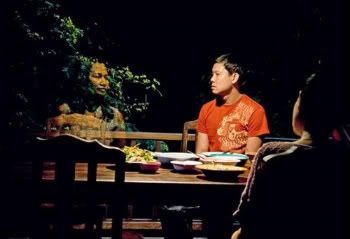
Uncle Boonmee Who Can Recall His Past Lives
Valhalla Rising
City of Life and Death


DIRECTOR
Apichatpong Weerasethakul - Uncle Boonmee Who Can Recall His Past Lives
Xu Xin - Karamay
Nicholas Winding Refn - Valhalla Rising
Lu Chuan - City of Life and Death
Jia Zhangke - I Wish I Knew


ACTRESS
Sibel Kikelli - When We Leave
Jennifer Lawrence - Winter's Bone
Michelle Williams - Blue Valentine
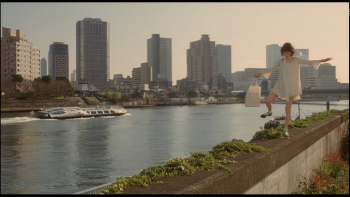
Doona Bae - Air Doll
Fooi Mun Lai - The Tiger Factory


ACTOR
Ben Stiller - Greenberg
Edgar Ramirez - Carlos
Ryan Gosling - Blue Valentine
Jesse Eisenberg - The Social Network
Stephen Dorff - Somewhere


SUPPORTING ACTRESS
Greta Gerwig - Greenberg
Nora von Waldstatten - Carlos
Olivia Williams - The Ghost Writer
Jennifer Jason Leigh - Greenberg
Elle Fanning - Somewhere


SUPPORTING ACTOR
Justin Timberlake - The Social Network
John Hawkes - Winter's Bone
Rhys Ifans - Greenberg
Dominique Thomas - Bluebeard
Mark Ruffalo - The Kids Are All Right


SCREENPLAY
Aaron Sorkin - The Social Network
Noah Baumbach and Jennifer Jason Leigh - Greenberg
Michael Arndt, John Lasseter, Andrew Stanton and Lee Unkrich - Toy Story 3
Stuart Blumberg and Lisa Cholodenko - The Kids Are All Right
Robert Harris and Roman Polanski - The Ghost Writer


CINEMATOGRAPHY
Lee Ping-bin - Air Doll
Nelson Yu Lik-wai - I Wish I Knew and Dream Home
Yukontorn Mingmongkon and Sayombhu Mukdeeprom - Uncle Boonmee Who Can Recall His Past Lives
Xu Xin - Karamay
Harris Savides - Greenberg and Somewhere


SCORE
Trent Reznor and Atticus Ross - The Social Network
James Murphy - Greenberg
World's End Girlfriend - Air Doll
Thomas Bangalter - Enter the Void
Carter Burwell - True Grit
Work in Progress


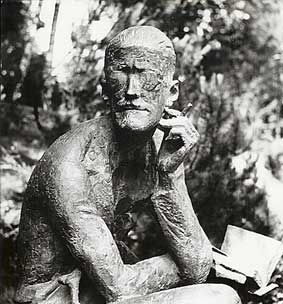
James Joyce died 70 years ago today. A few quotes in his honor.

"One of the things I could never get accustomed to in my youth was the difference I found between life and literature." (Joyce to a friend)

"Welcome, O life, I go to encounter for the millionth time the reality of experience and to forge in the smithy of my soul the uncreated conscience of my race. Old father, old artificer, stand me now and ever in good stead." (from A Portrait of the Artist as a Young Man)

"...I was a Flower of the mountain yes when I put the rose in my hair like the Andalusian girls used or shall I wear a red yes and how he kissed me under the Moorish wall and I thought well as well him as another and then I asked him with my eyes to ask again yes and then he asked me would I yes to say yes my mountain flower and first I put my arms around him yes and drew him down to me so he could feel my breasts all perfume yes and his heart was going like mad and yes I said yes I will Yes. " (from the Molly Bloom "Penelope" soliloquy that concludes Ulysses)
Bad Omens


2011 has not started off well.

First, in Pakistan, the governor of Punjab province, Salman Taseer, was assassinated by one of his own bodyguards coming out of a cafe where he'd eaten his lunch. Then, closer to home, an Arizona congresswoman was shot while holding an informal meeting with local constituents in a grocery store; six people were killed while 12 more were wounded, including Rep. Gabrielle Giffords.

Of course, it's deeply saddening when any acts of such horrific violence occur, against anyone, anywhere in the world. But what makes the combination of these two recent events sting additionally is that both Taseer and Giffords have been infallibly described as "moderates." Both were voices of compromise and peaceful progress fighting the good fights in profoundly polarized cultural spheres.

Taseer was a controversial figure in Pakistan for his efforts to liberalize the strict, Islamic blasphemy laws within his country's most populous province; his admirable resolve was apparently strengthened in the wake of a Pakistani female having recently been executed for supposedly defaming the Prophet Muhammad. (Extremely worrisome is the fact that, following Taseer's death, his bodyguard/assassin has garnered thousands of new social networking "friends.") Giffords, meanwhile, was a supporter of the Obama healthcare bill--a piece of legislation that, even in watered-down form, will provide serious assistance to millions of Americans, though the true scale of its impact may take decades to measure. A centrist Democrat, Giffords was reportedly one of the last "yea" votes swayed before the bill finally made it through the House of Representatives.

All I can do is hope that this pair of early January tragedies isn't portending darker days to come.
This Is Happening


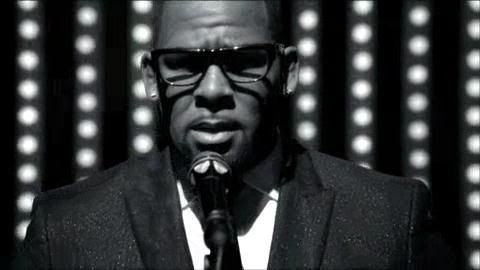
R. Kelly's "When a Woman Loves" is what's on.

Rosenbaum on Kiarostami's place in Iranian (and World) Cinema.

Armond White's annual "Better-Than" list--always a must-read, even if you mostly disagree.

I'm not a Poetry Person per se, but I really like this poem by Michael Ondaatje.

Joanna Newsom and Andy Samberg are the most adorable celeb couple that I didn't know existed until a couple days ago.
Movies While They Last
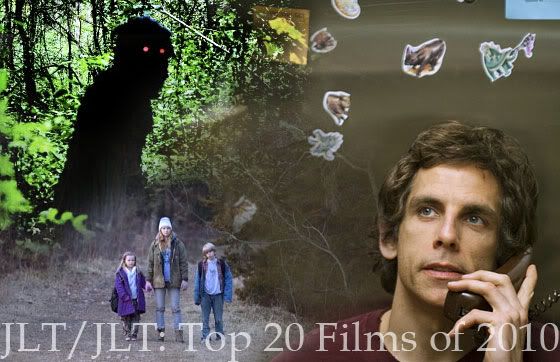

Putting this year's best-of list together has led me think a little bit about the different ways in which we see movies. The contrast, for example, between my #1 and #2 picks seems to emphasize the significance of following such a train of thought. The former was truly one of the twenty or so most powerful theatre-going experiences I've ever had, yet, sadly, I doubt--mostly because of the vagaries of DVD distribution but also because of the time-commitment required to properly watch a six-hour film--that I'll see it again anytime soon. #2, on the other hand, I've seen no fewer than a dozen times since first catching it at the multiplex. Like the films that occupied the top two slots on my best of the 2000's list, I've come to like it even more than I did initially because of the hidden surprises it's continued to yield upon revisiting. Several other titles on my list would, I suspect, benefit similarly if they were currently available on DVD, while a few others (such as #18 and #19) likely wouldn't pack anywhere near the same punch on a TV screen, with the option of pressing pause and without an audience sharing in the experience. Which is to say, this is a considered but by no means inflexible snapshot of what I liked or admired most in movies this year, from the not necessarily prime vantage point of late December.

The other thing I got to thinking about is how much movies can really mean. Not just personally, to me or you, but, you know, in the Grand Scheme of Things. I would argue that, sometimes (my #1 and #5 and even #20 come to mind), they can mean quite a lot--they can mean the power of a voice speaking firmly and eloquently against political oppression and corruption; they can mean guiding us to remember past events in danger of slipping beyond memory or immediacy; they can mean challenging contemporary projections of what constitutes the status quo. I can't help but think of Iranian auteur Jafar Panahi, one of the finest filmmakers working today. Unless something changes for the positive soon, he'll spend the next six years in prison and will be banned from making movies for the next twenty in punishment for vocally supporting the opposition to the Ahmadinejad government. I'm sure the sympathies of not just cinephiles but remotely compassionate people everywhere are with Panahi right now, and for what it's worth (probably not much, granted), this list is dedicated to the spirit of thoughtful resistance and meaning that his work exemplifies.

First, a half-dozen runners-up that in a less stellar year would've surely made the cut:

Dear Prudence Rebecca Zlotowski's uncommonly sensitive study of a teenage girl's day-to-day life following her mother's death is, for my money, the year's most assured and promising directorial debut. Lea Seydoux's titular turn impresses in a year brimming over with outstanding performances by young actresses.

The Illusionist Sylvain Chomet's charming filmization of a Jacques Tati script is the year's 2nd-best animated feature--and, upon reflection, it's not all that thematically dissimilar from the final chapter of Woody and Buzz Lightyear.

Kawasaki's Rose No film this year, besides maybe #20 on my list, felt more generous or inclusive toward all of its characters, despite or sometimes maybe because of their myriad shortcomings. Remarkably, that warmth doesn't entirely soften the film's political bite either.

The Strange Case of Angelica In placing Manoel de Oliveira's latest here, I do so with the reservation that I strongly suspect it would've finished higher had I not seen it in a film festival setting, where such a compact, understated, and wry film is inevitably overshadowed by flashier works like the sprawling Carlos and the delirious Uncle Boonmee. I hope to revisit this Strange Case as soon as possible.

13 Assassins and True Grit Mostly straight-faced, thoroughly accomplished genre exercises from filmmakers who usually work in self-conscious quote marks. Takashi Miike's samurai yarn is as much pure popcorn fun as any movie released this year, with the always awesome Koji Yakusho demonstrating some Eastern true grit. The Coen Brothers' take on the Charles Portis novel (and the subsequent movie that won John Wayne a late-career Oscar) is a legitimately engrossing western, complete with an immensely charismatic Jeff Bridges performance and some great references to The Night of the Hunter. Two things, in my view, prevent it from climbing a little higher on this list: 1) It can't help but feel a tad minor following A Serious Man, one of the Coens' most personal and distinctive films, and 2) While this True Grit is probably superior to the 1969 version, that film packs extra poignancy within the context of John Wayne's career and place in the popular imagination; Bridges is a terrific actor, but he's not mythic.

20.The Kids Are All Right In a year dominated by three-dimensional spectacles, Lisa Cholodenko's very smart, very funny ensemble piece offers actual, three-dimensional human beings. It also provides real hope that Hollywood can still winningly pull off the "small film." The most radical thing about this movie is how happily mainstream it is, in theme and in presentation; implicitly, Cholodenko seems to be asking: why should this movie be any stranger or more marginal than any other relationship- and family-centered comedy/drama? The script is sparkling and the performances across the board are superb, especially a never-better Annette Bening and Mark Ruffalo, adding nifty new twists on the character he's been more or less consistently typecast as since You Can Count on Me.
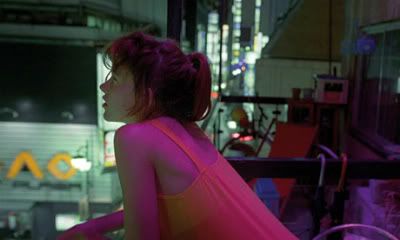


19.L.A. Zombie and 18.Enter the Void These two, on the other hand, are purposefully radical experiments that mostly succeed. Bruce LaBruce's horror-porn hybrid offers an unflinching, if tongue-in-cheek, look at life on the margins of Los Angeles, both for a gay community that doesn't live nearly as comfortably as Bening and Julianne Moore in Kids and for the homeless and mentally unwell residents of L.A.'s less scenic districts. The great surprise of Enter the Void--given both the subject matter and Gaspar Noé's track record--is that it's finally more pleasurable than it is off-putting. Sure, the film is overlong by at least a half-hour and Noé ventures places he's frustratingly unwilling to actually spend much thought investigating, but while it's on-screen, it's hypnotic, frequently exciting, and sporadically breathtaking in its vision and audacity.

17. Aurora and 16.Winter Vacation If, as the Talking Heads predicted, heaven is a place where nothing ever happens, then Cristi Puiu and Li Hongqi are certainly on the right track. These are films about, first and foremost, time passing--slowly, very slowly. The former presents, elliptically yet in paint-drying detail, the events leading up to a violent crime, with Puiu turning in an appropriately unreadable lead performance. The latter is a deadpan comedy observing the goings-on (mostly, among the kids on break from school) in a small Inner Mongolian community; the final scene solidifies the sharp sociopolitical metaphor suggested more loosely by what precedes it.

15.Air Doll Teresa liked Hirokazu Koreeda's dark, Pinocchio-esque fantasy so much she named it her top movie of 2009. I didn't see it until this year, but I was nearly as impressed. Air Doll is full of surprises, some splendid and others shocking, shifting between tones without ever feeling discombobulated. Koreeda's Tokyo might be the loveliest depiction of the metropolis I've ever seen on film; Doona Bae's performance as a sex doll come to curious and painful life is as heartbreaking as Haley Joel Osment's in A.I..

14.Carlos and 13.Toy Story 3 On first glance, these are two films with very little in common, but they both present deeply resonant portraits of life after irrelevancy. The adventures of the previous two Toy Story installments(which I've now seen dozens of times each, thanks to my two year-old son who loves them) are comparable with the first two-thirds of Olivier Assayas' epic biopic, culminating with Woody & Co.'s triumphant return home in Toy Story 2 and the breathlessly sustained OPEC raid sequence in Carlos. Then, Andy, inevitably, grows up and must head off to college sans toys; international terrorism evolves beyond Carlos' cult-of-celebrity hijinks. The final moments of Toy Story 3 are among the year's most beautiful and wistful, suggesting a cyclical nature of existence. The ending of Carlos implies, too, a cyclical continuity--but the events we all know well enough not to have to see are anything but beautiful or wistful.
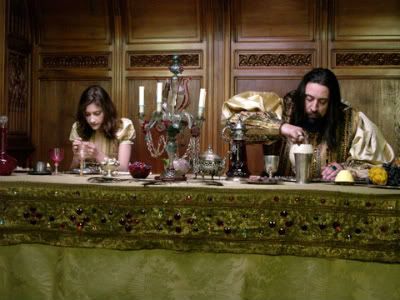


12.Around a Small Mountain and 11.Bluebeard Understated almost-masterpieces from great French filmmakers. What might well be Rivette's swansong is an affectionate study of a circus troupe that's so low-key and modest that its greatness sort of sneaks up on you near the end. Catherine Breillat's Bluebeard (which opened commercially in North America this year and is much preferable to its muddled follow-up, The Sleeping Beauty) is a take on Perrault's fairy tale where the titular villain is a moody, world-weary giant burdened by what he regards as a fatalistic obligation. The framing device, with two young sisters reading Perrault's story together, circles back on Breillat and functions provocatively alongside her ambiguous, muted telling of the main tale.

10.Dream Home and 09.The Social Network The year's most immediately relevant films: one a high-grossing, Oscar-contending Hollywood product, the other a Hong Kong extreme horror movie we luckily plucked off the shelf of a bootleg DVD kiosk. David Fincher's career-best effort gets the slight edge for Justin Timberlake's pitch-perfect, scene-stealing supporting turn.

08.I Wish I Knew Jia Zhangke is the most consistently excellent filmmaker working anywhere in the world today. I Wish I Knew preserves his status, as Jia takes a probing, concentrated look at the history and evolution of Shanghai. His long-time muse, Zhao Tao, wanders around the city like a ghost navigating somewhere, at once, familiar and alien.

07.The Tiger Factory and 06.Winter's Bone Young females making their way in a harshly unwelcoming world was surely one of 2010's great cinematic themes. We find it in Dear Prudence, in Air Doll (not as young technically, but youngest of all in terms of experience) and in the Coens' version of True Grit. And this concept is given especially brilliant treatment in Woo Ming Jin and Debra Granik's films. The former is a haunting look at day-to-day life in the developing world of Southeastern Asia, where money talks and literally everything has its price. The latter evokes The Night of the Hunter more powerfully than the Coens do in telling the story of a teenage girl in the Ozarks looking for her missing meth-cooking father. The scene where she finally "finds" him might be the year's single most indelible movie moment.
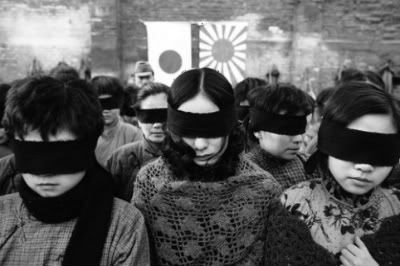


05.City of Life and Death Lu Chuan's harrowing account of the Japanese occupation of Nanjing might've placed higher if I could work up the nerve to watch it again. After one viewing, however, I do feel confident in ranking it alongside the greatest war films ever made--in recent memory, only Malick's The Thin Red Line, De Palma's Redacted, and Kathryn Bigelow's The Hurt Locker are as potent and powerful.

04.Valhalla Rising and 03.Uncle Boonmee Who Can Recall His Past Lives The year's most flooring (and unclassifiable) exercises in pure cinema. I kind of feel sorry for the Gladiator- and 300-loving dude I see pulling Nicholas Winding Refn's Viking headfuck off the shelf at Blockbuster (where it's hilariously being promoted as if it's your garden variety period swashbuckler). But I'd also kind of like to sit down and watch it with him. And if, somehow, he ends up liking it, I'll enthusiastically recommend Uncle Boonmee.

02.Greenberg I've already written at length and on multiple occasions in this space about how much I love Noah Baumbach's film, so I'll use this blurb as an opportunity to list a few of the things I've come to additionally love from subsequent viewings: Rhys Ifans and Jennifer Jason Leigh's performances (every bit as on-the-mark as Ben Stiller and Greta Gerwig's more prominent turns); that when his niece and her friend tell him that he should go to Australia with them, Roger's first reaction is, "There's this great Kinks song called 'Australia'..."; the scene where Roger asks his brother on the phone from Vietnam if pools can overflow ("Can pools overflow? Fuck you!") and then tries to remedy the situation; Florence coming to after her abortion and telling Roger: "You like me so much more than you think you do".



01.Karamay Xu Xin's monumental documentary is so unforgettable that I find myself thinking of individual scenes--of particular parents discussing their children or that video footage of the kids just before the fated performance--on an almost daily basis since seeing Karamay months ago. It's one of those rare films that you just can't shake. Its final scene edges Uncle Boonmee's for the year's greatest: a young girl performs a musical ode to Chairman Mao in her parents' (who lost a child in the Friendship Hall fire) living room when, all of a sudden, Xu switches from gritty black and white to DV color and then, with her song still lingering on the soundtrack, the shot jumps to the rebuilt Friendship Hall as a couple teenagers skateboard out front. Life goes on, Xu suggests, but the present is always colored by the past and our ability the shape the future depends critically on our understanding of this truth.
Buyer's Market


In my experience, it's exceedingly rare that halfway through a film you're just about ready to write it off as a potential-packed-but-muddled, exceptionally well-shot (by Jia Zhangke's DP of choice, Yu Lik Wai, sometimes credited as Nelson Yu Lik-Wai) dud and then, within the last ten minutes, you suddenly realize the movie you're watching is much smarter and tighter than you'd previously assumed and even, perhaps, one of the year's best films. Such is the case with Pang Ho-Cheung's Dream Home, a darkly comic (and decidedly not-for-the-faint-of-heart) slice of extreme horror about, of all things, real estate.

The 2007-set film centers on a young woman, born and bred in Hong Kong but relocated (not far, just far enough to be deprived of that fabled real estate commodity: A View of the Water--a concept instantly relatable for this Vancouverite) in her childhood away from Victoria Harbor. In flashbacks to 1991, we see banners accusing the government of collaborating with gangsters and greedy developers; at one point, snakes are left on a working class resident's porch in an attempt to intimidate them into moving away from the waterfront.

The melodramatic tone of these scenes coupled with the psychological fragility and quasi-unreadability of Josie Ho's lead performance purposefully confuse us as to what sort of movie we're watching. This is especially true as they're intermingled with the 2007 scenes, in which our deranged heroine is brutally murdering various occupants of an upscale condo building. This strange brew of wistful nostalgia and blood-and-guts effectively prevents us from predicting the first final-act twist (or should I said I say, double twist since in the denouement, Ho's character gets her just desserts in a manner far more delicious than mere jail-time) in ages that is legitimately clever and radically alters what's preceded it without feeling remotely contrived. The same goes for the film's puzzle-like structure complete with time-stamp clues; at first, it struck me as a superfluous stylization, but once the pieces fit together, I couldn't help but admire it as a slyly executed necessity for Dream Home's tonal ambiguity and final curveball.

Those twist(s)--which I won't reveal in this space--function as well-earned punch-lines to a very grim (but not unfunny) joke. They also render Pang's film immediately relevant to the here and now, as well as explaining why a 2010-released film is set in 2007. I don't know when, or if, a North American theatrical release is in the works, but I highly recommend hitting up your local Asian bootleg DVD spot ASAP. This one's worth seeking out.
Mesmerizing, Too


My Beautiful Dark Twisted Fantasy and Funstyle are two of the best albums of 2010, but they're also two of the year's weirdest, most playfully experimental and eccentric collections. I love 'em both--but most people don't. This is worth considering not because I think everyone should share my musical tastes or because they're at all comparable musically (obviously, they're not). But I do feel they were crafted in essentially the same spirit: deeply personal statements from embattled (whether mainly in their own mind or in reality) artists that--more than ever before in their respective careers--throw everything against the wall and watch, with a certain, warranted degree of self-amusement, to see what sticks.

Kanye's record is superior insofar as the success rate of his experiments is markedly higher, but Kanye's a perfectionist--a self-described "jerk-off who never takes work off." Phair, by contrast, is returning to the quirkily handmade aesthetic of her rightly treasured Girlysound tapes, and here as there, even the stuff that falls flat puts a smile on your face. Now Phair is a 43 year-old woman, for better and for worse. The for worse was Somebody's Miracle, her appropriately dull 2005 stab at the adult-contempo market. The for-better (far outweighing the for-worse) is that the professional and personal (which, for an artist like Phair, might well be inextricable) highs and lows she's experienced have prepared her to record a song as gives-you-goosebumps-good as "Satisfied," as fine a track as nearly any on the canonical Exile in Guyville or should-be-canonical Whip-Smart. The Phair of Funstyle sounds ultimately more comfortable in her skin than ever before, which is the last thing anyone would've said about her 2003 self-titled misfire (except maybe Liz Phair herself, who was decidedly wary of the expectations projected onto her by critics and fans in the wake of Exile's impact).

Kanye's album is the year's across-the-board rave-magnet; Funstyle has received mixed reviews, with some scathing. Phair raps (badly, though only slightly worse than, say, Debbie Harry--and that's not the point anyway), has an Indian guru-type deliver a stupid-funny sermon about suburban trophy wives faking it in bed, and preempts barbs coming her way (including from the record label that dropped her after hearing Funstyle) with a sound-collagey track called "U Hated It"; Kanye's album opens with Nicky Minaj slipping on a British accent to embellish a bit from Roald Dahl's version of Cinderella, includes an extended Chris Rock sketch tacked onto the outro of its loveliest and saddest track, and concludes with a Gil Scott-Heron monologue asking "Who will survive in America?"

Which is to say, neither of these are Rubber Soul-type great records, where said greatness is more or less quantifiable through a song-by-song measure. Which isn't to say, that there aren't great songs on My Beautiful Dark Twisted Fantasy and Funstyle. There are; for starters: "Power," "Hell of a Life," "Monster," "Satisfied," "My, My," and "Oh, Bangladesh." But Kanye and Phair are both decidedly dabbling in White Album territory, artists discernibly bored with song forms they've long since perfected and audacious enough to take real and exciting risks on, respectively, their fifth and sixth full albums. The difference is that the genius tag has stuck firmly enough to Kanye that critics give his more peculiar flourishes the benefit of the doubt they deserve; if anything, those who were disappointed by 808's & Heartbreak have been the most eager to heap unqualified praise on the new disc. Something tells me that if Phair had released Funstyle in 1994 as a follow-up to Exile in Guyville (rather than Whip-Smart, which sadly got stuck with the similar-to-Exile-but-not-as-good rep) it would've still proven divisive, but a much more substantial and vocal segment of music scribes (especially those who fell for Phair via Girlysound) would've championed this charmingly obtuse collection and even flirted with the "g-word."
The One That Got Away


With the queasy spectacle of LeBron's return to Northeast Ohio looming this evening, here's "Believeland," Wright Thompson's superlative examination of Cleveland, its sports history, and how LBJ factors in.
Higher Power


What My Beautiful Dark Twisted Fantasy proves, first and foremost, is that Kanye West is quite simply working at a different level of consistency and creative progress than every other recording artist today. I'll write at greater length about the specifics of this strange, masterful, and indeed very beautiful record in the near future, but after three start-to-finish listens and several more of early favorites, I'm hard-pressed to imagine a better album than this materializing before the year's end. And yet, perhaps most remarkably, it's only--and this verdict, admittedly, will very possibly shift with further and closer listening--my third-favorite Kanye album, though part of a trifecta that I'd unreluctantly call masterpieces followed by two exceptionally fine records that are fairly close (my list, at the moment goes: 808's, Late Registration, My Beautiful Dark..., Graduation, College Dropout, with the classic early mixtape Kon the Louis Vuitton Don meriting mention).

That's personal particulars, granted, but with the consensus forming around this one (the question, at this point, isn't whether it'll win Pazz & Jop but how huge a margin), it certainly begs the question of when the last time an artist or group maintained such an impossibly high standard over a stretch of five or more albums and roughly a decade. PJ Harvey in the '90's comes to mind, but Polly was always basically a cult/critics' artist, which in no way diminishes the accomplishment of her run but it does render it somehow less awe-inspiring and seemingly unlikely. Prince in the '80's, maybe? Or even, the Beatles in the '60's?! That's the league we're talking about here, suggesting that Kanye's legendary ego, however off-putting, maybe isn't too far off the mark. I mean, is it even bragging when you're just that good?
Every Man for Himself and God Against All


Sometimes the film world needs a swift kick in the ass. Especially the (quasi-)historical drama genre. Valhalla Rising is just that and plenty more besides--it's a tough-as-nails, weird-as-fuck work of Pure Cinema. Essentially sui generis, Nicholas Winding Refn's visceral Viking yarn is dubiously speculative as history but any semblance of "plot" here feels largely like an excuse for forging a totally immersive, almost overwhelming visual-aural experience. Refn's film packs more deliriously radical filmic vision in its first twenty minutes than I've found in any full film this year, save for Uncle Boonmee.

That's not a knock to the numerous good-to-great movies 2010 has, thus far, delivered, mind you. Valhalla Rising is just working from a completely different toolbox. There are echoes here of Terrence Malick (human violence contrasted with the sublimity of a lush natural landscape) and, to a more prominent extent, the limit-pushing mad genius of Werner Herzog (with Danish star Mads Mikkelsen standing in well as Refn's Klaus Kinski) and yet, while such points of reference are surely high praise, they actually don't help much in getting to the heart of why this movie matters. Once in a while, words just inevitably fail in expressing the real virtues of a piece of art. This is one of those cases. See it immediately.