2008 & Heartbreak


Our favorite things.

JOSH

Films

10. 4 Months, 3 Weeks, and 2 Days Romanian auteur Cristian Mungiu's Palm d'Or winner is the suspense thriller of the year, and a polemical gut-punch that's all the more powerful for its vérité ambiguity. We're kept on pins and needles throughout the film's almost two-hour runtime, thanks as much to Mungiu's expert pacing as to his cast's uniformly superb work. The film's haunting final scene affirms nothing, except that the future is uncertain.
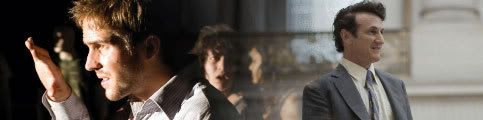

09. Milk and 08. Cloverfield Two of the best Hollywood releases of the past year--and a pair with more in common than you might initially suspect. One's a biopic set some four decades ago; the other is a monster movie grounded firmly in the here and now. The former inevitably suggests California's (and America's) on-going struggle for same-sex civil rights, while the latter evokes post-9/11 New York's (and America's) terrorism-wary anxiety. They're also both portraits of urban life, memorable for their uncommon tendency toward the specific: Gus Van Sant's film paints an affectionate, detailed picture of the modern origins of San Francisco's Castro Street; Cloverfield turns Manhattan (all too familiarly, both from cinema and real life) into a disaster zone, but, at the same, it considers the practical and socioeconomic geography of the city in ways that most films of its stripe conveniently gloss over.
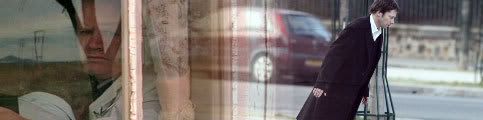

07. Silent Light and 06. A Christmas Tale Though neither could (or should) be classified as a "family film" in the marketing sense, the latest efforts from Mexico's Carlos Reygadas and France's Arnaud Desplechin--while otherwise very different--focus almost entirely on the idea of family. In both films, every familial virtue is seriously jeopardized or else furiously unraveled, with commitment souring into obligation, fidelity giving way to adulterous affairs of varying passions and consequences, and the trust of parenthood compromised by dysfunction. Yet where Silent Light--true to the Mennonite community it centers on--is stark and solemn, from its cosmic bookends to its Dreyer-indebted final act, A Christmas Tale embraces its less-than-harmonious bourgeois clan with minimal vitriol and less judgment.


05. Gran Torino and 04. The Edge of Heaven A couple master classes on xenophobia and cultural miscommunication in our post-national world. In Clint Eastwood's second-best film of 2008, a Hmong immigrant wonders why Eastwood's widower protag stubbornly stays put in their predominantly Asian-American, inner-city Detroit neighborhood while "all the other Americans have moved out." Fatih Akin contemplates the meaning of both his German citizenship and his Turkish heritage, as Turkey attempts to earn admission into the European Union. These are films that hinge on matters of life and death--and they treat such matters with appropriate seriousness--but, along the way, they also ponder the upper-middle class suburban exodus, the outsourcing of labor from the United States, the obstacles to finding common ground between the Islamic nations and the West, and the role our lack of real historical perspective plays in contemporary global problems. Neither film is perfect--Eastwood's has a habit of spelling out obvious subtexts that implies too little confidence in the audience's critical engagement, Akin's is so rigidly plotted that, at times, it's hard to resist comparisons with the Iñárritu school of weighty schematics; both are vital.


03. Perfect Life and 02. Paranoid Park Now, here are two films for which a general plot synopsis would only vaguely describe the actual experience of viewing them--which, for my money, is as valid a standard as any for differentiating good movies from great ones. They touch, by turns, on law and order, romance and relationships, and urban ennui, yet they're both finally meditations on time and its effects. Emily Tang's stunner--the most impressive film I saw at this year's VIFF and the winner of the festival's Dragons & Tigers award, for the best East Asian breakthrough effort--reflects on the way dreams for the future often dissolve without us even noticing as we settle awkwardly into adult life. Van Sant's best film to date is an innocence-lost yarn adapted from a young adult novel and refashioned into a poignant, formally exquisite study of the ephemeral quality of youth.
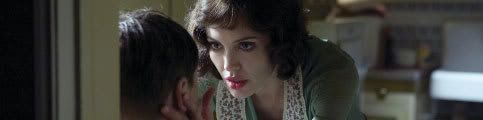

01. Changeling The year's most fully realized masterwork is Clint Eastwood's strongest directorial outing since Unforgiven, which (it bears typing out) means it trumps (to my tastes anyway) A Perfect World, The Bridges of Madison County, Mystic River, Million Dollar Baby, Letters from Iwo Jima, and Gran Torino (each no less than exemplary). Give or take Terrence Malick and the unique case that is his four-for-four record, Eastwood must, at this point, be considered America's foremost living filmmaker. Rumors have suggested that his retirement may be near, and if this is true, it's not altogether surprising--the man's pushing 80. Personally, I hope he follows Manoel de Oliveira's amazing, centenarian lead and keeps at it for decades (!) to come. But if this year's efforts do represent the final chapter of his career, or something close, he'll have pulled off a trick that few legitimate American icons have managed: he'll have gone out on top.

Next Ten: Up the Yangtze (Chang); Summer Hours (Assayas); Flight of the Red Balloon (Hou); Burn After Reading (Coen/Coen); W. (Stone); Waltz with Bashir (Folman); The Romance of Astrea and Celadon (Rohmer); The Dark Knight (Nolan); Boarding Gate (Assayas); Of Time and the City (Davies)

Albums


10. Stephen Malkmus and the Jicks - Real Emotional Trash and 09. Britney Spears - Circus It feels pretty strange referring to Stephen Malkmus and Britney Spears as seasoned vets, but, with over a decade of material and experience under their respective belts, that's exactly what they are. Listening to Real Emotional Trash makes me miss Pavement, which makes me nostalgic for the '90's, which, in turn, makes me feel old. (Changing diapers at 3am and watching Bob the Builder and The Backyardigans more frequently than Mad Men or Dexter doesn't help either.) For her part, Circus isn't close to as good as last year's marvelous Blackout, and song for song, it may not be as good as the underrated In the Zone either. It still cracked my list.


08. Portishead - Third Walking with headphones on as snow falls at an alarming rate in Canada's most temperate city, Portishead's Third sounds like some small winter miracle. "Machine Gun" is the wind whipping at the windows of the bus. Beth Gibbons is an angel atop some strange-beautiful Christmas tree.


07. The Mountain Goats - Heretic Pride and 06. Lucinda Williams - Little Honey Uh, event--what was that? You want an event? The best songwriters currently working in the English language released new albums that rank solidly in the top half of their discography. That should be sufficiently eventful for anyone with functional ears and a half-decent attention span. So what if Darnielle and Williams remaining relentlessly first-rate registers as old news; they're still more interesting than 51 out of 52 Indie Flavors of the Week (there are exceptions, natch--see the entry below this one). Little Honey's sense of (romantic/sexual/musical/existential) pleasure is infectious, and on Heretic Pride, Darnielle regains that "Oh-man-John's-pissed-he's-gonna-freak-the-fuck-out" energy that Get Lonely mostly, purposefully lacked. On the best track, he pretends he's H.P. Lovecraft in Brooklyn.


05. Santogold (s/t) Despite the inadvertent points of comparison, Santogold--aside from a track or two--doesn't actually sound very much like M.I.A., though, for what it's worth, her self-titled debut is both stronger on the whole and more successfully varied than last year's Kala. The one near the end, where she sounds almost exactly like Chrissie Hynde, I'll take any day over "Boyz" or "Bird Flu," if not "Jimmy" and "Paper Planes."
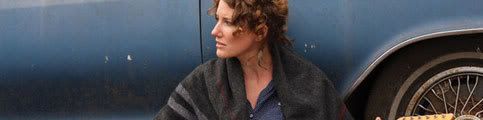

04. Kathleen Edwards - Asking for Flowers Everything works here, from the slow, sad Cat Power-y material to the up-tempo cuts like "The Cheapest Key." But nothing works quite as spectacularly as "I Make the Dough, You Get the Glory," which is warm ("blazin' a trail to the Southern cities from the streets of our hometown/basement bars we played from the heart in the company of our friends") and funny ("I'm a Ford Tempo, You're a Mazaradi/You're the Great One, I'm Marty McSorley") and lovely ("If I write down these memories/that I have saved away/photographs of the years that passed/inside my little brain") and poignant ("Once I got drunk with Jeff and told him/that I was in love with you/but I love you like a brother so I guess that half of it was true"). Yeah, sorry for quoting, like, the whole song--it's just that freaking good. Don'tcha know: Canuck girls are the coolest.
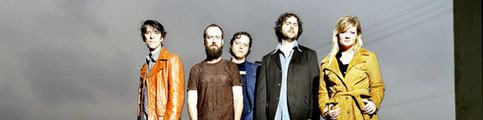

03. Drive-by Truckers - Brighter Than Creation's Dark This is the perfect record for the end of the Bush II Era: sad, funny, tough, politically incorrect, yet not without glimmers of hope. As Prez-Elect Obama prepares for his inauguration, Dubya is lame-ducking shoes hurled toward his dome--and the Drive-by-Truckers, for their part, keep quietly, thankfully making damn-good albums.


02. Lil Wayne - Tha Carter III and 01. Kanye West - 808s & Heartbreak After releasing four terrific-to-exceptional albums (not to mention a handful of memorable mixtapes) over a mere six-year span, is there really any question who, this time next year, should be crowned Artist of the Decade? From The College Dropout to 808s, Kanye's inventive instinct has been matched only by his consistency; if his perfectionism sometimes serves to accentuate his idiosyncrasies, the records are all the more interesting and compulsively listenable for it--especially the new one. Weezy, meanwhile, has yet to follow Kanye and Andre 3000 in abandoning rap for artsier pastures--and let's all hope he doesn't, since he's a much more formidable MC than either, and besides, his rhymes alone are at least as weird and playful as 'Ye's studio experimentation. If the long-awaited Carter III isn't quite as front-to-back fantastic as a couple of the mixtapes he dropped last year, that's hardly a pan--it's still one of the dozen or so best proper long-players hip hop's seen over the last ten years or so. For album of the year, it a was a close call indeed, but 808s noses ahead in the photo finish both for the Prince-like scale of its ambition and because Kanye sounds absolutely in his element on his studio albums, where Wayne needs more room to breathe and spit.

Ten Singles: Kanye West - "Love Lockdown"; Kathleen Edwards - "I Make the Dough, You Get the Glory"; Lil Wayne - "A Milli"; Kelly Clarkson - "How I Feel"; Miley Cyrus - "See You Again"; Beyonce - "If I Were a Boy"; Metric - "Help, I'm Alive"; Jonas Brothers - "Lovebug"; T.I. f/ Rihanna - "Live Your Life"; Estelle f/ Kanye West - "American Boy"


TERESA

Films

10. C L O V E R F I E L D
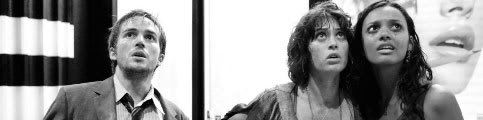
J.J. Abrahms & co. worked millions of internet nerds (myself included) into a tizzy with their piles and piles of viral material surrounding the upcoming film. What was the monster? How is Slusho involved? Maybe it's more than one monster? Is it Godzilla? The main guy is going to Japan. Or maybe it's Cthulu! Point being, the crew pulled the ultimate screw-over by releasing a movie that never alluded to any of these things, in any way, whatsoever. We'd been had, but we couldn't complain, because the movie was awesome. A sharp satire that's also just a good ol' monster movie in every regard. There's a planned sequel, and I have already been suckered into viewing some more of that pesky viral material. But, hey, it's kinda fun.

09. F L I G H T / O F / T H E / R E D / B A L L O O N

Hou Hsiao-Hsien's latest film is like an antidote to his own Three Times—trading jaded disillusionment and urban alienation for...childlike hope and urban alienation. Inspired by a movie I had to watch every year in French class and found terribly dull, Hou's film follows his on-screen surrogate (a young, androgynous nanny/aspiring filmmaker) as she takes care of the son of a frazzled, artsy divorcee (a charming, platinum blonde Juliet Binoche) in picturesque Paris. A cute, mundane story coupled with the magical score and sumptuous photography makes Flight of the Red Balloon a highly enjoyable lark that proves Hou can work well in at least two countries other than his own. America next? Just don't take the page from Wong Kar-Wai's book in this case, Hou.

08. B U R N / A F T E R / R E A D I N G
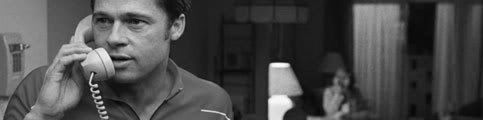
Due, I suppose, to the more serious successful films by the parties involved, the brilliant—and completely hilarious—all-star hit parade that was Burn After Reading got overlooked. It's a shame, because the Coens and their cast deliver every punch line perfectly and, for a comedy, what else can you ask for? This may be the funniest they've been since The Big Lebowski.

07. S U M M E R / H O U R S

The tagline for Summer Hours could be "come see the softer side of Assayas." Though he's shown the potential for this sort of fare before, this may be his first movie that really is, more or less, light through and through. Any pricklier topics that pop up (death, teenage drug use) are gracefully allowed to simply exist within the scope of the film, never straining the tone or focus. Assayas's characters are all at some point or another learning to let go of their childhood, and this is literalized with them gutting their old family house of valuable objects and eventually selling it. With the tone mirroring the sort of French countryside life it portrays, Summer Hours is funny, sweet, laid-back and sometimes lonely. There's also not a dark-haired, gun-toting, crime-involved femme fatale in sight.

06. S I L E N T / L I G H T
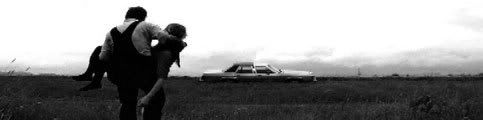
The opening shot of the movie is an extremely long-held image of the night sky—the galaxy, complete with static sound and occasional bird (bat?) chirps. The rest of the film, while no less lyrical or fantastical in its almost fetishistic nature footage and sound, is a lot more straightforward. That is to say, there is an actual plot. It still requires suspension of normal comprehension and the state of being along for the ride. But if you enjoy that sort of thing, which I do, it's simply enthralling. Reygadas, evidently, is one of the few directors who can put film as a medium to the limits of its uses. The acting and emotion is not sacrificed for the stunning imagery, and vice versa. Everything exists in perfect harmony.

05. T H E / E D G E / O F / H E A V E N

Given its intertwining storylines, international intrigue and the fact that it uses fate as a character—Fatih Akin's The Edge of Heaven could have all too easily become the next Babel (or, insert other Inarritu film of choice here). Instead, it bucks all expectations and draws out empathy and interest from the viewer without relying on its gimmick. The cast is superb, and it helps that their script is incredibly moving and intelligently written. Anything that was uneven or lacking in Akin's previous Head-On has been perfected here, and he'll no doubt be a force to reckon with if he makes the right project choices.

04. B O A R D I N G / G A T E
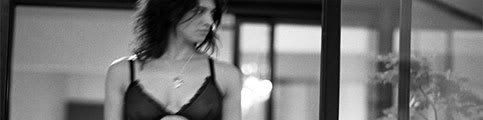
In a role perfectly suited to her attributes, Asia Argento plays damaged Euro-trash on an ill-fated mission, which leads her through encounters with her ex, her friend, her lover, her lover's partner, and a mystery woman. These, of course, are all against the backdrop of locales both exotic and ugly, with plenty of double-crossings and sleek panoramic compositions along the way. It's the darkest and most daring film Assayas has made since demonlover, and it's probably the style that he works best with. Michael Madsen is also excellent as Argento's true love, while Kim Gordon (yes, of Sonic Youth) is odd and awkward—but amusing nonetheless.

03. T H E / D A R K / K N I G H T

I thought Batman Begins was only okay, and even in the Dark Knight I find Bale's 'Batman voice' laughable and over the top. How then, is The Dark Knight my number three movie, out of many great ones, of the entire year? Well, Heath Ledger's scarily brilliant turn as a Joker more deranged than any of us imagined is a big part of it, but credit goes to director Christopher Nolan as well. He's come a long way from the grunged out motel rooms and factory basements of Memento, and Insomnia. He handily proves this with breathtaking cityscapes that would make Michael Mann wet himself, and large-scale action scenes featuring Bat-themed accessories that don't feel cheesy. Together they overcome Bale's silly voice, and tell a tale as corrupt and disturbing as a classic 70's gangster film—but a whole lot more relevant to society of today.

02. P E R F E C T / L I F E

One of the most moving films I've seen in a long time came from an unlikely source: virtual unknown and protégé of Jia Jhang-ke, Emily Tang. Perfect Life packs wisdom and emotional gut-punches (not to mention a surprising amount of dry and slapstick humor alike) that rivals the work of directors dozens of times more seasoned—and exposed—than Tang. If there were any justice in the world, this would see a decent sized theatrical run and DVD release in North America. Everyone reading this is strongly encouraged to catch it any chance you get. Little Miss Sunshine and Amelie are not "gems." This is a gem.

01. A / C H R I S T M A S / T A L E
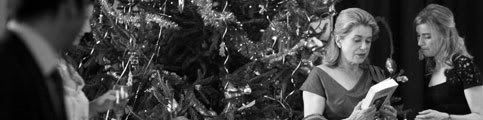
Like an edgier, rawer (less twee) Royal Tenenbaums, A Christmas Tale is a sprawling family reunion picture that, quite miraculously, I can't remember ever getting sappy. A still-stunning Catherine Deneuve heads a large and casually inappropriate crew of family by both blood and marriage, as they alternately insult, bond with, sleep with and resent each other. Deneuve's character is stricken by a serious, fatal disease, but you wouldn't know it from director Arnaud Desplechin's unflinching dedication to making a daring farce using all the ingredients that would typically be found in a somber drama. He succeeds with style and wit to spare.


Albums

10. t.i. / P A P E R / T R A I L

I have an image in my mind about how T.I. put this album together while largely on a clock of house arrest and community service. Lounging around in a bathrobe, familiarizing himself with internet phenomenons (the "Numa Numa" sample on "Live Your Life"). Fantasizing about sweeping a girl next door type off her feet with all he and his money have to offer ("Whatever You Like"). Taking his impending prison sentence in stride and reminiscing on accomplishments ("No Matter What") while keeping his gangsta image strong for his fans ("Swagger Like Us"). It's the sometimes shaky balance of cocky and wise, restless and content that drives Paper Trail—and allows it to achieve authentic moments of greatness.

09. britney spears / C I R C U S

Britney's critics love to complain about how much the singer sounds "inhuman," has "no talent" without some heavy auto-tuning, and hasn't performed without lipsynching in... well, maybe ever. Blackout was unquestionably a great dance-pop entry, and even said critics had to admit that (however begrudgingly). They still qualified it with "even though it could be anyone doing vocals" or "the producers deserve the credit." Well, to those who are still using this dismissal when talking about Circus—what album were you listening to? Because, while "Womanizer" spun Spears' voice into electronic silk to Blackout-worthy proportions, most of the songs are nothing like that. "Unusual You," for example, is a strikingly beautiful, moody ballad in which Britney sounds as human—if not more human—than she ever has. If this had been by Lily Allen or Lykke Li instead, the same people who've written it off would be blowing their loads all over it. And that's not even scratching the surface of how many wonderful, continuously listenable tracks Circus contains.

08. steve aoki / P I L L O W F A C E / A N D / H I S / A I R P L A N E / C H R O N I C L E S

If I were to have guessed which artists, newcomers notwithstanding, would ever crack my top ten list now or in the future, I probably wouldn't have said Steve Aoki. I knew him as a goofy, rich kid scenester who was a DJ like Paris Hilton is a fashion designer. Yet here he is. The eyebrow-raisingly titled Pillowface And His Airplane Chronicles is the best mixtape I've had the pleasure of dancing to since the Mad Decent podcasts were relevant. It's just pure (impure is actually more fitting), electro-trash fun—so obviously meant to be blasting in a club packed with pretty hipsters on ecstasy and vodka, texting photos of themselves to their Facebook pages. But it sounds just as good through the headphones of your laptop while you edit photos and try not to wake the baby sleeping a few feet away. Trust me.

07. cat power / J U K E B O X

Within a couple years, Cat Power has gone from that weird, spazzy, druggie genius indie chick to a glamorous, sophisticated Southern Belle who you see gazing at you from under those iconic bangs on a different magazine cover each month. As a result, her music has mellowed as much as her persona, and she seems to spend more time on the press junket than in the studio. Nevertheless, her cover album Jukebox was a lovely, soulful detour. "Silver Stallion" and her restless wail on the re-envisioned "New York, New York" give hints that the old Chan is still there, and just feeling out her new terrain before she delivers her next great, original album.

06. the hold steady / S T A Y / P O S I T I V E


Craig Finn has an uncanny ability to make lines sounds ominous before we even know why they would be ("when there weren't any parties, sometimes she partied with townies..."), and then funny even when we know they're tragic. As always with The Hold Steady, Stay Positive benefits from repeat listens so you can get ahold of whatever story the lyrics are fashioning, and then later appreciate the myriad sonic nuances. Both get richer and more rewarding each time.

05. flying lotus / L O S / A N G E L E S
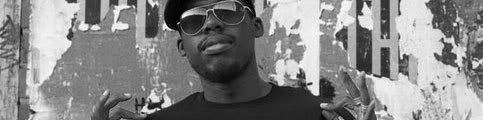
Flying Lotus is the best DJ Shadow successor we've had yet. Like Shadow, he seamlessly melds hip-hop with dreamy soundscapes to make background music you can't ignore. Some of the songs are menacingly head-boppable (the nervous energy of "Gng Bng," or the hard knuckled throb that is "Riot"), while most are either weird or soothing—or both, or all three. While there's nothing especially innovative here, it's still a fantastic disc's worth of treasures from a genre that's currently rather barren.

04. N A T I V E / K O R E A N / R O C K
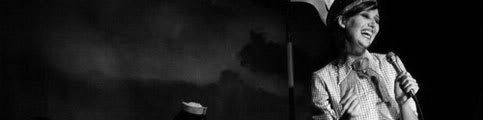
Is it just Native Korean Rock, or do you tack on "& The Fishnets"? Is it a demo, an EP, or just some songs thrown up on MySpace that will never make it to a consumer-destined disc? Will the songs just be added to the new Yeah Yeah Yeahs album as bonus tracks? I don't care. Whatever the hell it is, it's on my list, because it's some of the most stunning material of the year. Not to mention, it's also one of those (many) things that makes me envious of New Yorkers.

03. S A N T O G O L D

This one is a bit embarrassing, for as I stated in a recent blog post, I only just got around to listening to this a month or so ago. But I think the fact that I've grown to love it so much, so fast is only another testament to its quality. Santogold sounds more like the Pixies and Blondie than M.I.A., and though they make a good team, she would be just as excellent (if not better or more fine-tuned, as he tends to lead her in M.I.A. directions) without Diplo. I can't open up iTunes or fire up my iPod without clicking her songs within the first ten minutes. Addictive and objectively talented. That's impressive.

02. kanye west / 8 0 8 s / & / H E A R T B R E A K
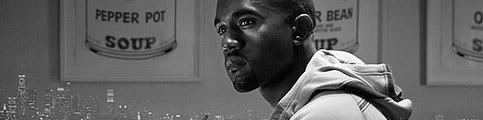
Kanye West has always had the ability to fashion a catchy beat and pair it with servicable, if clunky ryhmes in a way that appealed to a massive audience of hip-hop fans and "I only like Talib Kweli and stuff" people alike. But I bet most folks didn't know he could reach emotional depths like he does on 808s. If you thought the mopey "Through the Wire" was sad, try Kanye at his most aggressively hopeless. And as usual, it's masterful in production and a whole lot more enjoyable than most whiny white guy rock. This is his masterpiece, and if he tops it anytime soon, I'll be shocked (and pleased, natch).

01. portishead / T H I R D

I've been a Portishead fan since I was about 15, so I was more than a little excited to learn that they were, in fact, no longer dormant and were releasing the aptly titled Third. Not only did the band not disappoint, they basically blew my mind. Third is eerie, peaceful, hectic and enchanting—like their other two albums, but with a lived-in quality and an air of experience mixed with adventurousness. It builds a world like few albums can. A world something like Guy Maddin's Brand Upon The Brain! but less wacky, or Twin Peaks without the log lady to make sense of it all. I'd say it was worth the decade-long wait, but I hope they don't make that slowpoke pace a habit.
Hope Springs Eternal


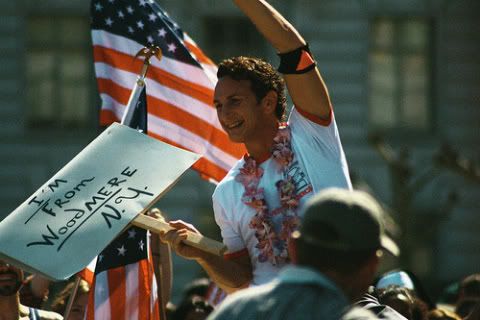
The first time I heard the name Harvey Milk mentioned was in a class I took in high school called "Practical Law." Unfortunately, if understandably given the aims of the course, Milk's historic rise to being the first openly gay man elected to a major U.S. public office took a back seat to the infamous, bizarre "Twinkie Defense" that led to the charges against Milk's assassin and fellow City Supervisor, Dan White, being reduced to a minimal manslaughter sentence. Gus Van Sant's film is an inspiring and very welcome antidote to such historical marginalization.

Of course, the cultural timing for this particular biopic couldn't be more dead on. Milk's grassroots call-to-action ("My name is Harvey Milk and I'm here to recruit you" went the opening line of his stump speech) and "gotta-give-'em-hope" mantra can't help but call to attention America's newly elected trailblazer-in-chief. And the film's depiction of the legislative battle to defeat a state proposition stripping gays of certain vital civil rights inevitably suggests the nation's (and especially California's) on-going struggle with the civil right of same-sex marriage. To call this the "movie of the moment" is certainly not hyperbole.

It's also--following a decade in the experimental wilderness that peaked with Paranoid Park, his masterpiece, released earlier this year--the most formally conventional film Van Sant's made since 1997's Oscar-admired Good Will Hunting. At the same time, it suggests that he isn't turning his back to the singular aesthetic he's carefully cultivated: cinematographer extraordinaire Harris Savides is along for the ride, and while Milk's narrative is infinitely more straightforward than Elephant, say, or Last Days, it's more structurally sophisticated (incorporating tape-recorded narration by Sean Penn's Harvey, newsreel footage, campaign art, and purposefully short-handed nuggets of exposition) than it might initially seem.

Nor is this a relatively impersonal director-for-hire gig, ala Finding Forrester, either; this is material that clearly hits close to home for Van Sant, both as a gay man and as a public figure with radical ideas who nevertheless senses the importance of earning mass recognition. The film's analogue to its director's stylistic restraint comes when Milk shaves off his beard, gets a haircut, and swears off bathhouses and pot in an effort for his candidacy to be taken seriously. In affectionately and wistfully chronicling the story of Harvey Milk and of San Francisco's Castro Street neighborhood (and doing so in a manner that's palatable, but never pandering, to multiplex audiences), Van Sant is simultaneously paying tribute to a pivotal chapter in the Gay Rights crusade and, implicity, reminding all of us that there remains plenty of work left to tackle. As I'm by no means the first to note, the denial of essential liberties to gay Americans will, in the years and decades ahead, appear as ludicrously unjust as the segregationist and misogynistic laws overturned in the last century.

Credit also deserves to be spread widely among Milk's exceptional cast. Each actor, regardless of their screen-time or place in the narrative, breathes real, palpable life into the men and women as whom they've been cast. Josh Brolin--who is continuing to enjoy one hell of a two-year-plus run--stands out in particular from among the supporters, but Diego Luna, James Franco, Emile Hirsch, and Alison Pill are all nearly as good. For his part, Our Greatest Actor further solidifies his reputation for disappearing inside characters, and communicating volumes through their most subtle mannerisms and idiosyncrasies; there are moments here that are as beautifully realized and genuinely moving as any in Hollywood movies of recent memory and in Penn's personal filmography. If he indeed snags his second Oscar for Milk, it'll be as richly deserved as his first.
I Am Trying to Break Your Heart


01. "Say You Will"

JOSH: As an opener, this is a good indicator that Kanye's up to something different this time out. There's no hook--or the whole thing's one lean, cold hook. Technically speaking, Kanye's not a good singer, granted (even going it T-Pain style), but neither are Joanna Newsom or Tom Waits; he really gets the most out of his artificially adjusted falsetto's idiosyncratic appeal. [8]

TERESA: You don't have to have studied psychology to see, from lyrics to public appearances/outbursts, that Kanye West does not deal well with rejection. Though he's usually throwing a tantrum or trying to convince us he's too good for this girl or that award. On "Say You Will," he's longing for someone, he's vulnerable, and it sets the tone for the entire outing. You realize that, wow, he really is gonna pull this off. He's voluntarily peeling away every coat of Louis Vuitton-emblazoned armor and exposing himself in a very audibly pleasing healing process. By the end of the CD, I'll be completely won over, and this great song won't even be in the top 5. [8]

02. "Welcome to Heartbreak"

JOSH: This is where 'Ye unambiguously establishes the theme of his latest opus. Where his first three proper records centered loosely around the idea of education, 808s focuses on the discontents of the working world, or a multi-millionaire professional entertainer's experience of it anyway. Musicially, it's largely unlike anything he's released before--a comment that rings true for much of what's to follow. (It's worth noting that the leaked version is a much more forceful and grandiose production, where the final cut is more melancholy and spare. I initially preferred the former, but as I type this, the latter is nosing steadily ahead.) [9]

TERESA: Though the leaked version is superior--the foreboding synth left raw and not layered with piano--this may still be the best track on 808s. The heartbreaks he laments here don't sound all that bad (so you had to leave your Godsister's wedding early, boo hoo), but they're given tangible emotion by Kanye's delivery and the fact that we all know he's suffered real tragedies this year, and we can hear them in every syllable. [leak: 10; album: 9]

03. "Heartless"

JOSH: This might be the only track on the new album that wouldn't sound at least a little out of place on his previous releases, and as such, it might be his best shot from the new batch at a "Golddigger"/"Stronger"-level radio hit. The best part's when 'Ye goes "and we just gon' be en-e-mies." [8]

TERESA: Now to lighten things up a bit! Or, wait...no. Despite the misleading beat, Kanye is still astonishingly sad and angry. He's just being considerate and giving us something to bob our heads to and chuckle at ("how could you be so Dr. Evil?") while we dry our eyes. Listen a little closer though, and the tears might come welling back up. [9]

04. "Amazing"

JOSH:808s could be the first hip-hop record (a classification I'm applying pretty liberally, natch) that's grounded almost entirely in existential anxiety; it's certainly among the most pervasively pessimistic albums of any stripe released in recent memory, and not from Thom Yorke or Trent Reznor but from the man responsible for freaking "Touch the Sky." He's clearly, desperately reaching--for meaning, for love, for memories made in the coldest winter--and maybe the high-performance automobiles and closets full of designer swag just aren't cutting it anymore. To be sure, the specter of his mother's sudden death looms large over his first recorded statement since. "Amazing" is one of the new album's high (or perhaps low, given the spirit of the thing) points--meditative and menacing, ambivalent about the cultural and financial status he's achieved yet backed by a beat that's absolutely insistent on drone-like forward movement. Jeezy, for his part, sounds, in this unusual aural context, like a growling, rapping incarnation of that demon atop Bad Mountain in Fantasia [10]

TERESA: I seem to recall Jeezy having a verse that ended up being cut out somewhere on Graduation. I suppose this makes up for it, with a dramatic music drop-out and everything before he kicks in. When Kanye refers to himself as a "maven" immediately after a "monster," it's defensive in place of his usual stance of cocky. I remember seeing him on Ellen, and he was saying something about how he used Patrick Bateman of American Psycho as inspiration for 808s. That was quite awhile ago, and I would have to guess that most of that fell away as the tracks were mastered and changed, and more Kanye came out. "Amazing" is probably the closest thing to that vision that remains. [8]

05. "Love Lockdown"

JOSH: Hmm,...what's really left to say about this one? [10]

TERESA: I still feel that this studio version doesn't come close to the jaw-dropping passion on display when Kanye debuted this at the MVA's. However, it's still a serviceable version when one doesn't want to bother Youtubing the other. The jungle sounds, also featured on "Amazing," are appropriately eerie and unhinged, and the "you lose...you lose" is among the more haunting moments on the album. [7.5]

06. "Paranoid"

JOSH: 808s is arguably the best Prince record since Sign 'o' the Times--or at least since Basement Jaxx's Rooty--as ambitious as its pleasurable, and all the more indelible for its imperfections and limitations. Kanye's latest is too across-the-board inspired to use the word "filler," so let's just say this is his "Housequake" or something, happily minor but no less enjoyable for it. [7]

TERESA: "Paranoid," a playful jaunt nestled between tracks ranging from mournful to seething, would be a disposable piece of fluffy fun on any other album of his; here it's a triumphant demonstration of strength and humanity. If that sounds a bit hyperbolic, take for example the contrast of something like Beck's Sea Change (a good album in its own right, don't get me wrong) and countless other white dude break-up discs. There's no room for a shake-it-off moment and they're all gloom all the time. Kanye, on the other hand, isn't gonna mope around forever. You know, he's like that Daft Punk song he sampled. [7]

07. "Robocop"

JOSH: The leaked version of this sounded like a Robyn B-side (which is a compliment). The Herbie Hancock-tweaked album cut is something significantly richer. Lyrically, it's a pretty standard issue "no-good dame" dis track (the sort of territory Kanye's worked more wittily numerous times before), but enveloped by Hancock's lush, soaring symphonics, it's an ebullient contradiction. The final minute and a half here is the loveliest such stretch I've heard all year. [10]

TERESA: I'm starting to sound like a whiny elitist hipster mp3 blogger snob, but I also prefer the previously leaked version of this. The finalized offering is a handful of loops too messy. That being said, it's still admittedly loads of fun, and along with "Paranoid," provides a refreshing, if brief, hiatus from...well, heartbreak. It's kinda like taking a smoke break and checking your text messages at the intermission for King Lear. [leak: 8.5; album: 8]

08. "Street Lights"

JOSH: This is as intimate, and as vulnerable, as anything Kanye's put to record to date--a promising possibility suggested by his heartrending "Hey Mama" at last year's Grammys ceremony. It's probably still early to start tossing around the 'm'-word--his next effort could very well be a concept album devoted to Louis Vuitton 's new luggage line--but some vague Rubicon feels crossed here. [8]

TERESA: West has always been ace at incorporating female vocals into his songs ingeniously (the computerized cold snap chant of "Flashing Lights," or the ethereal "ooh oooh oooh ooh" of "Good Morning") and the simple inclusion of one helps "Street Lights" immeasurably. He more or less repeats the sentiment of "Welcome to Heartbreak," but it's also just a common thread of the album, and thus forgivable. This one, however, as we near closer to the end of the album, shimmers with some hope. [8.5]

09. "Bad News"

JOSH: Upon repeat listens, this is a grower, but I haven't quite reached a final verdict yet since the leaked version of this was unlistenable. It's probably not a highlight, but it holds its own on the album of the year, which should count for something. [7]

TERESA: "Bad News" is simple and straightforward enough that it could have been an interlude, and still kind of is. The sparse piano/squelch combination bobs along as Kanye croons as if he's in a cozy jazz bar from the future. Then said crooning stops entirely and gives way into a crescendo of strings and ivories. Nothing I'd go back and listen to as often as some of the others, but it fleshes out the whole piece quite nicely. [8]

10. "See You in My Nightmares"

JOSH: This is some Les Mis shit--overproduced, for sure, yet irresistibly baroque, and better, at any rate, than the surprisingly so-so "Barry Bonds," Graduation's 'Ye/Weezy teaming. Here, Kanye is the noble outlaw Jean Valjean, while Wayne plays the sinister Inspector Javert (with a liberal dose of Freddy Krueger thrown in for good measure). [8]

TERESA: Okay. I'm not going to complain about Lil Wayne here. I know I do that too much, and it ends up detracting from whatever else a song has to offer. Even though that song could be great in production, composition, execution and idea and Lil Wayne's presence could still ruin it...I won't mention that. Or the way his insufferable voice could probably remove paint from walls and his idiotic "rhymes" could numb one's brain enough that they wouldn't need anesthetic to have a lobotomy. Nope, not gonna. [6]

11. "Coldest Winter"

JOSH: Not as stunning as "Gone" so far as Kanye closers go, but plenty poignant nevertheless. Kanye the Autotune Soul Man triumphs! (Totally off-topic, the drums on this remind me of Hole's "Northern Star," one of my favoritest songs in the whole wide world.) [9]

TERESA: And any hope built up on "Street Lights" is dashed with the absolutely defeated exhale of "Coldest Winter." Few songs so short and minimalistic can wring out this kind of aching regret--and certainly not in pop or hip hop. Kanye, can I give you a hug? [10]

12. "Pinocchio Story" [live freestyle bonus track]

JOSH: Chapter V: Kanye as Bob Marley for the Obama Era? Bring it on. [9]

TERESA: If the state our (anti)hero is in, or the intention of his masterpiece wasn't clear enough to you by now, he's included this live freestyle that spells it out in a heartfelt, if clumsy fairy tale metaphor. Or maybe he included it because it's really freaking good, and it really makes you want to catch him on his next tour stop near you. I already checked for possible future Vancouver appearances. [7.5]
A Woman in Trouble


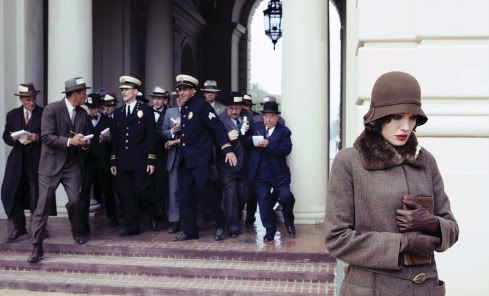
Connecting the dots between Renee Maria Falconetti and Angelina Jolie may seem like a fool's quest or, at best, a strictly theoretical academic exercise, but if there's any active filmmaker up to plumbing real meaning from such a task, it's Clint Eastwood. Where in the past, Jolie had always struck me as a fairly limited actress, good at what she does but seemingly incapable of doing much else well besides, under Eastwood's direction, she offers the performance of a lifetime, and of the year.

Certainly, Eastwood's compositions (some of them among the most extraordinarily beautiful in American cinema) and DP Tom Stern's infatuated camera lend Jolie's proto-feminist Changeling protagonist, Christine Collins, an iconic weight that's closer to Falconetti's Joan of Arc than, say, Sally Field's Norma Rae. Particularly in the film's more austere and ostensibly single-minded first half, the points of comparison with Dreyer's 1928 (coincidentally, the year Changeling's mind-boggling true story opens) masterpiece are down-right eerie. In lieu of monstrous clergymen interrogating Dreyer's suffering saint is a rabidly corrupt Los Angeles Police Department and various medical and media professionals under their influence. When a police captain orders Christine to be "escorted" to a city mental hospital for questioning his department's official report, the sinister white walls of the asylum instantly call to mind the intimidatingly labyrinthine church facility where Dreyer's Joan was imprisoned.

Or, if you prefer, consider Changeling as an opposite-coast take on The House of Mirth transplanted ahead by a quarter-century or so. In the decades between Lily Bart and Christine Collins, American women were granted the right to vote, yet their voices were often still stifled, ignored entirely, or subjected to misogynistic double-standards. Jolie's central performance is every bit as heartbreaking and exquisitely nuanced as Gillian Anderson's much-lauded turn in Terence Davies' Wharton filmization. Remarkably, her finest scenes aren't the uber-dramatic, plate-smashing Oscar-ready clips. They're instead the more restrained moments, where Christine seems to be mustering every ounce of effort to try and remain sane, and especially several series of devastating reaction shots: one while being condescended to and dressed down with loaded questions by a bought-off doctor at the mental hospital; another in response to dirty looks from the officer who had her committed, during his day in court; and, finally, being told by a helpful pastor that Christine and her missing son would meet again--in Heaven--a thought that appears to provide her little comfort or reassurance.

This is also, to be sure, classic Clint territory. At this point in his career, Eastwood is such a sure-handed master that the considerable structural complexity of Changeling registers as rich, old-fashioned storytelling, engrossing genre moviemaking in the best Hollywood tradition. Along with The Bridges of Madison County and Million Dollar Baby, it's further evidence that he's as sensitive a director of women as of men. The parallel narrative track, involving the kidnapping and murder of young boys, is reminiscent of his very underrated A Perfect World, yet when the disturbed man ruled responsible for those crimes is hanged, the impact of his execution is as empty and wholly unsatisfying (for Christine, whose son he may have killed, and for us as an audience) as the vigilante misjustice of Mystic River. Unlike that film's Shakespearen-level tragedy, however, Changeling is marked more by its mournful tone and by a sustained sense of loss, even as its latter half expands the story's scope and accommodates significant triumphs.

My dear wife--with whom I tend to more or less agree roughly 90% of the time (at least regarding movies)--didn't much care for this one. Teresa complained that the film was "cheesy" and too melodramatic. Again, I turn to Dreyer, cinema's patron saint of full-throttle, irony-free personal/spiritual drama. Like The Passion of Joan of Arc, Changeling is a work about a true believer for true believers (in Clint Eastwood, if not some higher power), absolutely riveting for those willing or able of full investment. Even without the happy ending that Old Hollywood (as opposed to Real Life, the film's source versus its stylized form) would seemingly dictate, it's a tribute to--to borrow a much more recent cultural catch-phrase--the audacity of hope.

And it's the best film of the year.
Gave Proof Through the Night


Barack Hussein Obama will be the 44th President of the United States of America.

Take it all in. Celebrate it. Savor it. Exhale. (Grin like you're crazy.) Inhale.

This fact alone feels like something close to a miracle, and through the sheer adrenaline and joy of this wonderful historical moment, it's almost enough to make one temporarily forget both how awful the past eight years have been and how staggering the problems facing the next commander-in-chief will be.

It's a fact, and a moment, that makes me tremendously proud to be an American (even though I now reside in Canada) and more specifically an Illinoisan (even though I'm now an adopted British Columbian)--and on so many different, significant levels.

It's the promise of a fresh start after nearly a decade of domestic and international disasters; the hope that America may once again represent a positive, ethical force in the world, admired and looked to for leadership and integrity by the global community; and, of course, it's a powerful rebuke to--though by no means an end to--centuries of repugnant prejudices and institutional glass ceilings.

And yet...and yet, this is, naturally, just the beginning--or January 20th will be anyway. As ridiculous as it sounds, overcoming such daunting obstacles and giving real, palpable hope to hundreds of millions of people (not just in the United States, mind you, but indeed around the world) in decidedly grey times, was actually the easy part. Which is to say, there's clearly plenty of history yet to be made.

If anyone is capable of righting this sinking ship and fulfilling these greatest of expectations, it's Barack Obama, the--go ahead, say it again out loud, keep the party going through the end of the year!--next Preisident of the United States. As he takes this time to profusely thank his supporters and campaign workers, he, in turn, deserves nothing less than our most sincere gratitude and our staunchest confidence.

Hail to the new chief!
The Bush Doctrine


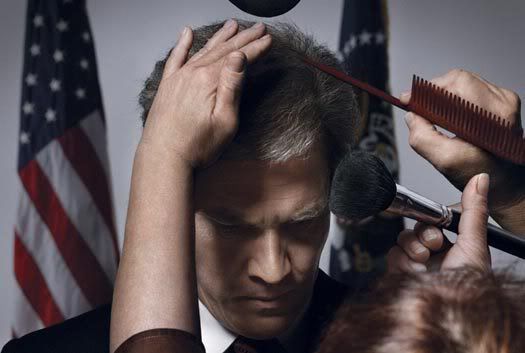
The Man Who Wasn't There: Wrestling with Oliver Stone's W. and the Enigma of George W. Bush
Stay Tuned


Top Five Reasons to Watch TV:

05. SNL The last two episodes have been close to classic--and not just for Tina Fey's much-ballyhooed Sarah Palin impression or McCain's campaign-spoofing cameo. The sketch with Josh Brolin about "fall foliage" was some kind of comic genius. And Ben Affleck's Keith Olbermann riff had me pretty well in stitches. But yeah: election year, Tina Fey, election year, etc. (Which reminds me: I should try and get around to actually watching 30 Rock sometime, huh?)

04. The Late Show with David Letterman Like good wine and very few other things in life, Dave's getting even better with age. His edge is actually more pronounced and acidic, and yet he's sort of inadvertently endearing the way smart-ass, grumpy old men can occasionally be. Ditto Paul Shaffer. They're still funnier than Colbert and Stewart, not to mention their major network time-slot competition.

03. Dexter It's the anti-CSI, if you will, treading somewhat similar territory but with the focus on fascinating, multi-faceted characters and engrossing, breathlessly sustained season-long arcs. Michael C. Hall is the best actor on TV right now, period--good enough, in fact, to suspend rolled eyeballs at another popcult portrait of a charming, articulate serial killer.

02. Friday Night Lights Sure, the second season was a tad dramatically uneven and, at times, tended regrettably toward soap opera histrionics. This is still television's most uniformly superb cast, and after two seasons, any individual performer retains the ability to completely surprise you on any given night (kinda like football). The writing feels wholly genuine, even when certain plot twists seem dubious, making for a deeply affectionate (yet sharply critical, when necessary) look at a very specific American milieu.

01. Mad Men Yup, it's that good. To call former Sopranos writer Matthew Weiner's flawlessly realized brainchild the best show to hit the air since David Chase's masterwork isn't hyperbole. Like The Sopranos, Mad Men not only towers over its tube competition--it's markedly superior to any big screen drama Hollywood's produced in recent memory. Let's cross our fingers and hope that AMC follows HBO's admirable lead and gives this one the long, expansive life it so richly deserves.
People Are Strange


When Barton Fink won the Palm d'Or at Cannes back in 1991, the advance word declared that it was a Coen brothers movie for people who ordinarily can't stand Coen brothers movies (even though, in retrospect, that film introduced numerous stylistic flourishes and thematic concerns that remain major elements in their arsenal). The same can be argued, much more effectively, about their Oscar-winning No Country for Old Men--it's serious, and literary to boot! Which explains both why the anticipation for their follow-up effort was particularly feverish and why many of the critical reactions it's elicited have been lukewarm and rather befuddled.

It's a Coen brothers movie, stupid. Or, rather, it's a "stupid" Coen brothers movie--in the best sense, much like Fargo, their most generally well-regarded film prior to tackling Cormac McCarthy. In fact, Burn After Reading is, in a nutshell, Fargo relocated and re-imagined with real life movie stars, substituting the Greater D.C. area for the Upper Midwest, John Malkovich for William H. Macy, George Clooney and Brad Pitt for Steve Buscemi and Peter Stormare, Tilda Swinton for whoever that lady was that played Macy's wife, and Frances McDormand in a blonde wig for Frances McDormand in a pregnant suit. In both instances, the casts are uniformly terrific, but here the Coen's pull off a neat trick that wasn't necessarily available to them a dozen years ago: they've convinced A-listers to play hysterically exaggerated versions of themselves--George Clooney's the say-anything womanizer, Malkovich is the uber-effete intellectual with an explosive temper, Swinton's the chilliest of ice queens--and, arguably, the most famous (and famously handsome) actor in the world to play a full-on dork.

Those who've accused Burn After Reading of being a film about nothing may have a point, but it's clearly not one that eludes its creators. This one is nothing if not ingeniously self-reflexive. J.K. Simmons' CIA boss is an audience surrogate of sorts, sighing and rolling his eyes at the increasingly convoluted and seemingly pointless narrative developments (which play more as digressions, natch). And when Frances McDormand's Linda catches a comedy on a date with a humorless government employee, his stone-faced lack of amusement suggests viewers expecting a more "mature" follow-up to No Country. You might say, then, this a Coen brothers movie for people who love Coen brothers movies, aimed less at folks who Tivo the Oscar ceremony than at the cultists organizing Big Lebowski-themed meet-ups and rewatching Raising Arizona on basic cable for the umpteenth time.

As new territory goes, Burn After Reading is a clever riff on JFK-style conspiracy thrillers, but all their signature touches and concepts are here: desperate people in way over their heads (the film's oft-echoed refrain is "What the fuck?!"), eccentric types congregating in highly specific locations (this time, a chain gym called Harbodies in lieu of a bowling alley), and, above all, Murphy's Law as an omnipotent force of nature.

As in Burn, the narrative momentum in Kim Ki-duk's stunning Time is propelled by an overwhelming sense of you-can't-undo-what's-done anxiety and (incidentally) by a desire for the fresh start promised by major cosmetic surgery. Kim's film centers on Seh-hee, a young woman so jealous of her boyfriend's supposed flirting with other women that she has her face completely surgically altered. From there, things (as in the Coenverse) spin dramatically out of control, as love, sex, fear, and (self-) loathing blur into a nightmare mosaic of modern life.

Kim tosses so much out there idea-wise, and leaves enough of it on the table, tantalizingly unresolved, that Time's lingering effect is ambiguous. In a film defined by the extremes of human nature (if this is ever remade by Hollywood, some game actress just might snag herself an Oscar), the final scene is a harsh stroke of organic poetry. It's also representative of a purposeful formal playfulness that Kim balances deftly with his story's tragic dimensions. The film's most haunting scene, however, comes just before the operation that sets the plot in motion: Seh-hee touches her face--lovingly, wistfully--for the last time before getting a new one, as if she's telling a loved one goodbye for a very long while. For a moment that goes (presumably) someplace most of us have never been before, it feels painfully familiar.
This summary is not available. Please click here to view the post.
How My Heart Behaves


Brief notes on some stuff that I've been meaning to write about.

Feist, live in Victoria, 8/4/08 It's pretty cool that the province and the feds enlisted Leslie Feist to close out the festivities for B.C.'s 150th birthday; her appeal is seemingly as broad as any performer in her price range and her music is inoffensive yet seldom bland. It's cooler still that Miss F. played for a solid, inspired hour-forty when she was slotted for just sixty minutes. Reminder cuts like "I Feel It All" and "Sea Lion" rocked more convincingly than I would've suspected, and with 40,000-plus singing along, her Apple jingle sounded borderline anthemic.

Rihanna, "Disturbia"; Pink, "So What"; Lady GaGa, "Just Dance" So summer '08 lacked a single, unifying monster hit--everybody just opted to attend separate parties, that's all. "Disturbia"'s no "Umbrella," but it's nearly as sleek and well-suited to Rihanna's vocal strengths. (Plus, it's nice to see that she's not gonna pull a Fergie and release every damn track off Good Girl Gone Bad as a single before heading back in the studio.) Likewise, "So What" is precisely the sort of thing Pink should be putting out, at this point in her career. Where her edge and attitude appeared calculated a decade ago, they feel fresh here, a little bit cathartic even, as she's seemed to have grown into that pissed-off, grown-up-all-wrong persona. Best of all is Lady GaGa, whom we may well never hear from again but whose invaluable contribution to Western culture may be helping us transition away from "I Kissed a Fucking Girl." "Just Dance" is generic dance-pop in the best sense. As in, "I love this record, baby, but I can't see straight anymore"--and then you take her advice, whoever the hell she is.

Pineapple Express It's my least favorite product of the Apatow assembly line and my least favorite David Gordon Green movie, but it still has its charms. Chief among them are Seth Rogen and James Franco, who are never less than likable while the same can only sometimes be said of the film in general. It's also fun (at least for a while) to hear Green's signature quirky non-sequitirs delivered as stoner speak rather than awkward poetry. Things get increasingly muddled (and needlessly violent) as this one progresses, though it might've cohered better if I smoked weed.

Drive-by Truckers, Brighter Than Creation's Dark Nineteen songs--not one of them a dud (including the wrongly maligned "Bob"), more than half of them pretty great. "Home Field Advantage" is my favorite, for now. But "That Man I Shot" is close. Ditto "Checkout Time in Vegas" and "I'm Sorry, Huston." Heck, if it weren't for Tha Carter III, this would be my album of the year candidate, thus far.

2008 VMA's First off, congrats to Britney--not just for bagging a few Moonmen, but for seemingly making in-roads toward professional stability. Performance-wise, this was probably the best VMA's in years, especially with regards to Weezy and T-Pain, T.I. and Rihanna ("Numa Numa," seriously?!), even Xtina, who must've remembered that "Genie in a Bottle" was the best song she ever sang, so why not dust it off and mime over a real good remix? Kanye's show closer was on another level entirely--intense and hypnotic and completely game-changing. In fact, it might just be the most exciting thing I've heard all year.

2008 DNC Speaking of rock stars, the Dems' convention was something to get genuinely charged up about, from Ted Kennedy's surprise appearance and Michelle Obama's poignant speech on night one to the Clintons' gracious big-upping of Barack. For his part, the next President of the United States (fingers tightly crossed) answered in compelling fashion the question of whether a politician could pack, and totally work, an NFL stadium. The man's the real deal. (Maybe if the Canadian left had a figure with half his magnetism and immediacy, well-meaning voters up in these parts would actually get mobilized enough to vote Stephen "Bush of the North" Harper out of Ottawa...)

And, finally (if you live outside of British Columbia, feel free to stop reading now), a big nasty thumbs-down to CityTV for axing (or failing to renew the contracts of) Breakfast TV co-hosts Simi Sara and Dave Gerry, the most consistently appealing tube personalities in the Greater Vancouver viewing area. Hopefully, some smarter local network will give them new jobs soon. (If Simi and Dave are willing to cross the Georgia Straight, A-Channel should so get on that! BT live from Broad Street!)
Logan Arthur Paul Timmermann


Was Born on Saturday, August 9th, at 1:44 AM at Victoria General Hospital.

Birth Weight:
8 lbs, 9 oz
Birth Height: 57 cm
Likes: being fed, being held, demonstrating exaggerated hand movmements
Dislikes: bright sunlight, waking up alone, poop in his diaper
Dark Days: Murky Moral Relativity from Guantanamo Bay to Gotham City


When I typed this piece (a couple weeks ago), the name most dominating the news reports here in Canada was that of 21 year-old Omar Khadr, the Toronto-born “boy soldier” accused of killing a U.S. soldier in Afghanistan. Khadr’s return to the headlines, now six years into his stay at Guantanamo Bay, was prompted by newly released video footage of a visiting Canadian official interrogating a sporadically hysterical, then 16 year-old Khadr.

The tapes have re-energized the cries for Khadr’s extradition to Canada on the grounds that he was essentially still a child at the time of the incident in question, that he’s being held in custody as much for his family’s relationship with Osama bin Laden’s as for the grenade he supposedly threw, and that, as a Canadian citizen, he shouldn’t be forced to endure the well-documented rigors of the notorious detention camp. Others argue that Khadr is, regardless of his age and nationality, a war criminal and opponent of Western democracy, who deserves to be dealt with accordingly.

Somewhat surprisingly, the usually right-of-center Canadian daily news-media has mostly advocated the former position, while Primer Minister Stephen Harper, a willful George W. Bush clone, and his minority Conservative Party seem more than content to let Gitmo “justice” run its course. The Khadr case, and its fractious reception, seem especially emblematic of the times we’re living in – an era in which innocence and guilt and such distinctions as “soldier” and “terrorist” are as increasingly blurry as national borders and codes of diplomacy and war-time conduct.

The next-most prominent story of the moment? Why The Dark Knight, of course, which grossed over $155 million in its record-breaking opening weekend and is now on pace to possibly overtake the box-office’s all-time top spot or finish somewhere close. In Christopher Nolan’s second Batman effort, Christian Bale’s Bruce Wayne snores through important shareholders’ meetings and arrives at fundraiser events in a private plane with a trio of supermodel types. In costumed, crime-fighting mode, he taps every cell phone in Gotham City and (presumably) exerts unnecessary force in questioning and coercing the bad guys. And he’s the picture’s hero.

The unsubtle overlap between the extra-legal lengths the Caped Crusader goes to, to save the day, and those of the U.S. government and military in waging their War on Terror, must be chalked up largely to coincidence since the roots of this decidedly darker Batman yarn stretch back nearly 70 years – just before America entered another lengthy “war on terror”. What feels less coincidental is the unflinching emphasis Nolan places on his protagonist’s sometimes dubious ethical decisions. If desperate times indeed call for desperate measures, then things in Gotham are, to be sure, looking direr than ever.

Bale plays Batman as a gruff, growling, all-business military officer – not a General calling the shots from a safe distance away from the battlefield, but the top grunt, who doesn’t have to salute anyone within his realm of contact and who doesn’t take orders well, or at all. More than ever before, you believe that Bruce Wayne does what he does by night solely because he’s a man possessed by bottom-line moral imperatives; when we see that he derives no discernable pleasure or satisfaction from all the sound and fury of his action-packed escapades, and also seems to harbor virtually no interest in fame or glory or flattery by way of imitation, that leaves single-minded determination as the only valid explanation left on the board.

For his part, Heath Ledger’s deservedly lauded take on the Joker, above all, calls particular attention to the near-absence of humor in this biggest of summer blockbusters. Where Jack Nicholson proved a black-comic riot in the same villainous role in Tim Burton’s 1989 Batman, the late Ledger uses the part as a disturbing example of just how soberingly un-funny such a hypothetical super-sociopath would be in something like reality. In one telling scene, a fellow criminal accuses Ledger’s Joker of being crazy. “I’m not…I’m not”, he counters emphatically, without offering any actual evidence to the contrary.

If Nolan’s grim and thrilling film feels eerily in-step with the zeitgeist, it’s no less so than the other best studio release of 2008: the J.J. Abrams-hatched Cloverfield, which eschewed the jam-packed summer season for a January release. Hopefully, it’s not too distant a cultural memory by now, after Iron Man and Indiana Jones and The Incredible Hulk and now The Dark Knight (and, of course, the mountains of hype preceding each).

The “Blair Witch of monster movies”, in fact, might ultimately remain the year’s defining pop-cult statement, once the dust has settled, not least because it’s so many more things besides a faux-verite creature feature. For starters, it’s a minor masterpiece of New Media mastery, from the ingenious, peerless viral marketing campaign to the finished product’s ostensibly amateur video record. The Blair Witch comparison is, at once, spot-on (another essential movie of its time) and altogether too short-sighted, suggesting Cloverfield’s formal inventiveness, but none of the myriad ideas it brings to the table—about premature affluence and America’s distinct brand of arrogance and histories of violence played out both on and off-screen--nor its nasty polemical streak.

Where The Dark Knight searingly captures the troubling moral relativity of a post-9/11 America and world, Cloverfield nails the moment of attack – a mess of bodies alive and dead, the former scrambling in a confused panic across the freshly devastated cityscape. It evokes, at least as effectively and as painfully as Paul Greengrass’s superb United 93, the utter helplessness of the day, that lingering, quasi-apocalyptic sense that the wisest thing to do (maybe the only thing to do, in the frenzied moment) would just be to run and hide – in a corner shop or subway tunnel or department store, which is exactly what Cloverfield’s band of young urban professionals opts to do.

What both of these films lack is developed characterizations and evidence of hearts beating beneath their stylized surfaces. As strong as the performances are across the board in The Dark Knight, there’s hardly a likeable character on screen, save maybe those played by Morgan Freeman and Michael Caine (who don’t really count since they’re likeable in everything). Cloverfield’s solipsistic, privileged sub-“Mumblecore” twentysomethings are less sympathetic yet. Subsequently, the most impressive trick both films pull off is that, almost in spite of themselves, they are finally quite moving, haunting even as collections of indelible images, cold spaces, and colder souls in serious peril.

The same can effectively be said of the interrogation footage of Khadr, who is inevitably sympathetic, despite the brutality of his accused crimes. He is, by turns, eager to cooperate with his questioner, who tempts Omar with sandwiches from McDonald’s and Subway, and emotionally raw, calling out for his mother and removing his shirt to clearly display what he alleges is proof of physical mistreatment by his Guantanamo captors. Skeptics counter that the latter actions were, at least in part, calculated moves to drum up support on Khadr’s part -- and they might not be wrong.

Either way, his behavior is unmistakably that of an overwhelmed boy, and – let’s face it – six years spent in a military prison isn’t likely to have produced a mature, well-adjusted 21 year-old young adult. Still, to let Khadr off the hook on the grounds that he’s just a confused, impressionable kid or unfortunate product of his environment would be far too simple-minded. And if these times are anything, they’re certainly not simple, as evidenced by both the news reports and (remarkably) the multiplex. The brightest hope in these dark days might just be that it’s an election year in Gotham.
No Country for Old Mennonites


After catching Silent Light earlier this week at Cinecenta, it's not hard to see why Carlos Reygadas's third feature has been since such a magnet for extravagant, near-universal critical praise since it debuted at Cannes last year. Not only is it a powerful, exquisitely realized drama, it's also chock-full of purposeful allusions to some of cinema's most significant (and critically worshipped) figures. Dreyer's magnificent Ordet is the most direct and obvious point of reference, but there's also healthy doses of Bergman's spiritual turmoil, Tarkovsky's glacial pacing, Ozu's intuitive handling of family dynamics, Malick's ethereal eye toward nature, and--as a sort of Breaking the Waves in reverse--Von Trier's stone-faced, uneasy combination of religion with sex (specifically adultery) in the mix here.

But what's most remarkable about Silent Light is that, despite Reygadas' clear mastery of transcendental film language, his film feels neither studied nor stiff. Instead, it's impressively graceful under the weight of the spiritual/social ideas that Reygadas is deftly attempting to juggle; and, more impressive yet, its power stems from a slow build of real, palpable human feeling--of guilt, of fleeting pleasures, of fidelity, of, above all, profound ambivalence.

The film's protagonist, Johan, a Mennonite farmer living in Mexico with his large family and engaging in an affair that his wife seemingly accepts, is urgently at odds with his conscience, and with his faith, from the film's first scene: after his sons and daughters have left the breakfast table, he drops the stoic patriarch front, weeping and swearing to his wife, Esther, that he loves her. "I know...and I love you, too," she responds, her tone marked, too, with regret and a discernible sense of inner conflict.

From there, Reygadas plunges us deep into the hearts and minds of these "simple" people grappling with issues that are, of course, anything but. Johan's father relates that, some years ago, he also developed feelings for another woman, promises that he and Johan's mother will support him no matter what his decisions, and, finally, confides that while wouldn't necessarily like to trade shoes with his son, he's nevertheless a bit envious. Marianne, Johan's lover, can't continue playing the role of the "other woman," as she informs him after one particularly passionate meeting. Johan suspects, or at least wants to believe, that his attraction to Marianne may be part of some higher plan, while recognizing that Esther is a very good wife, mother, and soap-maker.

In perhaps the film's ultimate mark of ambivalence, Johan's soul-searching is played out against the lush forests and shimmering fields that he depends on for his livelihood. Silent Light is composed largely as a series of visual, thematic, and semiotic rhymes--including the spectacular opening shot of a sunrise and its natural opposite as the denouement--suggesting a deliberate order to the universe that its characters would most certainly affirm. Reygadas, like most of the Great Names mentioned earlier, doesn't seem quite so sure. His faith is in cinema, which is exactly where it should be.