(Just Like) Starting Over


It's comforting to think that in the year of the most devastating massacre in U.S. history the highest-grossing film will almost inevitably be a movie about forgiveness, second chances, and bridging that awkward, insecure gap between adolescence and adulthood. And no, I'm not talking about some new festival favorite by way of the brothers Dardenne. I'm referring rather to Spider-Man 3, the most sweetly humane blockbuster to storm the 'plexes in years--and the strongest Hollywood release of 2007 thus far.

Mind you, I'd never in the past been a fan of either Sam Raimi or the Spider-Man mythology, but the first movie was good, the second better yet (that subway sequence still knocks my socks off upon recollection). Now, with the third installment, Raimi has made a big-budget comic book adaptation to rival Ang Lee's moody, underrated Hulk. This is pop drama of the highest order, reminiscent of Buffy's later seasons in its treatment of superhero(ine) growing pains and its emphasis on character as a component (at least) equal to plot or special effects.

Speaking of the latter, the visuals are better this time around. The titular figure still looks cartoonish (or more pointedly, video game-ish), at times, as he swings around the city, but the Sandman (one of the film's villains, embodied in a heartfelt performance by Thomas Haden Church) is a CGI marvel, flawlessly integrated into the film's brightly colored fabric. More importantly, though, the effects-heavy action sequences are well-placed throughout this fairly long, surprisingly dialogue-heavy movie--a film that may finally have less in common with Daredevil than with Eyes Wide Shut.

Like Kubrick's masterful swan song, Spider-Man 3 takes place in a vivid yet suggestively dated version of Manhattan--here, Raimi uses the device to comment on the American appetite for nostalgia and all things retro--and focuses intently on the idea of fidelity and the challenges of monogamy. One of the most telling crowd reactions at the screening we attended: When Tobey Maguire's Spidey kisses another woman, the audience seemed to approve, but when his girlfriend, Kirsten Dunst's Mary Jane Watson, kisses another guy, she was roundly booed, with a few "slut!"'s clearly audible. To make matters more troubling, the guy MJ's kissing is her man's best-friend-cum-sworn-enemy-cum-best-friend-again, played by James Franco in the film's most charismatic (and probably best) turn. After exacting some confused payback on his former pal, a waitress asks him how his pie tastes. "Mmmm, so good!" he answers, flashing a grin worthy of a young Jack Nicholson.

I should note, too, while I'm at it, that this isn't simply a more thoughtful effort than your usual franchise megahit--it's a pretty damn weird movie on any scale. After a promising first third that deftly balances character drama with episodic build-up, Raimi blindsides the audience with a determinedly oddball, quasi-surreal midsection in which Peter Parker gets his inner-hedonist badass on and Dunst and Franco do the twist while frying up an omelet. It's a lot of fun, and a refreshingly idiosyncratic detour in a movie that's supposed to please everybody.
Trouble at Home, Travel Away


Last year, Karen O. made her moving-to-L.A. record; it wound up topping my year-end list. This year, Lucinda Williams follows suit--and it's not hard at all to imagine this one hanging on for seven months as my favorite album of 2007.

First thing's first: West is Williams's best record since Car Wheels on a Gravel Road, and song for song, as good as the ones she put out before that 1998 masterpiece. It's the most musically diverse (I'm trying not to use the word "eclectic") album she's ever made, thanks in large to producer Hal Wilner, who does here for Lucinda what Parks, O' Rourke, and Albini (sounds like a law firm) did for Joanna on Ys: That is, take a signature sonic palette, and expand it in unexpected yet entirely natural new directions.

Sure, the new album features the usual mix of heartbreakers ("Mama You Sweet" is about Williams's late mother; "Learning to Live" may be, too, or it may be about an ex, or it may be about both at the same time) and ballbusters ("Come On": "you can't light my fire, so fuck off!"), but they sound sharper here, lovelier or angrier as the case sees fit (again, sometimes both). And she's never made anything before that sounds much like "Rescue," which could easily soundtrack one of the moodier moments in Michael Mann's next nocturnal tour of Los Angeles.

On the other hand, West is very much of a piece lyrically with the decidedly spottier Essence and World Without Tears. Together, they serve to map out Williams's progression from the detailed specificity with which she made her name as a songwriter to a more overtly universal, overtly poetic style. Here, she pretty much nails it, give or take a couple minor missteps, and the results are sublime. And, hey, for those of you who really miss the Old Lucinda, she's thrown in "Where Is My Love": Helena, sweet potatoe pies, Tupelo, Birmingham, flannel sleeves, Gainesville, whiskey, and summer storms each earn a reference. She's still country--don't get the wrong idea.
...with the Most


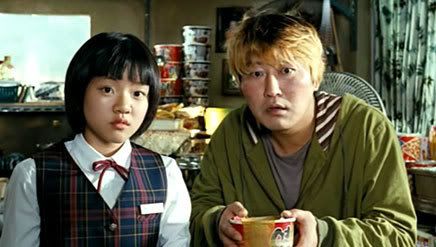
The many American studios vying for remake rights to Bong Joon-ho’s masterful blockbuster, The Host, seem to be missing a big part of the picture here. The film—while on the surface an old-fashioned King Kong-esque monster movie—is very unforgiving to U.S. foreign policies (and otherwise), to the point of bordering on being anti-American. Despite this, it’s managed to gross over a million here, in limited theatrical release. This is one I pray opens in my area, because (Canadian that I am) seeing it with a crowd of the flick’s targets would be quite an experience.

Right off the bat, Bong refuses to mince cinematic words by having a creepy, cartoonishly unreasonable American man (played by the dad in Junebug) instruct his nice, sensible Korean assistant to dump a whole lot of formaldehyde down the drain—knowing, and acknowledging, that it will ultimately end up in the Han River. It’s a moment that would be scoff-inducing and cheesy in its bold-faced unfairness, if it weren’t clearly done in satirical humor.

A few years later, those actions have produced a massive mutant sea (well, river) monster hell-bent on chowing down at the all-you-can-eat buffet local onlookers and unsuspecting tourists. The story narrows its focus (storywise) from here, onto a hapless ragtag family: an immature father, working for his own father at a small food stand, to support his preteen daughter, and said immature father’s brother (a college grad) and sister (a professional archer). They band together, in a touching display of bickering loyalty and constantly thwarted heroics, when their daughter/granddaughter/niece is snatched by the creature.

Unfortunately, authorities—by way of received orders from the U.S.A—are saying anyone who comes in contact with the mutant-fish needs to be quarantined in order to contain a deadly, highly-contagious (and highly-suspicious in its lack of details) virus. Before long, the entire family finds themselves forced to break out of a government hospital because no one believes that they’ve got a girl to save. The Kafkaesque absurdity on display as the surgical-mask sporting doctors shuffle around, administering anonymous medicine, and giving insincere reassurances, is nightmarishly gutsy—and executed awfully well.

The sometimes metaphorical, sometimes literal political commentary here is viciously funny, and more than a little disturbing. It’s this—even aside from the exhilarating, authentically thrilling popcorn fun at hand—that makes The Host deserving of the praise its been honored with, and then some. It’s the sort of film that gets me, at the risk of sounding extremely dorky and Ebertish, excited about movies. And relieved to be Canadian.
Upgrade Who?


I don't know if Jay-Z is involved with Rihanna in something other than a professional or platonic context. And it's not really my place to speculate either. I'll just say that Rihanna's "Umbrella," to which Jay contributes a brief opening verse, is every bit as oh-my-shit amazing as "Crazy in Love"--and perhaps more tellingly, sounds just as head-over-heels passionate (the track ends with Rihanna repeating, "Come into me..."). Toss it in the mix with "Ring the Alarm" and "Unfaithful" and read into it what you will.

It should also be noted, however, that "Umbrella" is a very striking song, completely aside from the developing Jay-B.-Ri saga. Producer Terius "The Dream" Nash is clearly taking some cues from Timbaland here (right, who isn't, at this point?): With its pulsating, irresistible synth line and snare-heavy beat, "Umbrella" has one foot in the '80's with the other stepping toward some sleek, not-too-distant future--think "Promiscuous" meets "My Love" with discernible traces of Europop thrown in for good measure.

I'm penciling it in as my single of the year.
Horror Movies


I'd never been a fan of horror movies in the past. If a year ago someone were to ask me my favorites, I'd probably cite a handful of safe, canonical picks--Murnau's Nosferatu, maybe Herzog's too, some Hitchcock, The Shining, and, oh, I liked The Blair Witch Project--and confess that horror wasn't really my thing. Recently, however, Teresa's managed to get me more into scary movies, primarily of the Asian variety.

The other night she asked which ones I'd liked best. I mentioned Shinya Tsukamoto's haunting (and haunted) Vital as one candidate. She immediately begged to differ; it's one of her favorite films, but, she insisted, it's not a horror movie. Maybe it is, maybe it isn't. Either way, it lead to some heated discussion of what exactly constitutes horror (and, in turn, inspired this post).

The Eye and its loosely, thematically related "sequel" certainly qualify. The first film is an initially creepy, eventually overly convoluted outing centering on a blind woman who receives functional eyes. Unfortunately, the used pair formerly belonged to a troubled Thai gal who haunts our heroine's vision. The "be careful what you wish for" morality tale has been handled far more effectively in countless other movies, but the Pang brothers bring enough sleek style to keep the proceedings fun throughout.

The Eye 2 is a decidedly more exceptional effort, with not just more style but more provocative ideas thrown in the mix. Some are only flirted with and quickly ditched--for a little while, I suspected this might daringly tread Dumplings-esque value-of-life territory, but then Shu Qi's protagonist opts not to have her planned abortion--yet this is, at any rate, a horror movie that will leave you thinking about more than just whether a goblin or serial killer is waiting outside your bedroom window. Plus, the Pangs here pull off one of the most breathtaking, exquisitely orchestrated sequences to ever grace the genre: It involves an emergency delivery in a hospital elevator and a ghost swimming ominously through the air, toward the exposed vagina.

Ju-On (The Grudge) and Dark Water are also unambiguous horror entries. I haven't seen either of the Hollywood remakes, but both Japanese originals have their merits. The former is notable mostly for its episodic, nonlinear structure, or more specifically, for how well director Takashi Shimizu handles the conceit. What at first feels gimmicky and unnecessarily confusing ultimately elevates what might've otherwise ended up your run-of-the-mill haunted house flick. Teresa informs me that the remake retains its Japanese setting, and merely plugs in SMG and (of all people) Bill Pullman. The fact that Shimizu helmed it as well peaks my curiosity: Did he rise to the challenge of Westernizing his J-hit? Might the latter version--regardless of whatever else it has to offer--serve as an interesting companion piece to Ju-On, a sort of essay on what English-speaking audiences find frightening versus what works in Japan?

I'm less curious to check out Motorcycle Diaries director Walter Salles' J-Conn-starring Dark Water retread, partly because I already know the original falls apart in its final act--and not in an enigmatic, Lynchian sort of way, but in the lazy "where the hell do we take this thing" sense. It's a shame, as up until the last twenty minutes or so, Hideo Nakata's film runs smoothly as an exercise in mood and memory (with some worthwhile things to say about parental responsibility, to boot). There's no debating Nakata's knack for getting the most out of creepy, cold urban locales, but narrative clearly isn't his strong suit. Personally, I'd like to see the generic J-horror ghost eliminated from the equation, the focus locked on the titular water seeping into the apartment (plus seemingly constant rainfall), and the material handed over to Tsai Ming-liang.

Yuichi Sato's Pray has the same problem--strong atmosphere, tense build-up, squandered pay-off. The biggest difference is that this one spirals out of control progressively rather than the bottom simply falling out at the end. The school building setting is inspired, and Sato's discipline in isolating almost all the film's action there is admirable. I only wish he'd thought Pray's plot out a bit before putting it together.

The most disturbing film I've seen recently can't be nearly so neatly pinned down, as horror or any other format. The most dead-on description I can think of for Terry Gilliam's underappreciated Tideland is the American Pan's Labyrinth; both movies concentrate on young girls who create detailed fantasy worlds for themselves in order to cope with the harsh circumstances of their everyday life. Where Pan's' Ofelia awakens the terrifying "pale man" by copping some fruit, Tideland's Jeliza-Rose dolls up her dead junkie dad (Jeff Bridges!) with make-up. Right, "unpleasant," a word dropped plenty in the film's numerous pans, definitely applies, but there's an entirely unique vision--appalling, claustrophobic, and in its way, beautiful--shot through this clearly personal affair. Excellent performances by Jodelle Ferland (better than Ivana Baquero in Pan's, compares favorably with Anna Paquin's Oscar-winning turn in The Piano), Brendan Fletcher (chewing major Gilliam scenery, a la Brad Pitt in 12 Monkeys), and Janet McTeer (a far cry from Tumbleweeds) also make this one very worth a viewing. Repeat visits might be reserved for Gilliam obsessives and morbid souls.

Neither feature in Grindhouse is scary, and only one of the two is any good. Robert Rodriguez's double-bill opener, Planet Terror, is ostensibly "horror," a fanboy's homage to Romero and Carpenter. It's really just a useless piece of dull fake camp where every action, line, and gesture comes packaged in painfully hip quote marks. Tarantino's offering, Death Proof, on the other hand, uses the dubious project concept merely as a starting point for some fruitful meta hijinks. The winking self-parody--Reservoir Dogs's around-the-table small talk, QT's use of abrupt narrative fractures, and even his notorious foot fetish are each touched upon--is funny, the (extensive) girl talk surprisingly credible, and the final jolt of feminist payback exhilarating.

No question: Volver isn't a horror movie, despite the involvement of multiple murders and a ghost of sorts. Had, say, Bergman or the Dardenne brothers inherited this material we'd no doubt be discussing a very depressing movie. There are some dark, difficult subjects mined here, to be sure, but Almodovar handles it all impeccably, expertly straddling a narrow path between melodrama and slapstick, Greek tragedy and tv sitcom. The result is a luminous, poignant portrait of female camaraderie, family crises, and the symbiosis of community. It's my favorite Almodovar to date.

Another Public Enemy, the sequel to--yup--Public Enemy from South Korea's Kang Woo-suk, doesn't qualify as horror either, and isn't intended as such. This is an old-fashioned crime yarn--in the best sense, really. The film does suggest, though, a bogeyman ready made for the 21st Century: the white collar sleazebag. As a smarmy, silver spoon-fed tycoon/crime lord, Jeong Jun-ho's charismatic performance perfectly embodies the solipsistic sense of entitlement that haunts today's Forbes-certified global marketplace. Our hero (a passionate populist prosecutor who Alberto Gonzalez would've surely fired without batting an eyelash) nabs the villain just before his planned relocation to the United States. It's a good thing, too: The last thing we need here is another Donald Trump.
The Stars Shine Bright


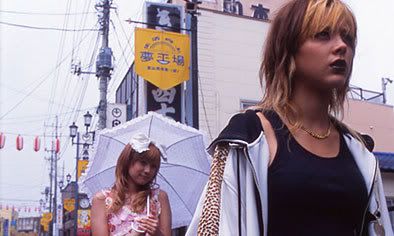
Between the frenetic quick-cuts, oversaturated, hyper-stylized visual language, and exaggerated, zany characters in Kamikaze Girls lies a thoughtful, affecting female friendship piece. The film also serves as solid evidence that director Tetsuya Nakashima can actually handle women much better than sophomore effort Memories of Matsuko would suggest.

Singer/actress Kyoko Fukada (the object-of-obsession pop star in Kitano’s Dolls) plays a disaffected teen living in rural Japan, and conveying what little personality and self-worth she has through her favorite style of dress: Lolita. For those unfamiliar, Lolita (usually paired with a Gothic in front) fashion is, more or less, frilly Victorian dresses and bonnets, most famously found in internationally known shops like Baby, the Stars Shine Bright (featured in the movie), and Metamorphose. Fukada’s Momoko asserts that her fascination with the decadent lifestyle of the similarly-outfitted Rococo period is the reason she wears the get-ups. At 17, she’s the right age to pull it off without being creepy or pity-inspiring, but is still an outcast in her farming village surroundings.

Eventually Momoko burns through her resources and finds herself too broke to feed her “happiness” (i.e. Lolita clothes). She remedies this by selling her dad’s old Versace bootlegs to a local, rough-around-the-edges girl biker Ichiko (Anna Tsuchiya). So grateful for the discounted price Momoko charges her for the junk, Ichiko starts to hang around. Little by little—through soul-baring confessions, favors, scooter trips, and head butts—Ichiko wears down Momoko’s indifferent exterior and the two become, yes, unlikely friends. This development is handled subtly, and with minimal cheese. The two leading ladies make it all very believable, and very adorable, right up to the mildly badass ending showdown.

Coincidentally, I’d recently revisited two of my favorite extreme/thriller films (Japan’s 2LDK, and Hong Kong’s Koma), which also happen to deal with the unreasonable love/hate nature of many (if not most) female relationships. While in the former two, the girls express their ‘hate’ phases much more violently, Momoko and Ichiko’s bond still fits perfectly next to them as an excellent depiction of the xx/xx dynamic. And they didn’t even have to fight over some man to get there.
Copywritten (So Don't Copy Me)


Or By the Numbers part deux.

Teresa

10
"The Way I Are"
"Fantasy"
9
"Bombay"
"Give It To Me"
"Time"
8
"Miscommunication"
7
"Release"
"Boardmeeting"
"Apologize"
6

"Come and Get Me"
5
"Scream"
"Oh Timbaland"
"2 Man Show"
"Throw It On Me"
3
"Bounce"
2
"Kill Yourself"
1
"One and Only"

-

Josh

9
"The Way I Are"
"Bombay"
"Give It To Me"
8
"Oh Timbaland"
"Bounce"
"Fantasy"
"Time"
7
"Come and Get Me"
6
"2 Man Show"
5
"Miscommunication"
"Release"
4
"Scream"
"Boardmeeting"
3
"Apologize"
2
"Kill Yourself"
"Throw It On Me"
1
"One and Only"
My Wife Is Officially Cooler Than Yours


Granted I'm partial, but Teresa's graphic design work is flat-out amazing! Give it a look, then hire her (before her asking price is out of your range!).

Oh, and also check out her new Asian film blog, Gold Lion.

(How in the world did I ever get so lucky?)
D'Est


Brief notes, recent viewings, listed alphabetically (because they're all good).

The Host
Much-discussed, and for good reason, Bong Joon-ho's follow-up to his solid policier Memories of Murder is a scathing piece of social criticism cannily disguised as a creature feature. What makes The Host a vital addition in the canon of trojan horse-style filmic cherry bombs is that it deftly succeeds as first-rate horror; the titular McGuffin is a legitimately scary movie monster, and the subsequent, Kafka-esque frenzy is creepier yet. To make matters more impressive, it's also a remarkably sensitive family drama and a mordantly funny dark comedy.

The central conceit--that an American military officer orders large quantities of formaldehyde dumped in South Korea's Han River, spawning a huge, carnivorous sea creature--isn't shy to the point. But Bong takes his polemic one brave step further, as the U.S. military steps in. Claiming that the creature is spreading a lethal virus, they propose a controversial, potentially hazardous solution. The kicker: we later discover that there is no virus, that it was merely the result of "misinformation." Sounds familiar, no?

Infection
The term "nightmarish" is tossed around a lot in describing horror movies, but Masayuki Ochiai's 2004 effort--in which, once again, a mysteriously spreading virus is a major narrative point--eerily echoes the trance-like rhythms and strange turns of an actual nightmare. The plot here might initially appear unnecessarily convoluted and, at times, illogical. That's a significant part of the film's surreal, unsettling charm, especially taken in contrast with its minimal set-up (there's virtually no exposition) and minimal locations (a hospital interior).

Koma
Lo Chi-Leung's masterpiece is, in its way, the Hong Kong Mulholland Drive. The tone is entirely liquid, relationship dynamics in perpetual flux, with the darker nooks and crannies of the female psyche navigated by a male auteur who should probably know better.

Okay, the Lynch reference is a stretch, but Koma is hardly an easy film to get your critical footing in. Maybe Persona would've made for a better point of comparison? Either way, co-stars Angelica Lee and Karena Lam admirably hold their own against the historic pairings of Watts/Harring and Andersson/Ullman. That much I'm sure of; the rest is grey--but brilliantly so.

Mr. Socrates
This one's easier to parse than Koma, but no less bizarre in terms of sudden tonal shifts--from camp ne'er-do-well comedy to camp gangster flick to camp going-back-to-school pic to camp tearjerker. Right, there's a reoccurring theme here. When I said above that all six of these are good that didn't preclude less edifying pleasures. Mr. Socrates is pretty funny when it's trying to be (hence "good"), but it's hysterical when it's not (hence golden).

2LDK
Another look at the love/hate nature of female relationships--except here, the "hate" part quickly, and quite extremely, takes center stage. Yukihiko Tsutsumi's movie seems very directly inspired by "Living Conditions," the season four Buffy the Vampire Slayer episode wherein SMG suspects her annoying roommate is evil. Turns out the roommate (who blasts Cher's "Believe" 24/7) is, in fact, a demon. Here, they're both just bitches.

Woman Is the Future of Man After finally investigating Hong Sang-soo, I'm duly impressed though not totally convinced the heaps of hyperbole are justified. This, in a nutshell, is Y Tu Mama Tambien by way of Woody Allen, but set in Seoul as opposed to Manhattan or Mexico. Hong's touch is certainly singular, making expert comic use of a narrative rhyme scheme that moves in teasing fits and starts. And then, once the film really starts gaining steam and focus: cut to black, roll credits. A very shrewd move in a very good movie.

I'm not done investigating yet either. With the level of wit and stylistic maturity on display here, it's not hard to imagine that Hong's already made his Annie Hall. This one's more a Hannah and Her Sisters. Jeong Yong-jin's playful score is the best part.
Must Love Dogs


Must-see movies: 2007


JOSH

01. Ballon Rouge
Now is the time to freak out.

02. Syndromes and a Century Apichatpong Weerasethakul is on a roll, too. Word is his latest doesn't disappoint.

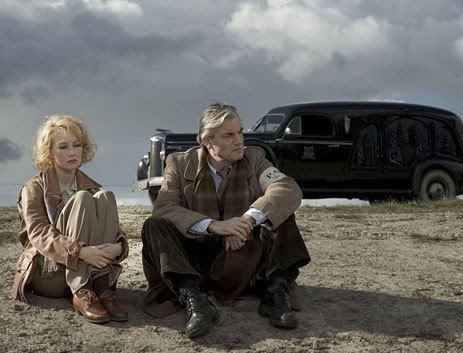
03. Black Book I'm not sure whether the fact that people who typically turn their nose up at Verhoeven apparently really like this one is a good sign or not--I mean, I liked Hollow Man--but I'm certainly curious to find out.

04. Into Great Silence
I've been dying to see this fascinating-sounding film for what feels like a very long time. My anticipation hasn't faded, but at this point, I may have to wait for the DVD.

05. The Unforeseen This Terrence Malick-exec produced doc seems to be the one to see from this year's Sundance crop.

Also:

06. Offside (Jafar Panahi)
07. I Don't Want to Sleep Alone (Tsai Ming-liang)
08. Summer Palace (Lou Ye)
09. Belle Toujours (Manoel de Oliveira)
10. The Journals of Knud Rasmussen (Zacharias Kunuk/Norman Cohn)


TERESA


01. Retribution It's bad enough that I still haven't tracked down K. Kurosawa's '05 effort, Loft. I'll be damned if I miss this one, which looks even better.

02. Sakuran
I was sold when I heard that Shiina Ringo scored this movie, but the glowing reviews and mouth-watering trailers don't hurt, either.

03. Southland Tales This is one, not being too huge a fan of Richard Kelly, that sucked me in on premise/oddness/subject matter/divisive buzz alone. Oh, and SMG.

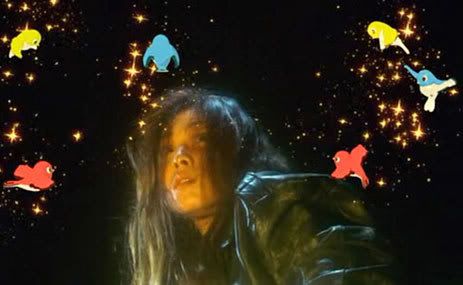
04. Nightmare Detective I don't know much at all about Shinya Tsukamoto's latest, but he's getting better and better with each film, and I hope that climb continues.

05. Paprika Another newest-by-director-I-like pick, with the stunning previews pushing it into my top 5.

The rest:

06. Black Book (Paul Verhoeven)
07. Dark Matter (Shi-Zheng Chen)
08. Breath (Kim Ki-duk)
09. Ballon Rouge (Hou Hsiao-Hsien)
10. Tekkon Kinkreet (Michael Arias)
Love is Trouble


Proclaiming itself a “fairy tale tragedy,” Memories of Matsuko is one of the more morally ambiguous flights of musical fancy I’ve come across. Director Tetsuya Nakashima (Kamikaze Girls) imbues this novel adaptation of a hapless girl’s decade-spanning existence with flourishing colors, show-stopping tunes, and a flawless cast—but the position the film holds, the message it’s trying to give, is hard to read.

The title character begins the film as a box of ashes, in possession of her formerly estranged brother, after being beaten to death near a river. Said brother hands the task of emptying Matsuko’s apartment to his son Sho, her nephew. As Sho fishes through his late aunt’s filthy, unlivable apartment, he unravels the details of her life after leaving home and being disowned by her family. Nakashima does a bang-up job with the visuals, the music, and the way both fit into their respective time periods. For the first half of the 130 minute runtime, it’s an utter delight.

Unfortunately, as Godlike figure Matsuko, the incredibly impressive Miki Nakatani is screwed over by nearly everyone she meets, while drifting from one abusive relationship to the next. She remains loyal, loving, and forgiving to the men who treat her like trash—an unpleasant trait that seems meant to provoke admiration. Too often her suffering is accompanied by zany music and comedy-scene camera angles. It’s a shame, because there are genuinely hilarious, touching moments here that are cheapened because of it.

Oddly enough, the film is nearly redeemed entirely by Asuka Kurosawa as a tough, smart, sexy pornstar/business woman friend of Matsuko’s—one of the few characters who never hurts her, physically or otherwise, and encourages her to leave her current Yakuza-member boyfriend. She breezes into the movie just as it’s starting to feel icky from the barrage of black eyes and Stepford Wife mannerisms our heroine displays, and steals the show, without even having a musical number.
The South Will Rise Again


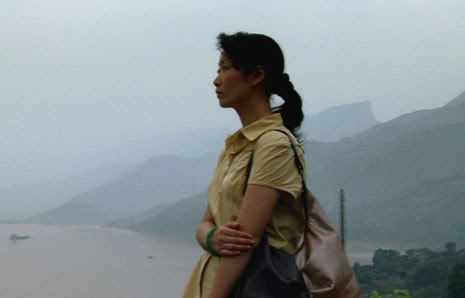
It's harder to watch Jia Zhang-ke's Still Life, set in Fengjie, China, without thinking of Hurricane Katrina than it is Craig Brewer's Black Snake Moan, set in the American South.

In fact, Jia's latest (and possibly his greatest, which is really saying something) feels more in tune with the Katrina disaster and its aftermath than any other film produced in its wake. The specifics vary, of course--Still Life takes place in the Southern region of China that was artificially flooded to make way for the U.S.-backed Three Gorges dam. The theme of displacement, however, with ordinary people swept by the wayside, hits eerily close to home.

Oddly enough, the yin to Still Life's yang might well be Michael Almereyda's underappreciated Happy Here and Now, a messy sci-fi tone poem set in the near future but shot in a pre-Katrina New Orleans. Both films capture, painfully and poetically, the calm before the storm; while Still Life awaits North American distribution, the village where it was shot is now completely submerged in water.

Where Jia's first three films registered the influence of Italian Neorealism, Still Life feels more discernibly indebted to Antonioni's architectural mise-en-scene, a trend that first seemed present in his fourth feature, 2004's The World. Without sacrificing a shred of empathy for his cautiously optimistic, mostly working class characters, Jia has progressively heightened the formalist nature of his aesthetic, balanced with a few sly surrealist touches. To be sure, the film's lush, almost tropical locale provides a welcome opportunity for Jia's career-long DP Nelson Yu Lik-wai to shine. The high-def DV master lends Still Life a Malick-like view of natural wonder, of ephemeral beauty in peril. The result is a profoundly sad movie--a masterful meditation on loss.

Black Snake Moan is an altogether stranger animal. Craig Brewer's follow-up to the good-if-not-especially-interesting Hustle and Flow is an unexpectedly audacious and uncommonly passionate film (especially for a wide studio release). It's a fucked-up fairy tale, if you will--a skewed Pygmalion relocated to a small, nondescript Tennessee town populated by downwardly mobile folks. The heroine? A drug-abusing, sex-addicted piece of rebel trash (well-played by Christina Ricci), nursed back to physical--and "spiritual"--health by a kindly, Bible-thumping black guitarist (a never-better Samuel L. Jackson).

It's easy to accuse this movie of misogyny, racism, yankee snobbery, and even puritanism--too easy. Inevitably divisive, the film succeeds on the strength of its performances (Justin Timberlake is terrific, too, as Ricci's character's fiance) and its convictions. Brewer's vantage point is far from nonjudgmental, but it's never mean-spirited. Remarkably, in its willingness to tackle social issues without shying away from moral ones, Black Snake Moan feels something like a Dardenne brothers film.

Okay, fine: A Dardenne brothers film by way of Larry Clark and Lynyrd Skynyrd.
The More I See the Less I Know


The '07 list, now up here, consists thus far exclusively of singles: Diddy's best (and strangest) offering since the (unfairly maligned) Police rip (if not ever); a binoculars all-star remix of a so-so Fat Joe track about throwing money on women; a minimalist statement of intent that tours the U.S. of A.--slyly sampling Dre, E-40, and Kanye along the way--in attempt to "prove" that Mims is, in fact, hot; one of the more remarkably lovely entries in the Red Hot Chili Peppers' generally samey catalogue; M.I.A.'s sophomore LP lead-off, which I'm still not quite sure about, though I'm pleased at any rate to see that she hasn't shied away from the third-world militant angle; and one of the highlights from the second Game CD.

As always, the list will be updated throughout the year.
Will Win/Should Win: You Know the Drill


Teresa


PICTURE
Will Win: Babel
Should Win: Letters from Iwo Jima

DIRECTOR
Will Win: Martin Scorsese - The Departed
Should Win: Martin Scorsese - The Departed

ACTOR
Will Win: Forest Whitaker - The Last Kind of Scotland
Should Win: Ryan Gosling - Half Nelson

ACTRESS
Will Win: Helen Mirren - The Queen
Should Win: Helen Mirren - The Queen

SUPPORTING ACTOR
Will Win: Eddie Murphy - Dreamgirls
Should Win: Mark Wahlberg - The Departed

SUPORTING ACTRESS

Will Win: Jennifer Hudson - Dreamgirls
Should Win: (haven't seen any of the nominated films)

ORIGINAL SCREENPLAY

Will Win: Little Miss Sunshine
Should Win: Pan's Labyrinth

ADAPTED SCREENPLAY
Will Win: The Departed
Should Win: The Departed

CINEMATOGRAPHY
Will Win: The Illusionist
Should Win: Children of Men


Josh

PICTURE
Will Win: Babel
Should Win: Letters from Iwo Jima

DIRECTOR
Will Win: Clint Eastwood - Letters from Iwo Jima
Should Win: Paul Greengrass - United 93

ACTOR
Will Win: Leonardo DiCaprio - Blood Diamond
Should Win: Ryan Gosling - Half Nelson

ACTRESS
Will Win: Helen Mirren - The Queen
Should Win: Helen Mirren - The Queen

SUPPORTING ACTOR
Will Win: Jackie Earle Haley - Little Children
Should Win: Mark Wahlberg - The Departed

SUPORTING ACTRESS

Will Win: Jennifer Hudson - Dreamgirls
Should Win: (see above)

ORIGINAL SCREENPLAY

Will Win: Babel
Should Win: The Queen

ADAPTED SCREENPLAY
Will Win: The Departed
Should Win: Borat

CINEMATOGRAPHY
Will Win: Pan's Labyrinth
Should Win: Pan's Labyrinth
Scrape your knee / It is only skin...


"Do you think this is a feminist film?" Teresa asked, about midway through Marina de Van's In My Skin, her pick in our I-choose-one-you-choose-one double feature (I went with Taste of Cherry, her first taste of Kiarostami).

"Yeah,...um, I mean, I guess so? It's definitely interesting..."

Teresa laughed. You see, we have this sort of running joke: She cringes at displays of overt feminism, while I--being a good, dyed-in-the-wool liberal and longtime Sleater-Kinney fanboy--actively embrace that sort of fare. She feels no gender-tied obligation to fist-pump along with the type of grrl-power rhetoric that I inevitably swoon for. And she really likes In My Skin, a determinedly nasty piece of provocation about a woman who enjoys eating her flesh.

De Van, who bares more than a passing resemblance to Beatrice Dalle (thus making it all the more difficult not to think of Claire Denis' poetic, if problematic, Trouble Every Day while viewing In My Skin), also wrote the film and is its star. But this is anything but a vanity project. Within the field of actor-directors, de Van's debut feature registers closest to (coincidentally) Trouble Every Day co-star Vincent Gallo's controversial pair of efforts.

Like Buffalo 66 and The Brown Bunny, In My Skin is earthy and mostly unshowy (despite a possibly pointless split-screen sequence) yet technically assured, decidedly unflattering (despite a bit of fetishistic nudity--though nothing on the level of an onscreen blowjob, ala Gallo!), and grimly funny. The most memorable scene in de Van's film involves a dinner meeting between business colleagues at a high-end Parisian restaurant. While the group debates the merits of various European cities--Lisbon, Rome, Milan, Paris--de Van's Esther imagines her severed lower arm sitting on the table and then proceeds to slash her arm with a knife, eager to taste the raw skin.

Perhaps the filmic subset that In My Skin best occupies is that of inexplicable female masochism. Think: Haneke's The Piano Teacher, Desplechin's Esther Kahn, almost everything von Trier's made since Breaking the Waves. But, and this is key, those films were directed by men, and are subsequently ripe for accusations of misogyny--or at least "issues with women." De Van directed herself here and scripted the source. In My Skin's narrative progresses in fits and starts, and mostly when Esther cuts herself. This is a film about how it feels to be addicted to something. De Van's selected "something" just happens to be less commonplace than cigarettes or drinking or drugs or gambling or sex: Esther lives from slice to slice, clearly on edge when unable to partake or when questioned about her new fixation. The lack of exposition and mere suggestions of psychological empathy ultimately lend the material its haunting, unshakable weight.

In My Skin also strikes me as a perceptive portrait of an artist's courtship with her art--here represented rather more, ahem, extremely than in, say, 8 1/2 or Vertigo. It's still a (voyeuristic) look at the privacy demanded by the process of creating something; De Van simply literalizes the self-devouring nature of personal art. In the film's unsettling final shot, it's up to the viewer to determine whether Esther is still alive--or if she is, whether she will be for much longer. And, credits rolling, In My Skin, the deeply personal and deeply disturbing fruit of Marina de Van's creative process, is complete. As Polly Jean Harvey put it, "I've laid with the devil/cursed god above/forsaken heaven/to bring you my love." Maybe, finally, this is about the rigorous cost of creation, the toll paid in putting the personal to celluloid (or record).

So, the earlier question still lingers: Is In My Skin a feminist film? Yeah,...um, I mean, I guess so? It's definitely interesting...
200 Films: 2000-07


For no better reason than just keeping track of things and maybe starting a new discussion or two, I've compiled a list of my 200 favorite films so far this young millennium. And I'll confess the obvious upfront: I haven't seen every film released these past seven years. Not even close.

There--that said, here's my list, which includes the very best of what I have seen.
Wide Open Spaces


The Good


Justin Timberlake: Neither performance last night even came close to touching his damn-right-I'm-the-man-fuckers tour de force at the VMAs, but both were solid and the My Space cam was a nice touch in the earlier one.

Dixie Chicks: If they've gone a bit MOR in steering left of Nashville, well, you know, that can happen. They didn't deserve Album--JT and Gnarls Barkley both made better full-lengths--but I'm still happy for them, and their performance of the superb "Not Ready to Make Nice" was a highlight.

Carrie Underwood: Hands-down my favorite moment of the night: Carrie takes the stage, accepting the Best New Artist award, and declares, "I love country music!" Amen, sister! Now, Tom B. noted his girlfriend's observation that this might've been a sly jab at the CMA-shunned Dixie Chicks. That didn't occur to me, but might well be the case. Either way, it was pretty seriously charming, and Carrie's rendition of "Desperado" was the most effective I've seen since that little Irish girl in In America.

Gnarls Barkley:
Basically the same performance as their classic Top of the Pops appearance. Still good, natch.

The Okay

Ludacris:
I like the guy enough that part of me is pleased to see him win anything, but in this case, he won for a decidedly mediocre record, and his performance of "Runaway Love," an inadvertently lame song to begin with, just felt sort of phoned in. And yet, at the end of the day, I still like Ludacris more than I like most people.

Shakira:
Over the course of the past year, I went from being annoyed by "Hips Don't Lie," to begrudgingly accepting its uberhit status, to finally kind of liking the damned thing, if only for being more listenable than "Fergalicious." Last night's performance brought nothing new to the equation.

Red Hot Chili Peppers: I've never been a fan per se, but I do enjoy a small handful of their hits (their "Higher Ground" cover, "Under the Bridge," the one off the Coneheads soundtrack,). Their new one might (jury's not quite in) be among them.

The Bad (and, In Some Cases, Ugly)

Beyonce: I like B. plenty ordinarily, and had she twiddled her exquisitely manicured thumbs through a half-hearted version of "Irreplaceable" or "Ring the Alarm," I'm sure I'd be nodding approvingly today. But the soulless ballad she opted to deliver veered dangerously close to Mariah/Whitney/Celine territory, which scares me.

James Blunt:
Need I say more, really? I hope he disappears soon.

Corinne Bailey Rae/John Legend/John Mayer:
From what little I've heard of Corinne Bailey Rae, she sort of sounds like Feist, which is good, and I have nothing in particular against John Legend. This was without a doubt, however, one of the most boring things I've ever sat through in my life. Just lifeless. And as Teresa rightly observed, John Mayer is sick.
You Don't Mean Nothing At All To Me


So, I'm apparently very out of step with the zeitgeist. Sure, I'm happy enough that Dylan took the album side of Pazz & Jop '06 (his fourth poll-topper, after The Basement Tapes, Time Out of Mind, and Love and Theft), thus defeating Idolator's dubious winner. Personally, though, I didn't vote for either Modern Times or Return to Cookie Mountain--nor, for that matter, Fishscale (Ghostface's least interesting record, to my tastes anyway), the Hold Steady's Boys and Girls in America (liked the first one a lot, the follow-up considerably less, haven't heard this one, probably should at some point), St. Elsewhere (admittedly strong, if spotty), the Arctic Monkeys album (though I was evidently the only poll participant to rep for the Sugababes' terrific cover of "I Bet You Look Good on the Dancefloor"), Hell Hath No Fury (staggeringly overpraised better-than-average rap record), or Fox Confessor Brings the Flood (hands-down my least-favorite Neko album), which placed third through eighth, respectively.

I did, however, vote for Joanna Newsom's ninth-ranked Ys and might've thrown some points behind Tom Waits' tenth-ranked box set, which Teresa loved and I haven't yet found the time to listen to from start to finish. After that, my ballot bares little resemblance to the consensus. Album-wise, my picks placed, respectively, #24 (the woefully slept-on Show Your Bones), #9, #756, #92, #118, #142, #69, #72, #1424 (I was evidently the lone fan of Bubba's latest!), and #226. What's interesting about that is that my ten albums aren't painfully obscure; hell, the Joanna CD, the only top ten entry I voted for, is arguably the most esoteric selection on my list! Among them are a former poll winner and longtime perennial competitor who put out his best record in at least a decade, five ostensible critical darlings whose prior efforts finished top forty this millennium (that's excluding Newsom), and a pair of blog-pop sensations who, inexplicably, couldn't crack the top seventy. And then there's Miss Lily, whose good-not-great LP proper placed 37th, while her straight-up golden, hype-launching mixtape garnered one measly vote (guess who).

On the singles front, my personal faves didn't fare much better, though that was less surprising since roughly half of my picks don't qualify as "singles" in the technical sense. There's a pair of b-side covers, an album standout that may or may not receive the video treatment, and two more that reputable sources indicate were, in fact, singles though I find myself doubting the existence of actual, tangible copies of either such release. Still, genuine beef: How the hell is it that me and one other guy are the only critics (or would-be critics) to big up "Say It Right"? Did it drop too late or what? It's close to classic and vastly preferable to Nelly F.'s 20th-ranked "Maneater"--not to mention "Steady As She Goes" and that godawful My Chemical Romance track. Kind of makes me feel relieved to be so unhip.