Awards Season


Most Admirable Former Executive Office Holder: Al Gore (should receive serious consideration from the Nobel committee)
Most Alarmingly Terrific Fourth Single Off an Album: Nelly Furtado's "Say It Right" (compares favorably alongside Tim's best Aaliyah cuts)
Most Baffling Critical Darling of Late: My Chemical Romance (I really don't get it?)
Most Blood-Chilling Music Video (Ever?): Juvenie's "Get Ya Hustle On" (a real-world post-apocalyptic nightmare)
Most Boringly Executed Potentially Exciting Formal Experiment: Brick (Teresa liked it anyway)
Most Cathartic 111 Big Screen Minutes: United 93 (I couldn't bother with that Oliver Stone pic after seeing this one)
Most Complex Socioeconomic Mosaic: Fast Food Nation (puts Traffic to shame)
Most Consistently Brilliant Songwriter: John Darnielle (inexhaustible)
Most Consistently Brilliant Filmmaker: Hou Hsiao-hsien (Three Times might just be his greatest film to date)
Most Dramatic Performance in a Music Video: Beyonce in "Ring the Alarm" / Rihanna in "Unfaithful" (purposeful tie)
Most Entertaining Guest Verse: Nas on Kelis's "Blindfold Me" ("like Hugh Grant in '8 1/2 Weeks!")
Most Deservingly Hyped Hype Band: Cansei de Ser Sexy / The Pipettes (tie)
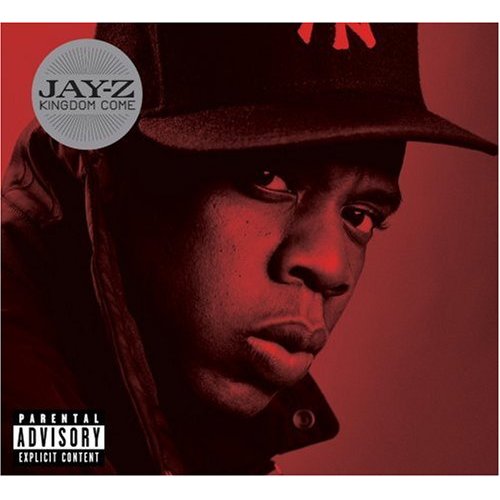
Most Disappointing "Comeback": Jay-Z (Kingdom Come is better than its reception would indicate, but it's still a very mixed bag)
Most Effective Cover by a Scandi-Pop Diva: Robyn's "Cobrastyle" (just edging out Marit Bergman's take on "My Love")
Most Electrifying Star-Making Performance: Ellen Page in Hard Candy ("Does your mother know you cut men's balls off?")
Most Genuinely Frightening Horror Movie: The Descent (rivals Wolf Creek as the best recent English-language contribution to its genre)
Most Inexplicable LP Exclusion: Lily Allen's "Sunday Morning" (conspicuously absent from her not-as-great-as-it-should've-been Alright Still)
Most Justifiably Praised Star Turn: Ryan Gosling in Half Nelson (Oscar should come knocking)
Most Lackluster Follow-up to an (Arguable) Masterpiece: Lars von Trier's Manderlay (Bryce Dallas Howard does make it worth a watch, however)
Most Legitimate Comeback: Prince (3121 is precisely the return to form that Musicology was flimsily cracked up to be)
Most Ominous Sign for the Future of Music Criticism: The bought-out Village Voice's termination of living legends Robert Christgau and Chuck Eddy (Jim Hoberman remains--for now--the last icon standing at the going-to-shit alt-weekly)
Most Overrated Album: Clipse's Hell Hath No Fury (good not great, though I should give it a few more spins)
Most Puzzling Boast: "When your friends is Chris and Gwyneth" - Jay-Z, "Hollywood" (really, Jay? are we supposed to be impressed by this or what?)
Most Pleasant Cinematic Surprise: Michael Mann's Miami Vice (the hypnotic apotheosis of Mann's distinct aesthetic)
Most Pleasant Musical Surprise: Paris Hilton's "Stars Are Blind" (think what you want of Britney's BFF, but her lead-off single shimmered)
Most Sublime Musical Moment: the banjo-accompanied minute-and-a-half stretch near the end of Joanna Newsom's 17-minute "Only Skin" (breathtaking)
Most Sweetly Wistful Glance Back at Childhood: Fernando Eimbcke's Duck Season (thoroughly charming)
Most Underrated Album: Yeah Yeah Yeahs' Show Your Bones (my album of the year nominee warranted much higher marks than it received)
Most Underrated Film: Albert Brooks' Looking for Comedy in the Muslim World (not quite as funny as Borat, but every bit as on-the-mark)
Most Valuable Artist: Timbaland (don't call it a comeback)
Most Valuable Supporting Actor: Big Boi (hands-down the best thing in both the winning ATL and the less-than-winning Idlewild)
Face to Face


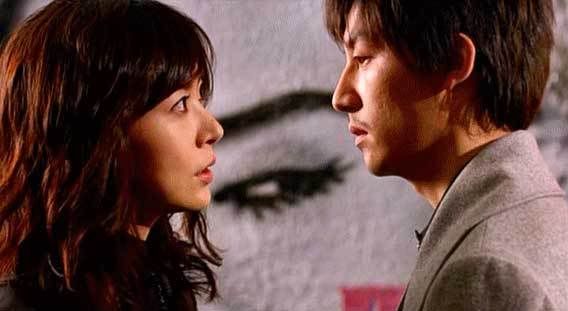
After seeing Spring, Summer, Fall, Winter...and Spring, Samaritan Girl, and 3-Iron, while avoiding the widely-panned the Bow, I must have been spoiled on Kim Ki-duk. Those first three are recognizably his best-received efforts, and are nearly devoid of the unsympathetic rawness of his early work. When watching his latest film, Time, I suppose I expected something entirely separate from what I saw. Nowhere to be found is the quiet meditative-ness of 3-Iron and Spring, or the heartbreaking morals of Samaritan Girl. Instead, this is a frantic study of characters that are hardly relatable. A half-hearted expose of plastic surgery culture, that doesn’t seem to have a handle on what it wants to say. Time is kind of like a train going much too fast, and in the wrong direction to boot. Which is to say, it’s impossible not to stare at it and be simultaneously frightened and fascinated.

The story, set against the sleek and achingly hip backdrop of downtown (presumably) Seoul, throws us into the loving-but-mildly-stale relationship of Seh-hee (Ji-Yeon Park, of two Whispering Corridors flicks) and her boyfriend Ji-woo (Jung-woo Ha). They’ve been together for two years, and Ji-woo has acquired a harmless, but hurtful roving eye that—not five minutes into the movie—sends Seh-hee into an over the top jealous rage. She’s paranoid that he’s going to get sick of her “same old boring face,” and eventually leave her. So, in a ridiculous preemptive strike, she disappears and has her mug reformed to be unrecognizable to him, before resurfacing months later (now played by Hyeon-a Seong of the Scarlet Letter) as “See-hee.”

See-hee begins showing up at the regular hang outs of her unbeknownst ex, hoping he’ll take notice of the new and improved her. He does—but is still reserving the majority of his affections for his long-lost disappearing act, Seh-hee, should she ever return. Now, even though she is Seh-hee, this drives See-hee wild—and she’s just as jealous as before. Of herself. More insane acts of unreasonable obsession ensue, until we’re violently carried to the bloody final act, which loops the entire proceedings into a nonsensical, surrealistic psychological nightmare.

Though it’s difficult to watch, given these people seem so out of touch with reality—not to mention social niceties—there are still fleeting moments of tranquil poignancy. Seeing the mentally-unstable, fragile smile on See-hee’s face as she thinks she may have a second chance to be loved by Ji-woo is touching, just as Ji-woo’s attachment to the au natural and long-gone Seh-hee is. Time is strange, brutal, and off-putting, but enthralling in the way that Extreme Makeover is. And, of course, it’s refreshing to see a depiction of having one’s skin pulled, sliced, and sewn into new shapes not having a happy ending. For all the things that can be said of Ki-duk, he’s got no shortage of compulsively intriguing ideas.
The Good Fight


Many reviews (including my wife's) of Richard Linklater's latest have criticized the (admittedly unconventional) move of ditching Greg Kinnear's third of the narrative roughly halfway through the film. In Film Comment, Linklater himself observed of the Kinnear character that "his effectiveness has run its course"; this decision strikes me as key, and entirely meaningful.

Fast Food Nation the movie is, above all, a study in resignation. It's an unflinching sociological measurement of the point at which fundamentally ethical people throw in the towel. Kinnear's corporate higher-up realizes that he can't feasibly make the changes that need to be made. Illustrating the grey area between the personal and the political, he opts to retain the job that allows him to support his family, while turning a blind eye to the unsavory (to put it lightly) product his company is delivering to the marketplace. The fast food cashier, in turn, loses her fire after a bold stab at activism backfires, and the Mexican immigrant returns to the meat-packing plant when her husband is injured.

Equal parts proactive and pessimistic, Linklater's film is, at once, a revelatory character piece, an impassioned muckracker, and a deeply angry polemic with implications that travel far beyond McDonald's et al. In a terrific sort of extended cameo playing the cashier's odd job-working journeyman uncle, Ethan Hawke shows up as the movie's conscience (and possibly Linklater's on-screen surrogate). Speaking to his niece, he remarks that he's okay with what he's doing--admitting that his ten-years-younger self might not be particularly impressed with his current state-- but that he's more than okay with what he's not doing. It's a sighing defiance of the if-you-can't-beat-'em-then-join-'em mentality, and perhaps the most telling moment in one of the year's best films.
Out of Sight II, to which Teresa and I contributed, is up now at Stylus.
By the Numbers


Josh

10
“Trouble”
“Kingdom Come”
9
“Oh My God”
“Lost Ones”
8
“Do U Wanna Ride”
“30 Something”
7
“Show Me What You Got”
“Beach Chair”
6
“The Prelude”
4
“Minority Report”
“Dig a Hole”
3
“I Made It”
2
“Hollywood”
1
“Anything”


Teresa

10
“Oh My God”
9
“Trouble”
“Kingdom Come”
8
“Lost Ones”
“Do U Wanna Ride”
6
“Beach Chair
“Show Me What You Got”
“Dig a Hole”
4
“Minority Report”
“The Prelude”
3
“30 Something”
“I Made It”
“Hollywood”
1
“Anything”
I've got a piece listing the top ten directors of photography at present up today at Stylus.
Don't Come Near Me / Don't Go Missing


Two excellent pieces on Ys: Garrett Kamps in the Village Voice and Stylus's own Mike Powell.

As for me, I'm loving it more with every listen.
Lost in America


Borat: Cultural Learnings of America for Make Benefit Glorious Nation of Kazakhstan is, as I'm by no means the first to note, the funniest movie of the year. It's also the most problematic, an unswervingly, indiscrimately confrontational look at the "U.S. and A." right now, from New York feminists to secession-minded Southerners and Evangelical Christians. Like Jay-Z's "Girls Girls Girls," Borat is impossibly, across-the-board offensive, while somehow still oddly charming. It's hilarious stuff, to be sure, but guiltily so--the joke's on us.

Sacha Baron Cohen and director Larry Charles get some easy, early comic mileage out of Borat's Kazakh village, but as Third World caricatures go, it's hardly more insightful than, say, Eurotrip's "Eastern Europe" ("Miami Vice, #1 new show!"). Once Borat hits these shores, it's on. He's still playing on age-old stereotypes, but reminding us that, more often not, there's some truth there, agitating some particularly unfriendly Manhattanites before heading down to D.C. to visit with the likes of Bob Barr and Alan Keyes.

The most indelible sequence occurs a little later, when Borat and his producer check in at a bed and breakfast run by a sweet elderly Jewish couple. The terrified documentarians first suspect that the operators are trying to poison when they bring in some food; then, after spotting beetles crawling on the floor, they accuse the couple of "shapeshifting," attempt to pacify them by tossing dollar bills to the ground, and flee the inn.

For all the gags here centering on misogyny, homophobia, and any number of other sensitive issues, it's Borat's consistent jabs at antisemitism that have launched the lion's share of warning flags. As Manohla Dargis succintly observes, "Commentators often imply that Borat wouldn’t be funny if Mr. Baron Cohen were not Jewish, which is kind of like saying that Dave Chappelle wouldn’t be funny if he were not black." Right, this is nothing new. Remember that episode of Seinfeld, the "anti-dentite?" It ended with Jerry saying something along the lines of "dentists--who needs them?" and his girlfriend-for-that-episode (played by, if I'm not mistaken, Debra Messing) responding, "Yeah, not to mention the blacks and the Jews." (Cut to Jerry's horrified face.)

Baron Cohen has, in some quarters, been slapped on the wrist for "baiting" his interview subjects, coaxing out of them the sort of answers (read: prejudices) he expects to find. This is true enough, and while I'm sure Borat could manage to make me look like an ass in some way or another, I don't think I could be "baited" to agree that homosexuals should be jailed or slavery should be reinstituted. It's not like Jay Leno asking people basic history questions, and them answering that, I don't know, Abe Lincoln was the first President of the United States.

Michael Moore has frequently been accused of similar tactics, but as with Fahrenheit 9/11, Borat justifies its inherent degree of manipulation. Which is to say, I personally find the military recruiters' strategy of targetting poor neighborhoods and feeding their prey whatever line they think they want to hear more disturbing than the fact that Moore may have "tricked" said recruiters into appearing in his film; likewise, while I feel sorry for this poor lady, I'm far more ashamed of my fellow Americans. Writing as a lifelong inhabitant of flyover country, this isn't so much eye-opening as admirably unflinching.

As my wife noticed, Borat is more or less Looking for Comedy in the Muslim World (for my money, its only rival as the year's best comedy) in reverse. Albert Brooks' film is, at once, more conventional as a narrative and more opaquely meta (while Baron Cohen is clearly playing this character, Borat, Brooks is playing some slightly exaggerated version of himself). But both films are incisive snapshots of the present state of things, and in particular American ignorance, focusing on the idea of the outsider looking in (a conceit that proves twofold in the case of Borat: the protagonist is Central Asian, while the actor playing him is actually British).

All that said, what ultimately makes the film something of a classic is the way it balances its satire with a sort of offhanded goofiness. One of my favorite scenes, for example--and one you probably won't find mentioned in any review, as it has nothing to do with political correctness, or lack thereof--is when Borat, looking at a turtle, asks its owner, "What kind of dog is this?" And then, "Is this...cat in hat?"
JLT/TLJ Podcast #5


Subscribe in iTunes. Click above image for direct mp3. Happy listening.

Old podcasts:
One
Two
Three
Four
Movies That Matter (to Us)


So, tonight, on our four-month anniversary (go us!), Teresa and I decided to compile a list of our one hundred favorite films. In the spirit of diversity and inclusion, we decided to try and limit our selections to one entry per director. In a few instances, however, we couldn't agree on a filmmaker's best work, yet both felt strongly that said filmmaker should be represented, so we broke our rule and listed two separate films. (Even so, there are dozens of key figures who didn't make the cut, for one reason or another: von Stroheim, de Oliveira, Eisenstein, Akerman, Antonioni, Warhol, Brakhage, Imamura, Feuillade, Jarmusch, not to mention the glaring absence of a couple entire continents.) Eighty of the films here are individual picks (forty apiece--'J' for Josh, 'T' for Teresa), which we may not jointly admire; the remaining twenty are consensus choices (denoted as 'J/T') that may or may not have made it on as personal faves, but that we both like plenty.

Oh, right. Here's the list.
3 x 2 - 1


I recently watched five of the six vignettes from the Three...Extremes and Three (aka Three Extremes II) collections. At Teresa's insistence that The Wheel was "lame," we skipped that one. My thoughts on the other five.

Memories Despite the hypnotic fairly tale-style imagery, I didn't much care for Kim Ji-woon's A Tale of Two Sisters, which doubled back on its myriad charms with a cheap, late Shyamalanesque twist. Kim's contribution to Three takes a similar route to a similar end, but the strategy works more effectively here as a short form. If it's still not entirely satisfying, Memories nevertheless solidifies Kim as a striking visual artist, equally adept at illuminating an eerie urban landscape (the banner that greets visitors entering the city: "Welcome to New Town, Where Dreams Come True") and traversing a haunted country manor.

Going Home
Part quirky dark comedy, part Old Hollywood romantic tragedy, Peter Chan's entry in the series is one of the finer efforts on display, if the least creepy installment. As a lonely doctor attempting to revive his dead wife, Leon Lai is superb. While getting the most out of his star, Chan steers the shift from ghost story to idiosyncratic humor to operatic melodrama with skill to spare.

Dumplings
Fruit Chan's stomach-turning satire is to Three...Extremes what Wong Kar-wai's The Hand was to the Eros project--the clear show-stealer, and quite possibly a mini-masterpiece. (Probably not coincidentally, both directors are aided invaluably by Christopher Doyle, the best DP in the business today.) At once, shocking, grimly hilarious, and viciously incisive, Chan's film is finally an ambiguous cherry bomb, allowing room for missives on our image-obsessed (global) culture, sexist double standards, New Age kooks, and China's notorious disregard for human life. By no means "pleasant," but unforgettable, to be sure.

Cut Park "Oldboy" Chan-wook's entry is a nasty piece of meta sadism, starring a phlegm-gargling Korean version of Robert De Niro's King of Comedy character. If this sounds like your bag, then go for it. It's not mine.

Box
In his audio commentary track, director Takashi Miike says that silence and stillness are central themes in his film, and that "the moment of waking up" is a particularly essential concept. Box is, somewhat surprisingly (coming from the man who made Audition and Ichi the Killer), more quasi-möbius strip tone poem than gory horror show. Its deliberate pacing and snowbound visual scheme are haunting, and I'm still mulling over the rhythms Miike establishes within his condensed narrative.
Superman Is Alive


"Show Me What You Got" is good. "Kingdom Come" is great, the sort of effortless, playfully sinister flow that seals the deal for Jay as not just the best rapper alive--but, ahem, ever. I really can't wait for the whole enchilada to drop (or at least leak).

Newsflash: If it weren't for Timbaland firing on all cylinders, Just Blaze would surely be in the running for producer-of-the-year, dabbling in Public Enemy and Rick James for a pair of insta-classic beats. This shit is seriously hot.
Me on The Departed.

Teresa on The Departed.
Where Have All the Cowboys Gone?


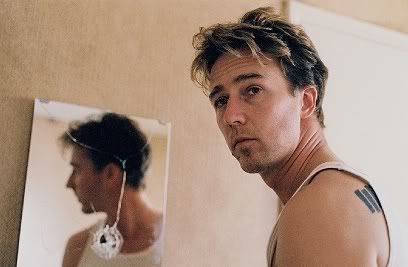
If the world weren't such a cold, unforgiving place, Down in the Valley would have been given the decent-budget / wide-release-Edward-Norton film treatment--in place of The Illusionist. Sure, it's about a dozen times less marketable than a classy period piece, and it doesn't have any Giamatti, or a swellingly dramatic Philip Glass score. It's got all the indie trappings (weird storyline, Evan Rachel Wood) holding it back. I realize this. But, it's a much better film than that soggy magician one, and it most certainly didn't deserve its blink and you'll miss it theatrical run, or hardly-rented DVD status. At the very least, it should have made some waves.

Why? Well, not only does Valley hold Norton's best, riskiest performance since 25th Hour, it's also one of the few genuinely imaginative, original works to come out of American film within the past few years. An effortlessly passionate story that transcends its small-scale setting, allowing the unfolding events to be weighted with life or death importance.

Norton plays Harlan, a man woefully out of place in modern-day San Fernando Valley, who retains old school Western charm (of the cowboy hat-tipping "Howdy there, little lady." variety), and happens to tote loaded guns, should a need to save the day in a heroic shootout arise. It's while working at a gas pump that he meets Evan Rachel Wood's Tobe--short for "October"--and promptly renders himself unemployed by ditching his duties to visit the beach with her and her gal pals. Normally, warning bells would go off here, with this guy being at least 15 years her senior, and willingly taking extreme measurements to be with her. Yet Harlan seems so unassumingly kind, and clueless: you feel more protective of him than the teenage girl he's courting.

Of course, though, their uneasy romance begins to crumble into American Dream-cum-nightmare territory, by way of an overprotective dad, some decidedly shady behavior from Harlan, and a whole lot of gunplay. By the end of the film, it's taken so many quirky turns, led its characters to such strange places, it's unclear who should be the 'bad guy,' or if there is one at all. Harlan, while earnest and well-meaning, ain't no John Wayne. And Tobe's family, reacting through fear and confusion, manage to inadvertently push him over the already-well-in-view edge. Maybe there's no right or wrong here--only broken hopes, childlike innocence, hasty reactions, and doomed figures. All the better, if you ask me.

This Shakespearean tragedy, things gone awry aspect is what makes Down in the Valley impossible to shake. Writer/director David Jacobson handles every extreme genre shift so deftly, I'm left feeling optimistic about what he may tackle next (and forgiving of his previous effort, Criminal). And, hey, if all else fails and nothing here appeals to you, there's a real nice Taxi Driver homage.
Notre Musique


With PJ Harvey having fallen off a bit, Sleater-Kinney calling it quits, and no for-sure word yet on Kingdom Come, John Darnielle has, for the time being, inherited the most-reliable-artist mantle. Get Lonely doesn't pack the immediate punch of last year's The Sunset Tree nor the thematic sprawl of Tallahassee, but, make no mistake, it's vintage Mountain Goats all the way. "Maybe Sprout Wings" is as exquisitely sad as any Darnielle track to date, while the lead-off single, "Woke up New," boasts a jangly defiance in the vein of "This Year" or "Palmcorder Yajna." Darnielle relays, "I wandered through the house like a little boy lost at the mall / and an astronaut could've seen the hunger in my eyes from space," before proceeding into the chorus: "What do I do? What do I do? What do I do [his voice cracking slightly]? What do I do without you?"--a de facto Alpha Couple epilogue shot through with (what sounds like) the added poignancy of experience. He's our Neil Young, people. Really.

Conversely, I'd just about forgotten about Joanna Newsom, despite liking 2004's The Milk-Eyed Mender more than a little and replaying "Inflammatory Writ" every so often. Her new record, Ys (pronounced "ees" apparently), is a tremendously pleasant surprise. Aside from longer, more expansively arranged songs, it doesn't necessarily stray that far from the ethereal-harp-weird/weirdly pretty-voice formula that worked for Newsom last time around, but there are moments of such rare, incredible beauty here that it's easy to forget the old freak-folk debate or any such subgenre semantics. The final stretch of the nearly-17-minute "Only Skin" is the most stunningly, sparklingly, exhilaratingly lovely thing I've heard in years. My wife can't stand it. I can't stop listening. She puts on headphones and turns up her nose.
Expanded thoughts on Dead Man's Shoes up today at Stylus.

You know the drill: click the above image for the mp3, or use this subscription link. Enjoy the 'cast, which Josh has called our "best yet," while I think #3 is still slightly better. Decide for yourself.

Podcast #1
and #2
and #3

Another big shoutout to astor, for hosting all of these.