As a little girl, you must've been magic

Top 25 Canadian Films
01. Goin' Down the Road (Shebib, 1970)
02. Les ordres (Brault, 1974)
03. The Sweet Hereafter (Egoyan, 1997)
04. Atanarjuat: The Fast Runner (Kunuk, 2002)
05. Kanehsatake: 270 Years of Resistance (Obomsawin, 1993)
06. Action: The October Crisis of 1970 (Spry, 1974)
07. Mon oncle Antoine (Jutra, 1971)
08. A Dangerous Method (Cronenberg, 2011)
09. Dracula: Pages from a Virgin's Diary (Maddin, 2002)
10. Winter Kept Us Warm (Secter, 1965)
11. Exotica (Egoyan, 1994)
12. MS Slavic 7 (Bohdanowicz/Campbell, 2019)
13. Cairo Time (Nadda, 2009)
14. The Body Remembers When the World Broke Open (Tailfeathers/Hepburn, 2019)
15. Dead Ringers (Cronenberg, 1988)
16. Spider (Cronenberg, 2002)
17. Crash (Cronenberg, 1996)
18. Hookers on Davie (Cole/Dale, 1984)
19. Wavelength (Snow, 1967)
20. One Day in the Life of Noah Piugattuk (Kunuk, 2019)
21. Never Eat Alone (Bohdanowicz, 2016)
22. Rhymes for Young Ghouls (Barnaby, 2013)
23. My Winnipeg (Maddin, 2007)
24. Stories We Tell (Polley, 2012)
25. Bon Cop, Bad Cop (Canuel, 2006)

The fields shudder, the woods shudder, the marshes shudder

Angelbert on the Battle of Fontenoy (841), the bloodiest battle of the Carolingian civil war; translated by Peter Godman in Poetry of the Carolingian Renaissance (London, 1985), pp. 262–265:
When in the earliest morning dawn cleaved the horrors of night
that was not the day of the sabbath but the cauldron of Saturn.
The wicked demon rejoices in the breaking of peace among brothers.
The hubbub of war resounds. A terrible battle arises on all sides.
Brothers prepare death for brothers, uncles for nephews,
nor do sons do their duty to their fathers.
There has been no worse massacre on the field of battle.
Christian law is violated; blood flows in waves;
and in hell the maw of Cerberus opens with glee.
The hand of almighty God protected Lothar
who himself put up a valiant struggle.
Had the rest fought like him swift victory would have been won.
But even as Judas once betrayed the Saviour,
so, Sire, your generals abandoned you in the struggle.
Be careful lest you be deceived like the lamb before the wolf.
Fontenoy is the name the peasants give to the spring and village
where Frankish blood was shed in slaughter and destruction.
The fields shudder, the woods shudder, the marshes shudder.
May neither dew nor showers nor rain fall on that meadow
on which mighty men, seasoned warriors, were laid low,
and wept for by fathers, mothers, sisters, brothers, and friends.
I, Angelbert, witnessed this crime which I have described
in rhythmical verse, as I fought with the others.
I alone survived among the many in the front line.
From the height of the hill I looked down into the valley's depths
where the brave king Lothar was vanquishing his enemies
who fled to the other side of the brook.
On Charles' side and on that of Louis too
the fields become white with the linen garments of the dead
as they often grow white with birds in the autumn.
The battle does not deserve to be praised or to be the subject
of fine song. Let every quarter of the globe
lament for those who died with such suffering.
Cursed be that day, may it not be counted
in the round of the year, but expunged from all memory,
unlit by the brilliance of the sun or by dawn's morning-light.
That night and the following day, the night was especially terrible
a night mingled with lamentations and suffering,
when some died and others groaned in dire straits.
O grief and lamentation! The dead are stripped naked,
vultures, crows, and wolves greedily devour their flesh.
They grow stiff, and their corpses lie there, unburied, helpless.
I shall not describe further the weeping and wailing.
Let each man restrain his tears as much as he is able to.
Let us implore the Lord on behalf of their souls.
Good Things from a Rough Year

With the Oscar nominations coming tomorrow, here's what I would've voted for, now having seen a few more really good movies; roughly in preferential order for each category:
PICTURE
Drive My Car
The Card Counter
The Power of the Dog
Memoria
Passing
Eternals
Flee
The Velvet Underground
Summer of Soul
Benedetta
DIRECTOR
Ryusuke Hamaguchi, Drive My Car
Paul Schrader, The Card Counter
Jane Campion, The Power of the Dog
Apichatpong Weerasethakul, Memoria
Rebecca Hall, Passing
Paul Schrader, The Card Counter
Jane Campion, The Power of the Dog
Apichatpong Weerasethakul, Memoria
Rebecca Hall, Passing
ACTRESS
Tessa Thompson, Passing
Paula Beer, Undine
Tilda Swinton, Memoria
Olivia Colman, The Lost Daughter
Alana Haim, Licorice Pizza
Paula Beer, Undine
Tilda Swinton, Memoria
Olivia Colman, The Lost Daughter
Alana Haim, Licorice Pizza
ACTOR
Hidetoshi Nishijima, Drive My Car
Andrew Garfield, tick, tick...BOOM!
Oscar Isaac, The Card Counter
Benedict Cumberbatch, The Power of the Dog
Will Smith, King Richard
Oscar Isaac, The Card Counter
Benedict Cumberbatch, The Power of the Dog
Will Smith, King Richard
SUPPORTING ACTRESS
Ruth Negga, Passing
Tiffany Haddish, The Card Counter
Charlotte Rampling, Benedetta
Kirsten Dunst, The Power of the Dog
Tōko Miura, Drive My Car
Tiffany Haddish, The Card Counter
Charlotte Rampling, Benedetta
Kirsten Dunst, The Power of the Dog
Tōko Miura, Drive My Car
SUPPORTING ACTOR
Andrew Garfield, Spider-Man: No Way Home
Kodi Smit-McPhee, The Power of the Dog
Jesse Plemons, The Power of the Dog
Ed Harris, The Lost Daughter
Timothy Spall, Spencer
Kodi Smit-McPhee, The Power of the Dog
Jesse Plemons, The Power of the Dog
Ed Harris, The Lost Daughter
Timothy Spall, Spencer
ORIGINAL SCREENPLAY
Paul Schrader, The Card Counter
Christian Petzold, Undine
Matt Lieberman and Zak Penn, Free Guy
Mike Rianda and Jeff Rowe, The Mitchells vs. The Machines
Aaron Sorkin, Being the Ricardos
Mike Rianda and Jeff Rowe, The Mitchells vs. The Machines
Aaron Sorkin, Being the Ricardos
ADAPTED SCREENPLAY
Ryusuke Hamaguchi and Takamasa Ore, Drive My Car
Jane Campion, The Power of the Dog
Rebecca Hall, Passing
Chris McKenna and Erik Sommers, Spider-Man: No Way Home
Steven Levenson, tick, tick...BOOM!
Jane Campion, The Power of the Dog
Rebecca Hall, Passing
Chris McKenna and Erik Sommers, Spider-Man: No Way Home
Steven Levenson, tick, tick...BOOM!
CINEMATOGRAPHY
Eduard Grau, Passing
Sayombhu Mukdeeprom, Memoria
Ari Wegner, The Power of the Dog
Hidetoshi Shinomiya, Drive My Car
Haris Zambarloukos, Belfast
Lost Futures

Since posting the (admittedly severely limited) best-of list down below, I've seen three more 2021 movies of note: Drive My Car, The Mitchells vs. the Machines, and The Lost Daughter. The first is not only far and away the best film I've seen that was released last year, it's one of the best, and most genuinely profound, films I've ever seen (no hyperbole intended); one of the true masterpieces of this still-young century. The second is thoroughly terrific –– funny, touching, and very on-point without ever being on-the-nose. The third one I'm more split on, admiring the uniformly strong performances and the main, present-tense narrative, but less so the cliché-ridden flashback scenes and ultimately too-neat schematic structure.

2021 Films
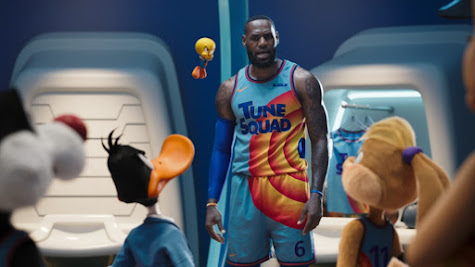
I did not see too many 2021 movies – and, frankly, I did not think very much about movies this past year – but, for what it's worth, these were the fifteen I liked best:
01. The Card Counter (Schrader)
02. The Power of the Dog (Campion)
03. Memoria (Apichatpong)
04. Eternals (Zhao)
05. Spider-Man: No Way Home (Watts)
06. Roadrunner: A Film About Anthony Bourdain (Neville)
07. Free Guy (Levy)
08. Licorice Pizza (Anderson)
09. Luca (Casarosa)
10. Space Jam: A New Legacy (Lee)
02. The Power of the Dog (Campion)
03. Memoria (Apichatpong)
04. Eternals (Zhao)
05. Spider-Man: No Way Home (Watts)
06. Roadrunner: A Film About Anthony Bourdain (Neville)
07. Free Guy (Levy)
08. Licorice Pizza (Anderson)
09. Luca (Casarosa)
10. Space Jam: A New Legacy (Lee)
11. Being the Ricardos (Sorkin)
12. Shang-Chi and the Legend of the Ten Rings (Cretton)
13. Black Widow (Shortland)
12. Shang-Chi and the Legend of the Ten Rings (Cretton)
13. Black Widow (Shortland)
14. Encanto (Howard/Bush)
15. Spencer (Larrain)
Forget tasteless or gross, this is very possibly the single most psychotic thing I've ever seen; the horrifying voicemail left for Ilhan Omar is certainly among the more psychotic things I've ever heard. Together – image and 40-second audio recording – they sum up catastrophic, perhaps unsalvageable American decline better than any 2000-word magazine article or op-ed piece.
I just don't know what to think of this.
Not as good (or "interesting") as his Angelina Jolie perfume ad, which can at least be argued to be a very minor addition to his Enigmatic/Ethereal Woman trope. (That "short film" will at some point be an additional-evidence footnote in someone's "The Ambivalent Function of the Feminine in the Work of Terrence Malick" Film Studies dissertation.)
I guess I hope he got paid well?
At least he's not shilling for Elon Musk?
"2021" Singles

01. Ben Walker and Jinnwoo, "How Stands the Glass Around"
02. Dolores O'Riordan, "Go Your Own Way"
03. Sinead O'Connor, "Feel So Different"
04. Norma Tanega, "You're Dead"
05. Audrey Hepburn, "Moon River"
06. Bea Arthur, "Pirate Jenny"
02. Dolores O'Riordan, "Go Your Own Way"
03. Sinead O'Connor, "Feel So Different"
04. Norma Tanega, "You're Dead"
05. Audrey Hepburn, "Moon River"
06. Bea Arthur, "Pirate Jenny"
07. Elliott Smith, "Pitseleh"
08. Al Green, "Tired of Being Alone"
09. Bob Dylan and Johnny Cash, "Girl from the North Country"
10. Caroline Polachek, "Breathless"
08. Al Green, "Tired of Being Alone"
09. Bob Dylan and Johnny Cash, "Girl from the North Country"
10. Caroline Polachek, "Breathless"
"2021" Albums

01. Norma Tanega, Walkin' My Cat Named Dog
02. Little Peggy March, I Will Follow Him
03. Dream a Little Dream of Me: The Greatest Hits of Doris Day
04. Dusty Springfield, You Don't Have to Say You Love Me
05. Patsy Cline, The Definitive Collection
06. We'll Meet Again: The Very Best of Vera Lynn
07. Dave Van Ronk, Down in Washington Square: The Smithsonian Folkways Collection
08. Jan & Dean, Surf City and Other Swingin' Cities
09. The Very Best of Peter, Paul and Mary
10. Drake, Certified Lover Boy
02. Little Peggy March, I Will Follow Him
03. Dream a Little Dream of Me: The Greatest Hits of Doris Day
04. Dusty Springfield, You Don't Have to Say You Love Me
05. Patsy Cline, The Definitive Collection
06. We'll Meet Again: The Very Best of Vera Lynn
07. Dave Van Ronk, Down in Washington Square: The Smithsonian Folkways Collection
08. Jan & Dean, Surf City and Other Swingin' Cities
09. The Very Best of Peter, Paul and Mary
10. Drake, Certified Lover Boy
Reasons to Believe

–Phoebe Bridgers, "Graceland Too"
–Mozart's Piano Concerto no. 23: II. Adagio
–The Anthony Bourdain doc, Roadrunner
–Samantha Power
–Bruce Springsteen, "Reason to Believe" (and the rest of Nebraska)
–That time the French military band performed "Don't Look Back in Anger"
–The last scene in Green Card (see below)
–Mirin Fader's Giannis book
–The Fake or Fortune? episodes that result in authentication
Everything is gonna be alright?
If there has been a better straight-up romantic comedy released in the three decades since Green Card, I must have completely missed it.
It is an inexhaustibly wonderful movie.
(Note: I would not count any part of the Before... Trilogy as "straight-up romantic comedy. "And the more extraordinary virtues of Groundhog Day –– the middle entry in the great "Andie MacDowell '90s Rom-Com Trilogy," completed with Four Weddings and a Funeral –– largely transcend its particular genre.)
Going further still: the bittersweet, ambiguous final scene (above) is as poignant and moving and perfectly realized and executed as any I've ever seen in any film romance, full stop.
Also: Peter Weir must be one of the most generally underrated and extremely versatile filmmakers of the past half-century or so. Consider that the same director made Picnic at Hanging Rock, The Year of Living Dangerously, Green Card, The Truman Show, and Master and Commander. Nearly the only thing these films have in common is that they are all either very good or great.
Sparks That Rise and Die
I. I read somewhere, not too long ago, that "I'm on Fire" is one of the most frequently played songs at weddings or wedding receptions, often specifically selected by the people getting married. I have no idea how such data was collected, and unfortunately I can't re-find that article now. You'll just have to trust me; and then, with that in mind, listen again to this song, surely one of Springsteen's best but also one of his darkest, which is saying something. The first verse is all cocksure come-on, seedy and dumb. But then it's promptly turned on its head in the staggering second verse, a totally raw admission of weakness, neediness, desperation, damage: "Sometimes it's like someone took a knife, baby, edgy and dull / And cut a six-inch valley through the middle of my skull / At night, I wake up with the sheets soakin' wet / And a freight train runnin' through the middle of my head." People want to dance to this at their wedding parties? Yes it is a love song –– the second verse ends "Only you can cool my desire," then rhymes that with the titular refrain –– but an exceptionally bleak one.
II. When Morrissey started playing "Please, Please, Please Let Me Get What I Want" at shows in the 2000s, he often (always? possibly) changed "get what" to "have who," creating a love song where there wasn't (quite) one before, some twenty years on, notwithstanding the prettiest melody Johnny Marr ever composed. The smile that Moz stifles from 1:15–19 in the concert clip above is evidence of this shift, subtle yet seismic; two words and four seconds as something like proof that hope springs eternal, even for an inveterate, professional pessimist, who (still) wants the one he can't have.
III. On the title track of a great album released twenty years ago this 9/11, Phil Elvrum (not yet Elverum) already "faced death" long before a crow looked at him as he trudged through a "forest fire zone on the hill above the lake" with an infant strapped to his back. When he "heard [his] own breath," he had to "face that [he was] still living," the second (verbal) use of "face" in a song that starts off with "golden" shoulders and ends, lyric-wise, with "there is no end." Does he still believe/think/imagine this is so? "Death Is Real," scorched earth "smoldering and fascist," etc. etc? "Now this," a kind-of answer ca. 2019 (again "smoldering"):
What's this new version of love that intrudes
Into the peace I thought I had?
This love has no recipient
But still lies there smoldering
Indifferent stars in the night sky
Watch me while I churn
Still holding this love for you
Without a thing to do
But try to live
In this uninvited liberation
Without a home in your life or heart
Without a shelter at all
Exposed and burning still
This unattended fire
For no one emanates a wasted warmth on the wind
Pushing against the edges
Of what it means to give
Lost wisdom in sparks that rise and die
Into the peace I thought I had?
This love has no recipient
But still lies there smoldering
Indifferent stars in the night sky
Watch me while I churn
Still holding this love for you
Without a thing to do
But try to live
In this uninvited liberation
Without a home in your life or heart
Without a shelter at all
Exposed and burning still
This unattended fire
For no one emanates a wasted warmth on the wind
Pushing against the edges
Of what it means to give
Lost wisdom in sparks that rise and die
I genuinely feel shook after reading this short polemical piece, even given (and in light of) everything I've seen play out on my television and computer screens over the past few days.
I would say that I disagree with the author –– and I certainly do disagree, up to a point (I think the sudden withdrawal of troops, especially in the way it's been executed, has been disgraceful, disingenuous, amoral, and profoundly dangerous) –– but she has a very specific, firsthand perspective that I obviously can't remotely claim. And it's hard to argue directly with some of her (scathingly nihilistic) points.
On the other hand, the remarkable content of the video clip in this tweet does, in a sense, stand as an important, eloquent counter-argument to some of Jedeed's points.
For those who insist that Afghanistan has not changed: almost 60% of Herat University students are women. And their scores are higher than their male counterparts. Now that is what I call progress (and something to be proud of) @TOLOnews pic.twitter.com/FaX3Hwkwz6
— Saad Mohseni (@saadmohseni) June 3, 2021
From Jedeed's piece, this line in particular threw me for a loop:
"But if Cowboy is dead then he died a long time ago, and if Cowboy is dead it’s our fault for going there in the first place, giving his family the option of trusting us when we are the least trustworthy people on the planet."
Is this last statement true?
I think it circles back to the quite murky question of intentions, and to what extent they ultimately matter vis à vis effects? I've been thinking, and arguing about, this conundrum a lot over the past week or so.
These are the (somewhat conflicting) conclusions I've come to (and of course I'm in no way a political scientist, just someone grappling with his own conscience while watching too much CNN and reading lots of news and op-ed articles):
1) Despite what it is disingenuously claimed now by Biden, Blinken, et al. (in order to spin/reframe this war as in some sense victorious), the US and its coalition partners obviously had some objectives in Afghanistan beyond eradicating al-Qaeda and finding bin-Laden and his immediate accomplices.
2) Furthermore, it is overly simplistic and perhaps even impossible to generalize about what "America" (and more so "the West") was really hoping to accomplish in Afghanistan, because in so doing one is lumping together four distinctly different executive administrations and many more different military commanders with certain visions for what constituted short- and long-term "success," as well as their secondary aims. And then there are the many thousands of individual soldiers, contractors, NGO workers, etc. who served in Afghanistan for some period of time in the past two decades. When one factors in Canada, the UK, France, Germany, etc. etc., the picture becomes even more complicated and resistant to broad generalization. Even if these states' first priorities were simply to make good on their NATO obligations and pragmatically demonstrate token solidarity with the more powerful US, they also had their own secondary priorities, also varying across multiple governments or administrations in twenty years.
Yet, having said all that, I'm going to generalize:
3) Democracy is good, and it is morally superior to any other sociopolitical form we've yet figured out and put into practice. A liberal, secular (at least semi-)democratic public sphere is a very good thing –– indeed, probably the single greatest achievement of the modern world.
4) Rights and opportunities for women are of paramount importance for any society, anywhere in the world, no matter its history or particular culture. Where threatened or embattled, those rights and opportunities must be defended and protected by all means available.
5) A basic education –– including the achievement of literacy and not limited to religious/scriptural studies –– is a universal human right, not a privilege. It should never be contingent on gender, religion, class or caste background. (A more advanced education should be too, but we remain quite far from achieving that ideal even in many so-called "highly developed" states.)
6) Whether as a direct or indirect consequence of US/coalition actions, Afghanistan had a marked, demonstrable increase in democratic participation (though by no means fully transparent or untainted by bureaucratic corruption) and in rights and opportunities for women and girls, particularly in terms of employment and education, including at the postsecondary and even postgraduate levels (see, e.g., the tweet linked to above). That is not nothing: a whole generation of Afghan females have enjoyed opportunities and relative protections on their basic human rights that – I think it is fair to say – they would never have had under the continuation of a Taliban-dominated government.
7) Even if some (many? most?) of the Western leaders and troops in Afghanistan were not most immediately concerned with promoting such universal rights (though, again, impossible to generalize about "Western" objectives/motives), their decisions, presence, and actions did facilitate these happy developments taking root and beginning to blossom.
8) Now, following the abrupt (morally irresponsible) withdrawal of Western troops and the rapid reconquest of Afghanistan by the Taliban, girls, women, and many others in Afghanistan will almost certainly have far fewer liberties, opportunities, and will suffer violence and oppression, probably to a very serious extent.
9) This is an absolute tragedy. But it does in itself negate the generation of females who have already acquired formidable knowledge, skills, and lives that they would not have otherwise possessed. Today's Taliban will have to reckon with a more substantial and resourceful women's-rights movement. They can kill individual people and attempt to impose severely restrictive laws, but they cannot totally cancel out years of social progress and its wide-ranging effects on Afghan society.
10) The decisions, presence, and actions (to say nothing of intentions) of US/coalition troops in Afghanistan also resulted in hundreds of thousands of deaths, including of al-Qaeda- and ISIS-connected terrorists, Western soldiers and contractors, Afghan soldiers, and civilians. Wikipedia gives the following totals (below); I have no idea how correct or timely these figures are – surely there have been some, probably many, unreported deaths – but it stands to reason that these numbers are at least approximately accurate.
| Casualties and losses | ||
|---|---|---|
Afghan security forces: Coalition:
Wounded: 22,773 Contractors | Taliban: 51,000+ killed (no official numbers, incomplete according to Brown, can be higher)[47] al-Qaeda: 2,000+ killed[43] | ISIL–KP: 2,400+ killed[27] |
Civilians killed: 47,245[47] | ||
11) In looking only at civilian deaths, this number (47,245), presumably, is higher than the number of civilians who would have been killed with the continuation of the Taliban-dominated status quo and non-involvement of Western states and their armies. How much higher, I have no idea, of course, and I doubt this can be even hypothetically quantified by a good statistician. Far too many contingencies over a twenty-year span.
12) Some amount of violent conflict/struggle and resulting mortality are something that the US and some other Western powers have (at times explicitly, at other times tacitly) accepted –– even celebrated, in certain cases –– as necessary for the achievement of greater rights and liberties and continued progress toward (at least ostensibly) a more democratic, just, and egalitarian society. Whether this "necessary sacrifice" equation and its built-in assumptions represent the right, or justifiable, or sometimes only (?) way to go about improving things in very meaningful ways, I really don't know...
13) Lastly, but perhaps most importantly: people – their lives, their freedoms, their opportunities for happiness – matter infinitely more than abstract entities like nation-states, international organizations, or corporations and their "interests" other than people.
Subscribe to:
Posts (Atom)